
Showing posts with label Election. Show all posts
Showing posts with label Election. Show all posts
17 July 2017
The Origins of the Term Gerrymander

27 June 2017
Breaking Presidential Ties
Here is a nice review for students in my Fundamentals of U.S. Constitutional Law and Introduction to U.S. Law courses. It touches on what happens when no one gets a majority of the votes in the Electoral College. If students understand the prior sentence, they are in good shape for the exam!
22 November 2016
The "Did Not Vote" Won

20 November 2016
$19 Million Spent By Outside Groups on Judicial Elections
How we select our judges in the United States is perhaps one of the things that surprises students in my introduction courses the most. Almost three quarters of the states in the United States place the names of judges on election ballots, and let the voters decide whether they should remain on the bench. Some do this using a process called retention, while others allow for open, competitive elections, just like any other elected office.
As is the norm in the United States, most people obtain their information about candidates for elected office via television commercials. These commercials are usually sponsored by the candidates themselves, but increasingly outside political action groups are funding commercials for the candidate of their choice. The same holds true for judicial elections. According to the Marshall Project, political action groups not directly affiliated with a political party or a candidate spent over $19 million on judicial elections this past election cycle. The article goes on to note that this spending for the most part failed to unseat their intended targets. This, however, will likely not dissuade people from contributing to these efforts in the future.
Those interested in a amusing take on the idea of electing judges should watch the John Oliver piece above. Be warned, this is HBO, so the language might be a little rough.
14 November 2016
Another Candidate Loses After Winning
Unless you have been in a cave for the past week, you are aware that Donald Trump won the election for U.S. President this past Tuesday. What you might not be aware of is the fact that Hilary Clinton actually received more votes. This is the fifth time in the nation's history that the person with most votes lost the election. As all of my students know (or at least should know), this anomaly is caused by the Electoral College system we use to select our President. The fine folks over at the National Constitution Center break down the ways this system might be changed, but more importantly, summarize the reasons why this system was adopted in the first place. If you have asked yourself over the past week why those crazy Americans use this system, you can find no better answer than the one provided in this post.
05 November 2016
Electing Judges
Just wanted to call attention to an interesting (and short!) podcast from National Public Radio about how state judicial elections in the United States are becoming increasingly political. It sounds obvious that an election would be political, but some elections (called retention votes) traditionally were not mired in ideological battles. But this has slowly been changing, as the podcast nicely points out.
22 April 2016
Natural Born Citizen Reloaded
 |
Legislative attorney Jack Maskell, writing for the Congressional Research Service in 2011, found that “the weight of more recent federal cases, as well as the majority of scholarship on the subject, also indicates that the term ‘natural born citizen’ would most likely include, as well as native born citizens, those born abroad to U.S. citizen-parents, at least one of whom had previously resided in the United States, or those born abroad to one U.S. citizen parent who, prior to the birth, had met the requirements of federal law for physical presence in the country.”Anyone interested in learning more about the arguments concerning this phrase should really give Maskell's memo a quick read.
11 April 2016
Directly Electing the Senate
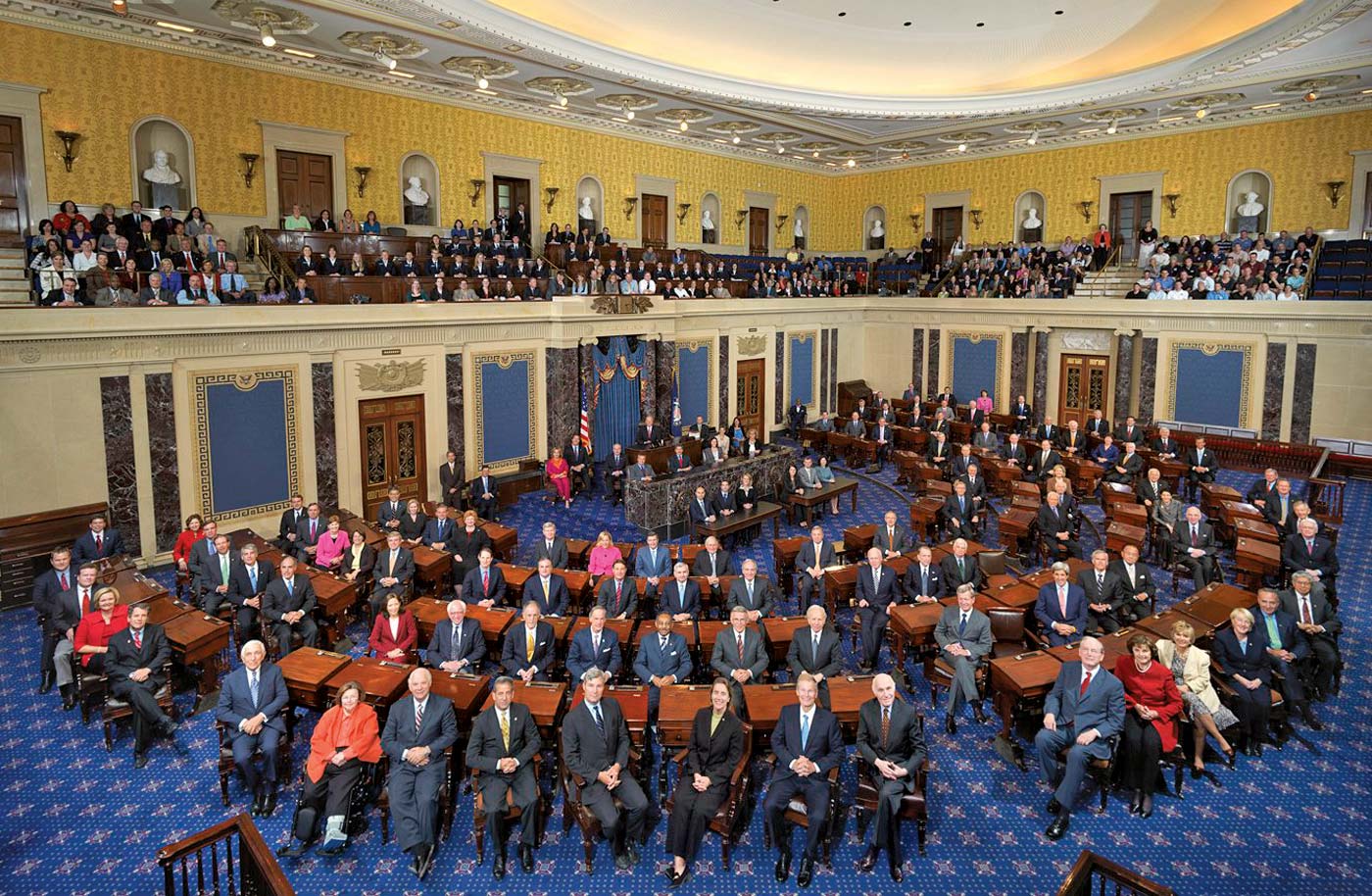
"At the Constitutional Convention in 1787, the Founders were guided by, among other powerful ideas, the fear of the potentially tyrannical, harmful powers of a democratic majority. The proposal that United States Senators should be elected by state legislatures, rather than democratic majorities, was inspired by this fear. . . ."
To understand why the U.S. Senate was originally select by state legislatures and why this changed with the passage of the 17th Amendment, you cannot go wrong reading the rest of the blog post.
28 January 2016
Judicial Elections Back in the News
Two recent news items caught my attention as they show the difficulty states have with keeping their elected judges independent. In an en banc decision the U.S. Court of Appeals for the Ninth Circuit upheld an Arizona law that regulates the fundraising activities of judges. According to the Arizona Courthouse News Service:
In Wisconsin court watchers are concerned that the upcoming Wisconsin Supreme Court race will be overly partisan. This illustrates yet another difficulty with judicial elections. Can judges be said to be truly independent when they run on a partisan platform?
Saying free-speech rights cannot outweigh the need to preserve judicial integrity, the en banc Ninth Circuit on Wednesday upheld an Arizona law banning judges from soliciting donations or stumping for colleagues. The 21-page lead opinion affirms five provisions in Arizona judicial code, which restrict judicial candidates from in-person solicitation or endorsing and campaigning for other candidates publicly, under the First Amendment.The goal here is to keep judges out of the normal give and take political campaigning process in order to keep them independent.
In Wisconsin court watchers are concerned that the upcoming Wisconsin Supreme Court race will be overly partisan. This illustrates yet another difficulty with judicial elections. Can judges be said to be truly independent when they run on a partisan platform?
14 January 2016
Natural Born Citizen and the Presidency
The natural born citizen question is currently front and center in the Republican primary contest for President of the United States. Students in my U.S. Constitutional Law course will know that a requirement to be President is being a "natural born citizen" of the United States. As I said in class, clearly this disqualifies someone who became a naturalized American citizen, for instance Arnold Schwarzenegger. But what about an American born overseas to American parents? Are they natural born citizen? Or must the person be born in the United States? The issues is being discussed (again) in the United States because Texas Senator Ted Cruz, who is running for President, was born in Canada to an American mother and Cuban father. He has his American citizenship through his mother, of course, but does being born in Canada disqualify him from running for the Presidency? Donald Trump thinks so. So do some legal scholars. The National Constitution Center's blog "Constitution Daily" has more.
03 November 2015
Judicial Elections

04 November 2010
Gone
A few days ago I wrote about the effort in Iowa to remove three judges through the retention process because they voted to recognize gay marriage. My point was that usually judges are not removed through this process of retention . . . unless they make a controversial decision. Iowa provides us with yet another example. All three Iowa Supreme Court Justices who were up for retention and voted in favor of gay marriage were removed by voters on Tuesday. My question is, does this prove that supporters of judicial elections are right? Shouldn't judges reflect the majority view of society, and when they don't, they should be removed? Or do we want a system where judges can make rulings that do not reflect the so-called "will of the people?" Does an election like this actually help us truly determine what the will of the people is?
22 November 2008
The Minnesota Senate Race Recount

Students who have been paying attention to the aftermath of the recent election in the United States probably know that some races for the U.S. Senate and House of Representatives are still not decided. The Senate race in Minnesota is particularly interesting, as both candidates are challenging the validity of ballots cast by voters. How can this be, you might ask. Well, the Minnesota Public Radio website (this link will take you the pictures) has pictures of some of the ballots that are being challenged. It is fascinating. I encourage you to take a look.
Subscribe to:
Comments (Atom)