The justice system itself is not immune to racism, so one would think that racism is also a problem when it comes to juries. But what legal impact does alleged racial bias on the part of jurors have on the outcome of a case? The U.S. Supreme Court recently answered this question by saying such bias potentially violates the constitutional rights of criminal defendants.
The real question before the Court involved the general rule that jury deliberations are confidential. But in this case a majority of the Supreme Court ruled that charges of racial bias might open the door to break this confidentiality rule. Writing for the majority, Justice Kennedy said "A constitutional rule that racial bias in the justice system must be
addressed — including, in some instances, after the verdict has been
entered — is necessary to prevent a systemic loss of confidence in jury
verdicts."
Showing posts with label Race and Equality. Show all posts
Showing posts with label Race and Equality. Show all posts
22 May 2017
27 October 2016
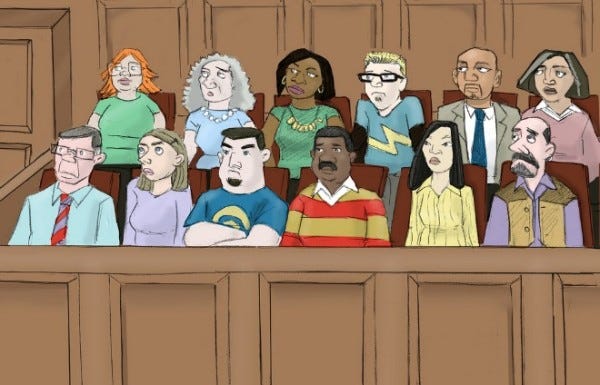
Racial Bias on Juries
Last session the U.S. Supreme Court tackled the issue of racial discrimination in the selection process of juries. This session the Court will face questions about how to deal with racial discrimination among members of the jury itself. Kenneth Jost over at the Jost on Justice Blog provides a nice summary of the case:
Miguel Angelo Peña Rodriguez was convicted in 2007 of groping two teenaged sisters in a darkened bathroom at a Colorado race track. The evidence in the brief trial consisted of little more than the girls’ identification — first in a roadside “showup” and then in court. The defense lawyer challenged the identification on a variety of well recognized grounds. Peña denied the accusation and was backed up by a fellow Hispanic who said the two were together in one of the race track’s barns at the time of the offense.
The jury deliberated for 12 hours before convicting Peña of three misdemeanor counts but acquitting him of a more serious felony charge. In juror interviews after the verdict, his lawyer gathered affidavits from two members of the jury that one of the jurors had made a number of blatantly racist statements during deliberations about Peña and his alibi witness. None of the jurors had volunteered any racial prejudices during jury selection.Reuters has more about how the Justices reacted to this case during oral arguments earlier this month.

15 June 2016
Race and Jury Selection
02 May 2016
Racism in the UK Bar
One of my favorite UK legal website, Legal Cheek, has a post directing legal watchers to a video interview of England's first black female High Court Judge. Legal Cheek goes on to say:
Dame Linda Dobbs has exposed shameful incidents of racism and sexism at the bar, particularly from her own clerks, in a revealing interview for the First 100 Years project — an ambitious video history which aims to highlight and celebrate the achievements of female lawyers in a profession long dominated by men.A link to the video interview can also be found on the Legal Cheek website.
02 November 2015
Jury Selection and Race in the United States
At some point students in most of my courses are introduced to the method used in the United States to select juries, a method that basically gives advocates a limited number of "objections" to potential jurors. These objections take the form of peremptory challenges and can be used by advocates to remove potential jurors from the jury pool for any reason . . . except for the wrong reason. In the Batson case the U.S. Supreme Court ruled that a "wrong reason" included removing a potential juror because of race. As Garrett Epps of the Atlantic writes, proving that race is a factor in the removal of a potential juror has been difficult and now is the focus of case being heard today by the Court:
Since 1986, the Court has extended that rule to peremptory challenges by defendants as well as prosecutors; to peremptory challenges of potential jurors even if they are of a different race as the defendant; to peremptory challenges based on sex as well as race; and to peremptory challenges in civil, as well as criminal, cases. Batson, thus, is a landmark—though at best a confusing one. That confusion may be on display next week, when the Supreme Court takes up a jury-selection case that is literally a matter of life and death. Foster v. Chatman tests how strong the evidence of racial motive must be in a jury selection case before a defendant can prevail on the issue.Students are strongly encouraged to read Epp's wonderful summary of the case that also includes a little of the history concerning the use of peremptory challenges by common law courts. Along these same lines a piece in Slate by Mark Stern and an opinion piece in the New York Times by former United States Deputy Attorney General for the Bush Administration Larry Thompson are also worth reading.
19 January 2011
More on Racial Preferences
Students in my Race and Equality in America seminar recently engaged in a discussion concerning the controversial topic of Affirmative Action. And wouldn't you know it, a day later Affirmative Action is in the news with the U.S. Court of Appeals' ruling on the University of Texas admission policy, which takes race into consideration as a factor for admission. The Statesman newspaper has more.
Subscribe to:
Posts (Atom)