On heels of President Trump's angry tweets about judges after his so-called Muslim Ban was struck down, Lyle Denniston at the Constitution Daily Blog couldn't hide his displeasure in a post entitled
"Analysis: A constitutional lesson for a new president." Denniston begins by quoting Chief Justice John Marshall:
"It is emphatically the province and duty of the judicial department to say what the law is.”
The quote is taken from the landmark Marbury v. Madison case, establishing the Court as the final interpreter of the Constitution, and it nicely sums up the constitutional role of the federal courts. The rest of the post is well worth a read, as it not only is aimed at giving the President a lessen concerning the role of the courts in the American system, it also serves as a lesson for students in my courses as well.
Showing posts with label Separation of Powers. Show all posts
Showing posts with label Separation of Powers. Show all posts
24 May 2017
22 May 2017
Removing the President
There is a thorough article in the Online version of Cicero entitled "Wird Trump gefeuert?" that students are encouraged to take a look at. Not only is this a good description in German of the various ways Trump can be removed (I gave you the English version in class), it also draws the correct conclusions about the politics involved in such a decision.

26 April 2017
Do we have a separation of powers problem?
The National Constitutional Center recently had a provocative post entitled "Does the separation of powers need a rewrite?" The gist of the article is that the standard used by the Supreme Court to judge whether the President has overstepped the power given to him by the Constitution is unclear and in need of a fine tuning. Students in my courses where we discuss executive power are encouraged to look over this article.
20 April 2017
The President Alone Cannot Overhaul American Immigration Policy
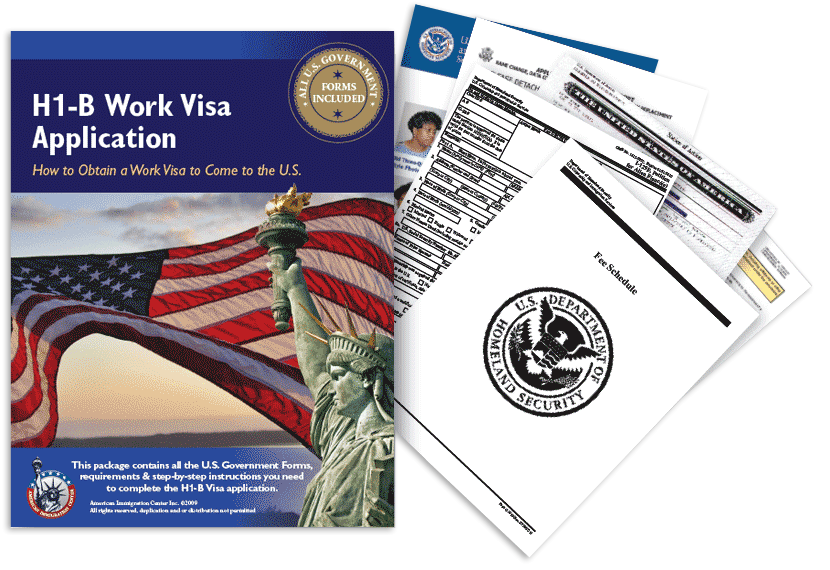
Just how is explained very nicely in the NY Mag piece:
In short, as head of the Executive Branch, President Trump is asking an executive branch agency to enforce existing rules more forcefully. He is not changing the law, he is simply asking that it be enforced differently!The order will direct the the departments of Labor, Justice, State, and Homeland Security to conduct reviews of the H-1B visa program and propose reforms. The Trump administration says current rules are going unenforced, and they want to see changes that ensure the visas are only going to “the most highly skilled workers.” According to the Washington Post, administration officials described various ways this could be accomplished: "The officials said reform could first come through administrative changes, such as raising the visa application fees, adjusting the wage scale to more accurately reflect prevailing salaries in the tech industry, and more vigorously enforcing violations. It could also change the lottery system to give foreigners with U.S. master’s degrees a leg up."
But as the article points out:
Signing an executive order lets Trump highlight his commitment to fulfilling his promise to protect American workers, but he can’t do a thorough overhaul of the program on his own. Changing certain fundamental elements, like how many visas are awarded each year, requires action from Congress.This illustrates very nicely the point I was trying to make in class: the President can change how a law is enforced, but he cannot change the law itself. Only the Legislative Branch can do that.
09 June 2016
Minority Judges in England

Stats from the Judicial Appointments Commission show that, of the lawyers who applied to be recorders (low-level judges) last year, only 10% of BME candidates were ever shortlisted. This is compared to 20% of white candidates. Of those who made the shortlist, 29% of BME lawyers were recommended for appointment. This is 17 percentage points less than the corresponding figure for white lawyers (46%).One reason cited for the changes made by the 2005 judicial selection reforms was the desire to diversify the bench in England. While the bench most surely has become more diverse, it appears that there is still a lot of work to do.
It should also be noted that, since 2012, not a single BME candidate has applied to or been appointed to the Court of Appeal.
25 April 2016
Separation of Powers
A recent U.S. Supreme Court case is the subject of a Noah Feldman's column over at Bloomberg News, and it is a must read for students interested in how the Court deals with separation of powers issues. The case involved whether Congress could amend a law in order to impact litigation pending before the courts. At the heart of the matter is whether by doing so Congress is interfering with the power of the judiciary.
01 December 2015

With President John F. Kennedy’s assassination, the need for a clear way to determine presidential succession, especially with the new reality of the Cold War and its frightening technologies,[14] forced Congress into action.[14] The new President, Lyndon B. Johnson, had once suffered a heart attack,[15] and the next two people in line for the presidency were Speaker of the House John McCormack,[16] who was 71 years old,[14] and Senate President pro tempore Carl Hayden,[16] who was 86 years old.In short, the situation was ripe for one of those rare moments when the country was ready and willing to amend its constitution. A mere six years after being added to the constitution, the amendment was tested with resignation of Vice President Spiro Agnew. To take his place President Richard Nixon selected Rep. Gerald Ford to be the new VP. Under the new amendment, his appointment needed to be confirmed by a majority of both houses of Congress. It was.
And just in time. An informative post on the Constitution Daily blog explains how another aspect of the 25th Amendment, the temporary replacement of the President, was also in play as the Watergate scandal was threatening the Nixon presidency.
24 November 2015
Youngstown Steel Case

19 November 2015
The Origins of Judicial Review in the United States
Students of my American Constitutional law course, and to a lesser extent all my other courses, are aware that the U.S. Supreme Court is basically a constitutional court. However, a careful reading of Article Three of the U.S. Constitution shows that in fact the Supreme Court was not expressly given the power to review whether actions taken by the other two branches of government violate the constitution. As it turns out, the Court gave itself this power in perhaps the most important decision ever issued by the Court: Marbury v. Madison. C-Span has a video of a discussion concerning the history of this case and its impact. For all you American constitutional history junkies out there, this video is worth checking out.
18 June 2012
The Court is an Issue
Every four years Americans are reminded by the press about just how important the Presidential Election is to the U.S. Supreme Court, or at least to the composition of the Court. A recent piece in the U.S. Today begins by stating that "[t]his presidential election year, the most important numbers at the court
could be 79, 76, 75 and 73. Those are the ages" of four of its members. Put a different way, up to four Justices might be retiring in the near future. Now might be good time for students in my American Constitutional Law and Common Law Legal System courses to reflect on our discussions about the Court and how its members are selected.
14 June 2012
Time for a Fix?
Recently I came across a series in Slate Magazine that has somehow escaped my attention: How Can We Fix the Constitution. This is certainly not a new topic. Heck the founders were talking about how to fix the Constitution even before they ratified it. Remember, the Bill of Rights was basically a concession to anti-federalists who feared the strong central government being created by the new governing document. Put a different way, the Bill of Rights was kind of a fix to the new Constitution.
Last week, U.S. Supreme Court reporter Linda Greenhouse weighed in on the question of whether there should be term-limits, like those that exist for member of the Bundesverfassungsgericht, for members of the U.S. Supreme Court. It is an interesting, and yes short read. Check it out.
As an aside, the Slate series was inspired by the new comedic book by Kevin Bleyer, a writer for the very popular fake news program The Daily Show entitled Me the People.
Last week, U.S. Supreme Court reporter Linda Greenhouse weighed in on the question of whether there should be term-limits, like those that exist for member of the Bundesverfassungsgericht, for members of the U.S. Supreme Court. It is an interesting, and yes short read. Check it out.
As an aside, the Slate series was inspired by the new comedic book by Kevin Bleyer, a writer for the very popular fake news program The Daily Show entitled Me the People.
09 May 2011
Under the U.S. Supreme Court: The president makes war in Libya
After pressure from England and France, President Barack Obama finally agreed to send U.S. war planes into Libya. But did he have the power to do so without permission from Congress? Back in March, shortly after the first U.S. planes were seen over Libya, United Press International ran an informative piece on this question. Students in my U.S. Constitutional Law course may want to check this short piece out.
18 December 2010
Advise and Obstruct
The New York Times recently ran an editorial with the same caption as my post here, which is clearly a play on the "advise and consent" language in the U.S. Constitution. As students will recall, while the President has the power to nominate federal judges, he must also obtain the consent of the U.S. Senate. As I mentioned in class, this process has become increasingly political to the point where the federal judiciary's ability to efficiently function is being threatened. Or at least so argues the New York Times.
15 November 2009
When Must A Judge Step Aside?
Can a United States federal court judge hear a case in which he or she may have an interest in it's outcome? For instance, what if the judge happens to be a hunting buddy of the defendant in a case. Or the judge's son works for the law firm representing the plaintiff. Must the judge step aside? The simple answer under current law is no. But that may change if some members of Congress have their way. Law.com notes:
Under the current system, federal judges get to decide on their own whether to disqualify themselves from cases. Among the proposals being discussed are requiring a second judge to rule on a recusal motion -- rather than leaving the motion to the "targeted" judge -- and making substitution automatic if any party to a case swears an affidavit alleging prejudice. Some lawmakers, including Conyers, have also said in the past that they want a system to review recusal decisions by U.S. Supreme Court justices.More on this can be found at law.com.
09 July 2009
A Ritual Worth Watching
Tony Mauro of the National Law Journal has a short, interesting piece explaining why next week's Supreme Court nominee confirmation hearings will be something to watch, or at least pay attention. Mauro's take can be found here.
22 June 2009
The Rare Impeachment
Students in many of my classes have discussed at one point or another the process for removing the President, high executive officers and federal judges: impeachment. Between 1797 and 2008, only 17 individuals have been impeached, and of those only seven were removed. In short, this is a rare event in American history. Which is what makes last week's impeachment of U.S. Federal Court Judge Samuel Kent extraordinary. Judge Kent was recently convicted of obstruction of justice related to charges of sexual assault that were brought against him. Now in prison, Judge Kent remains a federal judge until he resigns or is removed. After last week's action in the House of Representatives, removal is looking increasingly likely. The Houston Chronicle has more.
UPDATE - According to the Associated Press, the process is now moving to the U.S. Senate.
UPDATE - According to the Associated Press, the process is now moving to the U.S. Senate.
26 May 2009
Immunity from Criminal Prosecution
Students in my constitutional law courses know (or will know) that the President probably enjoys absolute immunity from criminal prosecution while he is in office. Most legal scholars maintain that the President must first be impeached before he can face criminal charges. But as this post over at the always informative Jurist website notes, judges do not enjoy the same kind of immunity from prosecution. U.S. Federal District Court Judge Samuel Kent recently was convicted of obstruction of justice related to a sexual harassment complaint filed against him. He is now serving 33 months in prison. However, Kent is still a federal court judge. Remember, the only means for removing judges in the federal system is via the impeachment process. This process, as one would expect, has already been started for his removal.
24 May 2009
Why Marbury Still Matters
 Students of American Constitutional Law learn that Article III, the part of the Constitution that created the Supreme Court, did not actually give the Court the power to review the constitutionality of actions taken by the other two branches of government. This power was derived from the court decision, arguably the most important decision in American history, Marbury v. Madison. Newsweek recently had an interesting story explaining why Marbury is still relevant some 200 years later.
14 May 2009
Obama Nominee Blocked by Senate Republicans
Today's Washington Post contains an article about how members of the Republican Party in the U.S. Senate were able to block President Obama's nominee for Deputy Secretary of the Interior. The article provides a nice illustration of a few things that I have already addressed in many of my courses. First, that the President has the power to appoint officers of the Executive Branch. Second, that this power is not absolute because the U.S. Senate must confirm the President's choice. Third, that because of special rules that exist in the U.S. Senate, rules that are not found in the Constitution itself, a minority of Senators can block action in the Senate using something called a filibuster. As students may recall, the filibuster is basically non-stop debate. The Senate cannot vote on the matter at hand until the debate is finished, and under the rules of the Senate a filibuster can only be stopped if at least 60 Senators vote to stop it. The Democrats in the Senate were only able to muster 57 votes in favor of ending debate and thus the fillibuster worked in stopping the full Senate from voting on the confirmation. Take a look at the Post article for more.
29 January 2009
When Congress Can Reverse the Supreme Court
When is the Supreme Court the law of the land and when is legislative overruling of the Supreme Court appropriate? Today President Obama signed his first bill into law as President. The bill dealt with equal pay for women. More specifically, it dealt with an instance where the Supreme Court interpreted a federal law one way, and Congress turned around and passed a new law which basically said that the Supreme Court's interpretation was wrong (by the way, this is what is meant by legislative overruling). Can Congress do that? Sure, but only when Congress is reversing the Court's interpretation of a FEDERAL LAW. It is different, however, if the Court says that a federal violated the U.S. Constitution. This is what is meant by the Supreme Court is the law of the land. The Court and only the Court has the last say on what is and what is not constitutional. But not every matter deals with the Constitution, and quite often the Court is merely asked to interpret a federal law that has nothing to do with the Constitution. The website Scotusblog has more.
Subscribe to:
Posts (Atom)