Matt LeMieux

Showing posts with label congress. Show all posts

17 December 2017

Questioning of Federal Judge Appointees


Anyone interested in seeing how members of the Senate Judiciary Committee question people appointed by the President to fill lower federal court vacancies should check out this video. The five people being questioned are appointees from U.S. District Court Judge. As a trail judge, they will be responsible for ensuring that the parties are treated fairly and the trial operates according to well established procedural rules.

In class I have mentioned that while the qualifications to be a federal judge are not spelled out in the Constitution, the Senate usually takes its constitutional duty of "advice and consent" rather seriously. The Senator asking the questions in this video is a Republican. Thus, he is asking questions of people who were nominated by a Republican President to be a federal court judge. Recently, the Chair of the Senate Judicial Committee, also a Republican, expressed concern about some of President Trump's nominees for the federal judiciary

17 July 2017

The Origins of the Term Gerrymander

Recently I have started discussing the topic of gerrymandering in my Constitutional Law courses. The term itself must sound funny to a non-native speaker. What on earth is a "gerrymander?" I suspect most native speakers also do not know the origin of this term and simply throw it around without ever wondering about this. A recent post by the National Constitutional Center explains that the "gerry" part of the term is linked to founding father and former Governor of Massachusetts Elbridge Gerry. Gov. Gerry notoriously pushed a plan to redraw the lines of the political districts within the state. Critics of the plan were quick to point out that one of the districts looked like a salamander, and a political cartoon (see above) coined his plan as "gerrymandering." The term has stuck ever since.  

22 May 2017

Removing the President

There is a thorough article in the Online version of Cicero entitled "Wird Trump gefeuert?" that students are encouraged to take a look at. Not only is this a good description in German of the various ways Trump can be removed (I gave you the English version in class), it also draws the correct conclusions about the politics involved in such a decision.

15 May 2017

Amending the Constitution

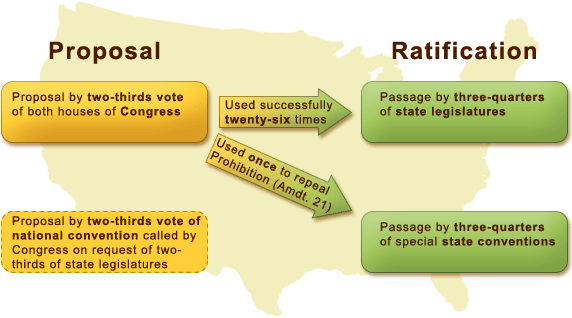
A few months back the New Yorker ran piece explaining how close the Republican Party is to controlling a enough state legislatures needed to call a constitutional convention of sorts. As the above diagram illustrates, there are two ways to start the process of amending the constitution. Normally, the process is started by two-thirds of the Congress (both houses!) agreeing on text. The last time this happened, to the best of my knowledge, was in 1978 when Congress passed the District of Columbia Voting Rights Amendment, which would have given D.C. full representation in Congress. Only 16 states voted in favor of the amendment.

Other than that, the closest Congress has come recently to sending a proposed amendment to the states was the Flag Desecration Amendment, which would have allowed for states to punish people who burned the American flag, overturning two Supreme Court decisions stating that individuals have a free speech right to do so. The measure passed the two-thirds threshold in the House but fell one vote short in the Senate.

The New Yorker piece notes, with alarm, that the Republican Party is close to having control of two-thirds of the state legislatures, which could result in a constitutional amendment being offered via the second method above, something that, to the best of my knowledge, has never happened before. The article notes that while a constitutional convention would most likely be called only to propose a so-called Balanced Budget Amendment, things could move in a different direction once the delegates met:
The original Constitutional Convention was intended only to recommend changes to the Articles of Confederation, not to do away with them, but the delegates literally took the law into their own hands and drafted a new document. It’s easy to imagine that an Article V convention would find it difficult to limit its agenda to the technicalities of budget finance. Abortion, the most divisive social issue of the past forty years, has insinuated itself into nearly every discussion of nominees for the Supreme Court. Could a gathering intoxicated by the possibility of imposing permanent change resist the urge to achieve by amendment what decades of lobbying, protesting, and the cultivation of sympathetic judicial candidates could not? Similarly, as the battle over immigration has intensified, conservatives have toyed with the idea of ending birthright citizenship, currently guaranteed by the Fourteenth Amendment. The allure of bypassing legislative stalemate on that issue might also prove tempting.
In the age of Trump, it is easy to conjure up images of American democracy as we know it seeking to exist (as anyone who has heard me discuss the constitution know, I don't believe this is a possibility). This article lays out a scenario for the dismantling of sacred rights. I suppose if Trump can be elected President, anything is possible. 

12 May 2017

Investigating Trump

Stefan Kornelius had a great piece in the SZ yesterday about how President Trump is threatening the rule of law in America. Deep into the piece Kornelius writes:
Sollte Trump die verwegene Idee verfolgt haben, mit dem Rauswurf die Russland-Ermittlungen beenden zu können, so hat er nun das Gegenteil erreicht. Selbst wenn der Kongress keinen Sonderermittler durchsetzen kann - das entsprechende Gesetz ist 1999 ausgelaufen, ohne erneuert worden zu sein -, so ist der Appetit an den Ermittlungen jetzt erst so richtig geweckt. Trump mag die Aufklärung verzögern, aber er kann nicht verhindern, dass seine allemal schwache Gefolgschaft im Kongress weiter schwindet und die dünne Mehrheit der Republikaner im Senat bröckelt. Amerika ist eine starke Demokratie, die auch ein Trump nicht so einfach ins Wanken bringen kann.
This is exactly right. If it becomes obvious that Trump is trying to impede a legitimate investigation, Congress will act, even if it is controlled by Republicans. The Republicans might want to support Trump, but they also don't want to lose their seats when they are up for re-election in 2018. They will if they are seen to be aiding a President who is trying to obstruct justice.

As an aside, students in my Constitutional law class are getting a real time lesson in how the President can be investigated. Take a look at the slides again from last week to have a fuller understanding of what Kornelius means in the quoted paragraph above.

20 April 2017

The President Alone Cannot Overhaul American Immigration Policy

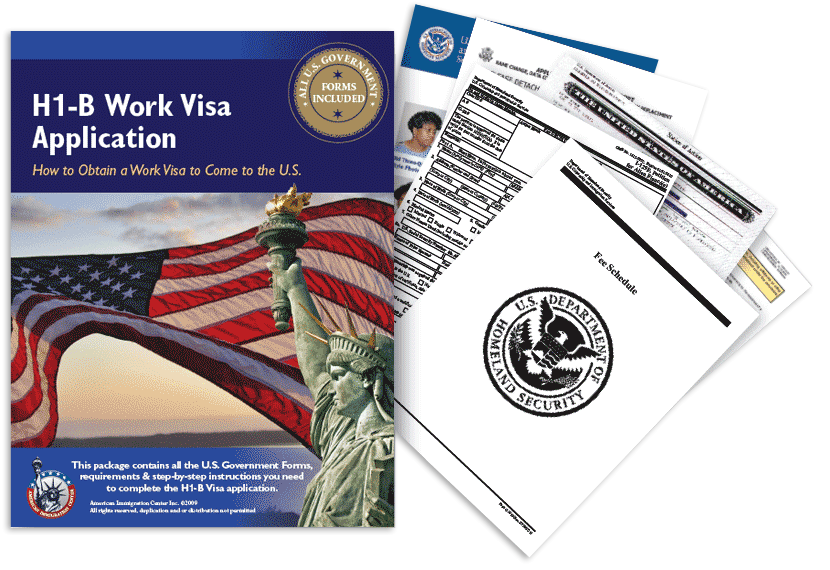
The New York Magazine's Daily Intelligencer has a great article that makes the point I have been emphasizing in class for the past two weeks: rarely can the President alone overhaul American domestic policy. As I mentioned in my Constitutional Law class yesterday, President Trump this week issued an executive order to make it harder for H-1B Visas to be issued. The H-1B Visa is given to highly skilled workers where an employer claims that there are no Americans who can do the job. The President's order doesn't change the law, it simply enforces it differently.

Just how is explained very nicely in the NY Mag piece:
The order will direct the the departments of Labor, Justice, State, and Homeland Security to conduct reviews of the H-1B visa program and propose reforms. The Trump administration says current rules are going unenforced, and they want to see changes that ensure the visas are only going to “the most highly skilled workers.” According to the Washington Post, administration officials described various ways this could be accomplished: "The officials said reform could first come through administrative changes, such as raising the visa application fees, adjusting the wage scale to more accurately reflect prevailing salaries in the tech industry, and more vigorously enforcing violations. It could also change the lottery system to give foreigners with U.S. master’s degrees a leg up."
In short, as head of the Executive Branch, President Trump is asking an executive branch agency to enforce existing rules more forcefully. He is not changing the law, he is simply asking that it be enforced differently!

But as the article points out:
Signing an executive order lets Trump highlight his commitment to fulfilling his promise to protect American workers, but he can’t do a thorough overhaul of the program on his own. Changing certain fundamental elements, like how many visas are awarded each year, requires action from Congress.
This illustrates very nicely the point I was trying to make in class: the President can change how a law is enforced, but he cannot change the law itself. Only the Legislative Branch can do that.

07 November 2016

The Politics of Picking Judges

As students in my courses have or will learn, federal judges in the United States are nominated by the President and confirmed by the United States Senate. While this process clearly involves politicians and politics, there are many who believe that the selection process should not and cannot be politicized. While I tend to agree with the goal, I do think it ignores the reality of today's hyper-partisan America. The Washington Post recently chastised both candidates for President for making the nomination of next Supreme Court Justice a centerpiece of their campaigns. The short editorial is worth a read. 

25 April 2016

Separation of Powers

A recent U.S. Supreme Court case is the subject of a Noah Feldman's column over at Bloomberg News, and it is a must read for students interested in how the Court deals with separation of powers issues. The case involved whether Congress could amend a law in order to impact litigation pending before the courts. At the heart of the matter is whether by doing so Congress is interfering with the power of the judiciary.

01 December 2015

On sixteen occasions the office of the Vice President of the United States has been left vacant due to either : 1) resignation, 2) death or 3) succession to the presidency (because the President had died in office). Prior to the passage of the 25th Amendment, the office simply remained vacant until the next election. As the wikipedia page of the 25h Amendment notes:
With President John F. Kennedy’s assassination, the need for a clear way to determine presidential succession, especially with the new reality of the Cold War and its frightening technologies,[14] forced Congress into action.[14] The new President, Lyndon B. Johnson, had once suffered a heart attack,[15] and the next two people in line for the presidency were Speaker of the House John McCormack,[16] who was 71 years old,[14] and Senate President pro tempore Carl Hayden,[16] who was 86 years old.
In short, the situation was ripe for one of those rare moments when the country was ready and willing to amend its constitution. A mere six years after being added to the constitution, the amendment was tested with resignation of Vice President Spiro Agnew. To take his place President Richard Nixon selected Rep. Gerald Ford to be the new VP. Under the new amendment, his appointment needed to be confirmed by a majority of both houses of Congress. It was.

And just in time. An informative post on the Constitution Daily blog explains how another aspect of the 25th Amendment, the temporary replacement of the President, was also in play as the Watergate scandal was threatening the Nixon presidency.

07 December 2011

TV's in the Courtroom

Whether TV cameras should be allowed in the courtroom during hearings before the Supreme Court (both UK and US) has been a hot topic in both America and England as of late. In America, it appears that Congress is trying to pass a law that would require the high court to televise its hearings. But can Congress really force the Court? A very good article in the Christian Science Monitor asks this question.

14 November 2011

How Powerful is the Federal Government?

As I mentioned last week in my Introduction to American Law course, questions concerning federalism in the United States are really now questions about how powerful the federal government can be. The New York Times ran a great piece this past weekend about this question of government power in the context of President Obama's effort to provide all Americans with health care. Give it a read and see if you can follow the arguments being made.

23 December 2010

The House Over Time

Just to follow-up on yesterday's post. The Washington Post has a really interesting interactive map showing how the composition of the House of Representatives has changed over the past 100 years. Choose a year. Then move your cursor over a given state. It will show you how many representatives that state had during the period you have chosen. It will also show you how many people each member of the House represented in a given period. Looks like the average number of people per member of Congress was about 290,000 in 1910. Today it is over 700,000 people per representative!

22 December 2010

Census Numbers Are In


In each of my courses, at some point or another, we touch upon how the membership of House of Representative is apportioned, and reapportioned every ten years. As students in my courses this semester have heard me say a number of times, this year reapportionment will once again take place because the United States just completed its census. Well, the numbers are in. Politico has more about which states were the winners and which the losers when it comes to membership in the House.

15 November 2009

When Must A Judge Step Aside?

Can a United States federal court judge hear a case in which he or she may have an interest in it's outcome? For instance, what if the judge happens to be a hunting buddy of the defendant in a case. Or the judge's son works for the law firm representing the plaintiff. Must the judge step aside? The simple answer under current law is no. But that may change if some members of Congress have their way. Law.com notes:
Under the current system, federal judges get to decide on their own whether to disqualify themselves from cases. Among the proposals being discussed are requiring a second judge to rule on a recusal motion -- rather than leaving the motion to the "targeted" judge -- and making substitution automatic if any party to a case swears an affidavit alleging prejudice. Some lawmakers, including Conyers, have also said in the past that they want a system to review recusal decisions by U.S. Supreme Court justices.
More on this can be found at law.com.

11 November 2009

Judges Reject Rendition Suit

Extraordinary rendition. This is the program used by the U.S. government shortly after September 11, 2001, whereby terrorist suspects were kidnapped and sent to third countries where they could be interrogated using torture. One such victim, a Canadian who was picked up in Kennedy International Airport in New York and whisked off to Syria where he was detained and tortured for a year, was told by the United States Second Circuit Court of Appeals that he cannot sue the U.S. government because Congress did not authorized such a suit. Ben Weiser, of the New York Times writes:
In saying that he could not sue officials involved in his rendition, the United States Court of Appeals for the Second Circuit ruled by a vote of 7 to 4 that Congress could always create a civil damages remedy for harms suffered through rendition, but it had not done so.

“We decline to create, on our own, a new cause of action against officers and employees of the federal government,” Chief Judge Dennis G. Jacobs wrote in a 59-page majority opinion joined by six other judges.

Judge Jacobs said that it was for the executive branch to “decide how to implement extraordinary rendition, and for the elected members of Congress — and not for us as judges — to decide whether an individual may seek compensation” from government officials for a constitutional violation.
Setting aside the question of how Congress could have created a remedy for violations arising from a program about which it was not informed by the Bush Administration, there are some very interesting points to take away from this article.

First, in class students are told that hearings in the Court of Appeals are presided over by a three judge panel. So how do we get a 7 to 4 vote here? The decision was actually one made by an "en banc" panel. See here for a full discussion of this.

Second, boiled down to its simplest form, the argument being made by the majority here is they do not have jurisdiction to hear this case. Remember, Article I of the U.S. Constitution gives Congress the power to create lower federal courts and determine the courts' jurisdiction.

Finally, one could argue that this is an example of there being no common law in American federal courts. Many scholars argue that the only sources of law in the federal courts are statutes and the Constitution, not common law. When the judges say "we will not create a remedy," what they are really saying is we will not create a common law (judge-made) remedy.

18 June 2009

State Sovereignty

By now students in my constitutional law courses are likely sick of hearing me talk about the historical and on-going dispute concerning state sovereignty. As students will surely recall, this topic is the focus of our discussions concerning the Commerce Clause, Necessary and Proper Clause and the 10th Amendment. But rest assured that I do not drone on about this for nothing. This is a real and current debate, ever more so as this article in yesterday's Los Angeles Times points out.

It appears that some legislators in western states are not all that happy with President Obama and have decided that now is the time to challenge the power of the federal government. How do they intend to do this? Pass laws, especially dealing with gun control, that are in direct conflict to federal law with the hope that the courts will get involved in the dispute and overturn prior rulings that have given the federal government broad power. As the Times piece points out:
Supporters of the bill want the Supreme Court to eliminate gun controls and, eventually, curtail Washington's ability to set policy on a wide range of issues, including education, civil rights, law enforcement and land use.
As an aside, don't you find it somewhat disturbing that the modern cases challenging federal power seem to only involve sex (U.S. v. Morrison), drugs (Gonzales v. Raich) and guns (U.S. v. Lopez)?

17 May 2009

Apportionment

During a recent Constitutional Law lecture in Münster, a student asked who was counted for purposes of determining a state's population with regards to apportionment of the House of Representatives. As students in most of my classes have learned (or been reminded of) at some point or another, the number of representatives each state has in the House of Representatives is determined by the population of a given state. Most students are surprised to learn that every ten years a recount of the entire U.S. population is conducted via something called a census (this recount, incidentally is required by the Constitution). But I digress.

So who counts when determining a state's population? Everyone. That's right, citizens and non-citizens, legal residents and illegal residents, registered voters and non-registered voters, adults and children. Everyone. More information is provided here by our friendly Census Bureau (the fine folks who conduct this decennial recount).

As an aside, as part of my search for this answer, I came across information concerning a movement here in Germany back in the late 1970s to introduce a census. Apparently a planned census in 1983 was halted by the Bundesverfassungsgericht. More can be found here.

28 April 2009

Local Currency


Article I of the U.S. Constitution gives the federal government sole authority to print money. But that isn't stopping local businesses in cities like my hometown of Detroit from printing their own (il)legal tender. USA Today has more.

27 November 2008

Is Clinton Barred by the Constitution?

There is an interesting question floating around the blogesphere about whether Hillary Clinton is barred by the Constitution from accepting the Secretary of State nomination (a nomination which technically has yet to be made official). You see, Article I of the Constitution basically prohibits sitting members of Congress from taking new jobs in the government if the salary for that job has increased during the current term of the member of Congress. The Secretary of State's salary has indeed increased during Hillary Clinton's current term as U.S. Senator. But this is probably just an academic question. As bloggers over at the Ecomonist point out, it seems unlikely that Republican Senators, after years of watching the Bush Administration play fast and loose with constitutional rights, will hold up Hillary's nomination because of such an obscure part of the Constitution.

25 June 2008

Extending Presidential Privilege to the Limit

The words presidential privilege do not appear anywhere in the U.S. Constitution. Yet, the U.S. Supreme Court has consistently held that the President has the right to engage in confidential conversations with his advisers, unless these conversations concern potentially criminal activity. The Bush Administration has pushed the idea of privilege to unseen limits. First, they claimed that discussions between the Vice-President and his advisers could be shielded by presidential privilege, even if the President himself was not involved in the discussions. The U.S. Supreme Court agreed. Then they claimed that internal e-mails between the Attorney General and his advisers enjoyed presidential privilege protection. This remains an open question. And now the Administration is claiming that the privilege allows the President to withhold documents from a congressional investigation into whether he pressured the Environmental Protection Agency to weaken decisions on smog and greenhouse gases. At what point does this idea of privilege interfere with the basic principles of checks and balances contained within the Constitution?