Matt LeMieux

22 November 2008

The Minnesota Senate Race Recount


Students who have been paying attention to the aftermath of the recent election in the United States probably know that some races for the U.S. Senate and House of Representatives are still not decided. The Senate race in Minnesota is particularly interesting, as both candidates are challenging the validity of ballots cast by voters. How can this be, you might ask. Well, the Minnesota Public Radio website (this link will take you the pictures) has pictures of some of the ballots that are being challenged. It is fascinating. I encourage you to take a look.

16 November 2008

Can Congress Subpeona Bush as Former President?

What happens if the Democrat-controlled Congress wishes to order President Bush, once he becomes former-President Bush, to appear before a Congressional committee to answer for some of the things he did while President? It is clear that the idea of separation of powers in the Constitution precludes Congress from ordering a sitting President to appear. But a former President? The New York Times addressed this question a few days ago, and dragged out this quote from former President Harry Truman:

If the doctrine of separation of powers and the independence of the presidency is to have any validity at all, it must be equally applicable to a president after his term of office has expired,” Truman wrote to the committee.

Could it be that even former Presidents can exercise Executive Power? I see Truman's point, but could this apply equally to all of Bush's advisers? I have no doubt Bush would make this argument considering how expansively he has interpreted Executive Privilege.

14 November 2008

Next in Line

Most people know what happens if the President of the United States dies in office: the Vice-President becomes the President. But what happens if both become incapacitated at the same time? Better yet, what happens if many of the leaders in government are incapacitated at the same time. How deep does the Presidential line of succession go? The Wall Street Journal has an interesting piece in yesterday's paper about there very questions. In case you were wondering, federal law provides the order of succession:

1. President

2. Vice President

3. Speaker of the House

4. Senate President Pro Tem

5. Secretary of State

6. Secretary of the Treasury

7. Secretary of Defense

8. Attorney General

Of course, constitutional scholars believe this federal law is unconstitutional because the Constitution only talks about the Vice-President and then an officer (many believe this means member of the Cabinet) with regards to succession.

08 November 2008

Access to the Court

After a long break, postings to this blog are now resuming. And I'll start with a question raised by students in my "Debating Controversial Landmark Court Decisions" class. This question actually should be of interest to students in all my classes, be it English or law. The question: are television cameras allowed to film oral arguments in front of the U.S. Supreme Court? The answer: No. I actually wrote about this topic about a year ago, but a case is currently before the Court that has made me want to revisit this issue.

The case, Federal Communications Commission v. Fox Television Stations, concerns fines given out by the FCC to the Fox television network. The fines were were for "indecent" language on live television (here is one example from the Golden Globe Awards; at around 5:35 of the clip you can hear U2's Bono utter the "offensive" word).

In the lower courts, lawyers arguing in defense of Fox used the offending words as part of their arguments. One commentator described the arguments as being littered with the talk of seventh grade boys in a locker room. So as time drew near for oral arguments in front of the U.S. Supreme Court, commentators began to wonder whether Fox's attorney would dare to utter these words in front of the nine justices of the Supreme Court. So if televisions are not allowed in the courtroom, then what's the big deal?

Well, a few years ago the Court started allowing audio recordings of oral arguments to be released on the same day of the arguments. But in anticipation of this argument, Chief Justice Roberts has said the audio from this particular argument will not be available until the end of the term. This rather silly attempt to protect the public from naughty words was for naught. The lawyer for Fox decided against filling the hallowed chamber of the Court with F-words and S-words, so the audio of the arguments is "clean." Heaven forbid a few colorful terms be heard over the public airwaves or via mp3 download from the Court.

15 July 2008

Ages of U.S. Supreme Court Justices

Students of common law are always surprised to hear about how long members of the U.S. Supreme Court stay in their positions. After all, these are lifetime appointments and many Justices take this seriously. Here is a list of the current and their ages along with a list of the 10 most recent former Justices and their ages:

The members of the current Supreme Court, by age:

John Paul Stevens, 88
Ruth Bader Ginsburg, 75
Antonin Scalia, 72
Anthony Kennedy, 71
Stephen Breyer, 69
David Souter, 68
Clarence Thomas, 60
Samuel Alito, 58
John Roberts, 53

The last 10 justices to leave the Supreme Court, with their age and date of retirement:

Sandra Day O'Connor, 75, Jan. 31, 2006
William Rehnquist, 80, Sept. 3, 2005
Harry Blackmun, 85, Aug. 3, 1994
Byron White, 76, June 28, 1993
Thurgood Marshall, 83, Oct. 1, 1991
William Brennan, 84, July 20, 1990
Lewis Powell, 79, June 26, 1987
Warren Burger, 79, Sept. 26, 1986
Potter Stewart, 66, July 3, 1981
William Douglas, 77, Nov. 12, 1975

25 June 2008

Extending Presidential Privilege to the Limit

The words presidential privilege do not appear anywhere in the U.S. Constitution. Yet, the U.S. Supreme Court has consistently held that the President has the right to engage in confidential conversations with his advisers, unless these conversations concern potentially criminal activity. The Bush Administration has pushed the idea of privilege to unseen limits. First, they claimed that discussions between the Vice-President and his advisers could be shielded by presidential privilege, even if the President himself was not involved in the discussions. The U.S. Supreme Court agreed. Then they claimed that internal e-mails between the Attorney General and his advisers enjoyed presidential privilege protection. This remains an open question. And now the Administration is claiming that the privilege allows the President to withhold documents from a congressional investigation into whether he pressured the Environmental Protection Agency to weaken decisions on smog and greenhouse gases. At what point does this idea of privilege interfere with the basic principles of checks and balances contained within the Constitution?

23 June 2008

Puting the Cross on License Plates


The State of South Carolina will soon be offering a license plate to its drives with a Christian cross on it, as well as the words "I believe." Anyone who has been to the States might have noticed that one can find a variety of different license plates within a given state. While in Florida last year, I noticed license plates containing environmental themes ("protect our reefs" and "save the manatee"), sports themes (NASCAR, University of Florida, Florida State University) and family themes ("family first" or "family values"). click here for a complete list of Florida specialty license plates.

The question here isn't whether states can have specialty plates, but what happens when one of these specialty plates contains a message that may violate the Constitution. As students in both my classes this semester know, the First Amendment of the U.S. Constitution contains the Establish Clause, among other clauses. This clause has been interpreted by the Court to require some semblance of a separation of church and state. So when a state provides a license plate with an unmistakable Christian symbol on it, does this act violate the Establishment Clause? The courts will most surely be asked to decide this question in the near future.

18 June 2008

What Free Speech?

A few weeks ago 34 demonstrators were convicted of violating a law that prohibits holding demonstrations on the grounds of the U.S. Supreme Court. The question this obliviously raises is doesn't such a law violate the First Amendment right to free speech? The answer is probably not. Our discussion in class concerning freedom of speech has dealt mostly with something called "traditional public forums". These generally include streets, sidewalks and public parks. People have an almost unlimited right to engage in speech in this type of forum. But the courts have uniformly held that not all government property can be considered a traditional public forum. In fact, most government property is not considered a public forum and thus speech on this property can be regulated far easier.

Why make a distinction between a traditional public forum and other government property? Generally because the Courts have been sympathetic to the government's position that allowing speech on all government property in any manner would interfere with workings of the government. Imagine if the government had to allow protesters onto military bases or into prisons. Clearly, this kind of expressive activity would interfere with the ability of government to carry out it's mission, whatever that mission might be on the property in question. For purposes of this class, students don't need to know this distinction, but I hope it helps explain why these protesters, who entered the grounds of the Supreme Court, were arrested.

16 June 2008

Establishing Obscenity

The Tampa Tribune has a nice piece, which tries to explain how obscenity laws in the United States are enforced. The title of the article, Standards Of Obscenity Are Murky, says it all. As we discussed in Con Law class last week, trying to spot this form of non-speech is not easy. Unfortunately for a pornographer who calls himself Max Hardcore, a jury in Tampa recently was able to weed through this murky area of the law and find his films to be obscene. Which means Mr. Hardcore will soon be serving hard time for violating obscenity laws.

12 June 2008

Don't Ask, Don't Tell - An Update

During U.S. Constitutional law lecture a few weeks ago, I used the issue of gays in the military to illustrate how courts generally apply the rational basis test (as you recall, this is the lowest level of scrutiny applied to due process and equal protection claims). Well, it turns out that at least one court now believes that the military's policy of "Don't Ask, Don't Tell" should be judged using a level of scrutiny somewhere between strict and rational basis. Here's why.

A few years ago the U.S. Supreme Court struck down a Texas statute that outlawed consensual homosexual sex. (see Lawrence v. Texas). According to many commentators, and three judges on the First Circuit Court of Appeals, the decision in Lawrence recognized "a protected liberty interest for adults to engage in private, consensual sexual intimacy and applied a balancing of constitutional interests that defies either the strict scrutiny or rational basis label." In short, the Court didn't use the rational basis test to deal with this law that classified gays and lesbians differently then heterosexual couples, which is how courts had always dealt with such classifications in the past.

But even using this "new" level of scrutiny that falls between strict scrutiny and rational basis, the First Circuit Court of Appeals still found the Don't Ask, Don't Tell policy to be constitutional. How?

The court began it's analysis by noting that "Lawrence balanced the strength of the state's asserted interest in prohibiting immoral conduct against the degree of intrusion into the petitioners' private sexual life caused by the statute in order to determine whether the law was unconstitutionally applied." In short, the Lawrence Court weighed the "protected liberty interest" as noted above, against the state's interest in stopping "immoral conduct." In the end, the Lawrence Court felt that individual right was more important.

Lawrence truly was a departure from past reviews of laws that classified gays and lesbians differently, i.e. using the rational basis test. A rational basis analysis "does not permit consideration of the strength of the individual's interest or the extent of the intrusion on that interest caused by the law; the focus is entirely on the rationality of the state's reason for enacting the law," said the First Circuit Court of Appeals. In Lawrence, the Court most certainly looked at the individual interest at stake.

So the First Circuit Court of Appeals now had to use this new approach to judge the military policy at issue. And they did so rather quickly, saying basically that when it comes to matters of the military, courts have always shown deference to Congress because: 1) Congress is in a much better position than the courts to determine the proper workings of the military and; 2) the U.S. Constitution specifically gives Congress the power to raise and support armed forces. The Court then noted that the policy in question was created after a careful and thorough review noting that Congress:
focused explicitly on the effect that the Act could have on constitutional rights of homosexuals, concluding that "if the Supreme Court should reverse its ruling in Bowers and hold that private consensual homosexual acts between adults may not be prosecuted in civilian society, this would not alter the committee's judgment as to the effect of homosexual conduct in the armed forces. . . . Congress ultimately concluded that the voluminous evidentiary record supported adopting a policy of separating certain homosexuals from military service to preserve the "high morale, good order and discipline, and unit cohesion" of the troops.
In short, concerning matters of the military, courts should basically defer to Congress, which is really what Courts generally do when applying the rational basis test. Which begs the question. Did the First Circuit really use something other than the rational basis test in concluding that the policy did not violate the Constitution? It doesn't appear so.

11 June 2008

How Not to Conduct a Jury Trial

Students learning about common law sometimes question whether the jury system is an efficient and just way to run a legal system. News out of Sydney, Australia may support the proposition that in fact jury trials are a waste of time, not to mention a waste of money. At least this particular trial was. Yesterday a judge presiding over a three-month-long jury trial that cost the state over a $1 million dismissed the jury before they could reach a verdict because it was discovered that at least four members of the jury spent a good deal of time in the jury box playing Sudoku when they should have been paying attention to the trial. There is no law prohibiting jurors from being inattentive, even if the inattentiveness results in the judge ordering a retrial. Apparently, officials in the state of New South Wales are considering a rewrite of their jury rules that would, at the very least, prohibit jurors from playing games while sitting in the jury box. Probably not a bad idea.

10 June 2008

Enforcing Medical Marijuana Laws

One of the more important recently decided Commerce Clause cases dealt with whether the federal government could enforce federal anti-drugs in California after voters there decided to legalize marijuana for medicinal purposes. (see Raich v. Gonzalez) The answer given by the U.S. Supreme Court was yes, the Feds can arrest people for using marijuana even if users are doing so pursuant to California state law. The question many students must have is: so is it still legal to purchase marijuana in California, under state law, for medicinal purposes? The quick answer is under state law YES, but people who use the drug still run the risk of being arrested by federal agents under federal law. But it gets even more confusing. The San Diego Union-Tribune newspaper recently reported that San Diego County is suing the State of California to repeal the medical marijuana laws. Lawyers for San Diego and San Bernardino counties will argue that the state cannot force counties to issue identification cards to qualified medical marijuana patients because the drug is illegal under federal law.

So, under California law it is the local government (in this case county government) that must help carry out the medical marijuana law, but the counties are beginning to question whether this is wise (and lawful) in light of the aforementioned U.S. Supreme Court decision. Ah, the joys of federalism.

UPDATE - A California court has ruled that California's medical marijuana laws do not violate federal law saying, "The purpose of the (federal law) is to combat recreational drug use, not to regulate a state's medical practices." It is possible that this ruling will be appealed to California Supreme Court.

09 June 2008

Interpreting State Constitutions

As has been noted on several occasions in American Constitutional Law class, an individual state may grant more rights to people under it's constitution than are available under the federal constitution. But there may also be instances where a state constitution places more limitations government. For instance, the United States Supreme Court has held the giving parents vouchers (money) to help pay for tuition charged by religious schools did not violate the Establishment Clause found in the First Amendment of the U.S. Constitution. But many states, including Arizona, have a clause in their constitution that specifically prohibits state money from being used in any manner related to religion. So it was no surprise that the Arizona Supreme Court recently ruled that school vouchers given out by the State of Arizona violated the Arizona constitution. So, to review, the U.S. Supreme Court said this practice does not violate the U.S. Constitution, but the Arizona Supreme Court said that it DID violate the Arizona constitution. Federalism in the U.S. isn't always easy to comprehend.

03 June 2008

Picking Judges

Students of American Constitutional Law are by now quite familiar with how federal judges are selected. Thus, it goes without saying that the upcoming President election is important not only because it will determine who the next leader of America is, but is also important because it will likely determine whether the U.S. Supreme Court becomes more liberal or conservative. Syndicated columnist Linda Chavez, with whom I rarely agree, has an interesting article arguing why the issue of judicial nominations should be, but is not, an important criteria for selecting the next President.

16 May 2008

States' Rights

By now students in my Constitutional Law class are quite familiar with the federal system of government in the United States. But I cannot emphasize enough the fact that the fundamental rights contained in the Constitution and its Amendments represent the bare minimum of rights enjoyed by residents of the United States.

What do I mean by that? Simple. Government cannot violate these rights. Period. But governments (state and federal) may provide greater rights. How so? A case decided by the California Supreme Court yesterday provides a nice illustration.

The U.S. Congress is on record saying that marriage can only be between a man and woman. Federal courts have generally ruled that this limitation does not violate the U.S. Constitution (although the U.S. Supreme Court has never weighed in on this question). But several states have decided that under their own constitutions, the right to marry is extended to couples of the same sex.

By a 4 to 3 vote, the California Supreme Court said that a California law restricting marriage to only couples of the opposite sex violates the California Constitution. By doing so, the California Court is providing greater rights to gays and lesbians then what is given to them under the U.S. Constitution. In short, the U.S. Constitution sets a floor of rights under which government may not go. But if government decides to provide greater rights, that's fine as there is no ceiling set by the U.S. Constitution when it comes to the states granting fundamental rights under their own constitutions.

14 May 2008

War Power

As we discussed last week, the Constitution sets up the potential for conflict between Congress and President when American troops are sent overseas and placed in harms way. Article I clearly gives Congress the power to declare war, but Article II makes the President Commander-in-Chief, which inherently gives him the power to defend the United States without obtaining approval from Congress. Presidents have defined "defend" rather broadly, dispatching troops to places like Panama and Beirut and putting them in war-like situations without getting approval from Congress. I just came across a piece on the English Deutsche Welle site about a case that many of you probably are already aware of. It seems that the German Constitutional Court has settled this question about who has the power in Germany to dispatch troops to foreign soil. Any deployment of German troops to foreign soil must be done with the approval of the Bundestag, so said the Court. There are a number of reasons why it was easier for the German Court to deal with this issue then it would be for the U.S. Supreme Court. For starters, there is much clearer division of power between branches in the United States. Second, as a rule the Supreme Court does not answer "political questions." More on that next week.

09 May 2008

No to German National Security Council

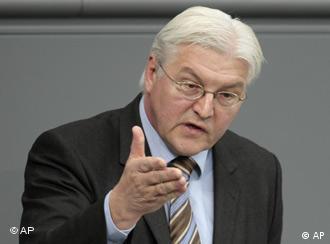
In case you missed it, German Foreign Minister Frank Walter Steinmeier has rejected an idea put forth by Chancellor Merkel for the creation of a U.S.-style National Security Council. As you will recall from our last Constitutional Law lecture, the NSC was set up to counsel the President concerning relations with foreign countries. It's no wonder why Herr Steinmeier would oppose such a move. American Secretaries of State (the equivalent of the German Foreign Minister) have generally had cool relations with the NSC. And why wouldn't they? The NSC is basically serving a similar role as the Secretary of State, meaning the Secretary has competition for the President's attention on matters of foreign relations.

24 April 2008

The Senate and the Filibuster

Last Monday, students of American Constitutional law were introduced (or possibly re-introduced) to the concept of a filibuster, which is unique to the U.S. Senate. By way of review, a filibuster is a tool that Senators can use to block debate of a bill they do not like. The filibuster itself is basically an endless debate that, because of it's duration (endless), prohibits the Senate from voting on a bill. The filibuster can only be stopped by way of a Cloture vote, which requires 60 Senators to vote in favor of ending the debate. Thus, a super-majority is needed to stop this delay action being taken by a minority of Senators. The mechanics of how this works are not really important for this class, especially considering that the Constitution itself does not grant this power to the Senate; so it's really outside the scope of this class. Nevertheless, there is an article in today's New York Times explaining how Republicans in the Senate are using the filibuster to block a vote on a bill that would make it easier to sue employers for wage discrimination. The article is worth a read if you are interested in how the filibuster can be used.

22 April 2008

The Commerce Clause and the Environment


Understanding Congressional power, especially as it relates to the Commerce Clause in Article I of the U.S. Constitution, is not an easy task. My hunch is that many students walked out of yesterday's lecture on the Commerce Clause wondering, "what the heck is LeMieux talking about." As I said yesterday, the central question here is what are the limits of Congressional power? That's really what's at the heart of discussions concerning the Commerce Clause. An excellent example of this concerns whether Congress can pass laws aimed at protecting the environment. As Benjamin Wittes, of the Atlantic Monthly, pointed out in a 2005 article:
Consider the Constitution's commerce clause, which empowers the national legislature to regulate "commerce … among the several states." Since the New Deal the commerce clause has been construed very broadly, becoming the constitutional backbone of much important civil-rights legislation and of all the major environmental laws. Yet since 1995 the Court has issued a series of decisions that emphasize the limits of the commerce power, requiring that laws enacted under it deal in some sense with—well, interstate commerce. I have considerable sympathy for this line of argument, but its potential dangers to the environment are hard to overstate. For while the environment itself is intrinsically interstate, not all environmental-protection measures obviously constitute regulations of commerce "among the several states"—or even regulations of commerce at all. Can the government, under the Endangered Species Act, protect—as one conservative judge poetically put it—"a hapless toad that, for reasons of its own, lives its entire life in California"? Can it, under the Clean Water Act, protect isolated seasonal pools (which are not interstate) used by migratory birds (which are)?
His point is, if enough judges on the Supreme Court believe that Congressional power under the Commerce Clause is not very broad, might the Court start striking down laws aimed at protecting endangered animals and wetlands? Good question and one that makes environmentalists in the United States lose sleep.

15 April 2008

What is a Secret

During yesterday's American Constitutional Law lecture, I spent a good deal of time discussing the concept of separation of powers, and I noted that the Bush Administration has taken actions over the past several years that raise significant questions about the balance of power in the U.S. government. While these battles between the branches don't receive a great deal of attention here in Germany, one particular case has: the case of Khaled El-Masri, a German citizen who was "kidnapped" by the CIA as part of the Bush Administration's extraordinary rendition program. This case nicely illustrates the interplay between the three branches of government when it comes to something as sensitive as national security.

El Masri's case was dismissed by a federal court because the government claimed his lawsuit involved state secrets. As the Washington Post noted in an editorial earlier this week:
IN RECENT YEARS, a number of possibly deserving litigants have been denied their day in court after the Bush administration claimed that too many secrets would be spilled in an open trial. The cases of people who alleged they were subjected to illegal eavesdropping or were handed over to a foreign country in an "extraordinary rendition" have been fended off in this way.
But now Congress is trying to change this by passing a law that would allow courts to look more closely at the state secrets defense that has been raised in these cases. This is a classic example of one branch (Legislative) trying to place limitations on another branch (Executive) by giving the third branch (Judiciary) more power to check government actions. Whether Congress has the power to do this will be a topic we will address next week.