
12 June 2013
Why Electing Judges is a Bad Idea

11 June 2013
The Supreme Court's troubling past
The Washington Post's George Will recently devoted one of his columns to the
Korematsu case. Students in my Constitutional Law course might want to take a look at this piece as it relates to what we will be discussing on Thursday.
Korematsu case. Students in my Constitutional Law course might want to take a look at this piece as it relates to what we will be discussing on Thursday.
21 May 2013
Original Jurisdiction
The Desert News had a recent article that began by saying "The U.S. Supreme Court is set to hear arguments Tuesday in a case that
could have implications for states that rely on interstate water
compacts." The case in question concerns a water rights dispute between six western states, and is an excellent example of case that begins and ends in the U.S. Supreme Court, as the Court has original jurisdiction to hear disputes between the states.
If you are reading the words "original jurisdiction" and asking yourself what that means, it is time to go back and review your class notes.
If you are reading the words "original jurisdiction" and asking yourself what that means, it is time to go back and review your class notes.
14 May 2013
Jury Nullification in Action
For those students interested in reading about a case where jury nullification was used to find a defendant not guilty, take look at this post.
13 May 2013
More on the UK Supreme Court
I just came across this nice little introductory video about the UK Supreme Court. According to its website:
This introductory film is primarily aimed at GSCE/Standard Grade students and explores the role and the workings of the Supreme Court, the only court with UK-wide jurisdiction and the highest court in the land. It explains its relationship to the Judicial Committee of the Privy Council, the highest court for British Overseas Territories and a number of Commonwealth countries.
08 May 2013
The Right Jury Size
More on juries, this time related to the size of juries in the United States. Slate Magazine recently ran an interesting article on jury size noting that all but two states require juries that contain 12 people to give unanimous verdicts. The article runs down nicely how the Supreme Court has ruled in the past regarding jury size:
Isn’t a verdict in a criminal trial supposed to be unanimous? The answer is yes in 48 states and yes if the case is tried in a federal court. But two states, Oregon and Louisiana, allow convictions by a non-unanimous vote. In both states, the threshold in non-capital cases is 10 to 2.* Arguably, Herrera had to go to jail for the crime of living in Oregon.
The Supreme Court has allowed this conflict between federal and state law (as well as between state law and conventional wisdom) to persist for more than 40 years, during which time it has come up with a mishmash of seemingly arbitrary rules about what constitutes a legal trial. A jury of six, the Supreme Court has decided, is constitutional (Williams v. Florida, 1970). A jury of five, however, is not constitutional (Ballew v. Georgia, 1978). In a jury of six, conviction must be unanimous (Burch v. Louisiana, 1979). But in a jury of 12, conviction does not have to be unanimous (Johnson v. Louisiana and Apodaca v. Oregon, 1972). (At the time of these decisions, Louisiana required a 9-to-3 vote to convict in non.capital cases, which the court upheld as constitutional. The state has since changed its threshold to 10 to 2.)
06 May 2013
Learing to love Jury Duty

A jury summons is an invitation to participation. Jurors are asked to involve themselves in some of the most personal, sensational, and terrifying events in a community. It is real life, usually real tragedy, played out in court. Jurors confront disturbing facts, bloody images, or heart-wrenching testimony. A jury may have to decide whether a man lives or dies, or whether a multimillion-dollar company goes bankrupt. A jury will have to pass judgment in a way that will have real-world effects on both parties before the court. This active role was not accidental. Participation in jury service teaches the skills required for democratic self-government. Being a juror lets you develop the habits and skills of citizenship.
29 April 2013
The "Informal" UK Supreme Court
The Financial Times recently ran an interesting piece on the UK Supreme Court subtitle: "The most striking fact about this place is its informality. Grandeur and remoteness have been swept away." Students in my "Juristische Technik und Methodik des Common Law" course in Münster my find it interesting.
28 April 2013
Listening to the Supreme Court
Ever wonder what oral arguments in front of the U.S. Supreme Court sound like? Wonder no longer. NPR reports, fittingly via a podcast of a segment from one of its radio programs, that the Oyez Project now has digitized oral arguments heard before the Court dating all the way back to 1955! The manner in which arguments are conducted before the Court have changed dramatically over the past several decades. As a point of reference, take a quick listen to an argument from the early 1960s and then compare that to a recent argument. Today's Justices are much more active with their questioning. That is except for one. Justice Clarence Thomas has famously not asked a question during oral argument for several years now.
20 April 2013
Agency Alphabet Soup
Early on in the massive manhunt for the suspects involved in the Boston Marathon bombing, the Atlantic ran an interesting piece entitled "The Alphabet Soup of Agencies Hunting in Boston." Students in my American Administrative Law course last week heard me say that the structure of agencies in the United States amounted to a web of various agencies with overlapping responsibilities. This manhunt and the agencies involved in it provides an excellent example of what I was talking about:

10 April 2013
A Lawyer Shortage in America?

But there appears to be a lawyer shortage in some parts of America. The New York recently ran an interesting article about a remote parts of Nebraska and South Dakota where no lawyer can be found for more then a 100 mile radius. The situation is so desperate that the State of South Dakota recently passed a law offering subsidies to those lawyers willing to move these remote parts of the state.
Shakespare famously wrote "the first thing we do, let's kill all the lawyers." But in South Dakota they are looking to kill, rather they are looking subsidize their existence!
01 February 2013
Law School Applications Drop in U.S.
The Atlantic has a fascinating piece on how law school applications in the United States have dropped to a thirty-year low. A few bullet points from the article:
- applications have dropped 38% from where they were in 2010.
- the average public law school graduate left school with over $75,000 in debt from tuition costs.
- the law profession is bloated and there are no jobs to be had.
17 January 2013
Floating Home or Residential Boat?
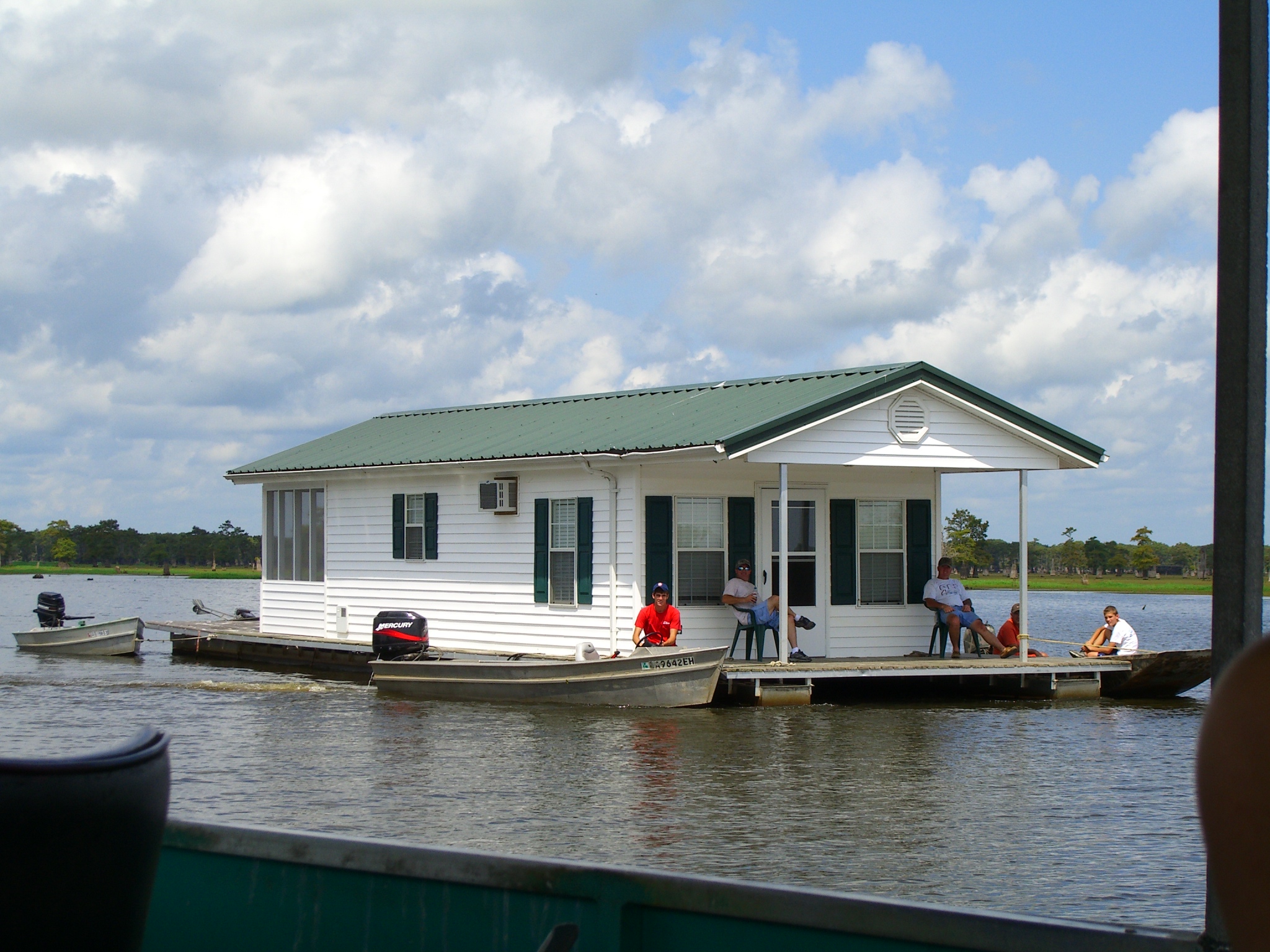
Just this week the U.S. Supreme Court had a similar issue before it involving a house boat. The question was whether the vessel should be considered a residence or a boat. The characterization of the vessel obviously would lead the Court in two different directions (otherwise the case would not have made this far in the system), and it was up to the Court to determine whether this was a boat or a home.
The Washington Post has more on this case.
14 January 2013
Political Judges
Are judges in America actually politicians? This is a question posed by former Obama Administration official and renowned law professor Cass Sunstein in a recent essay published by Bloomberg News. What Sunstein is really asking here deals more with the role ideology plays in judicial decision making, but the point is well taken and worth consideration. The essay is highly recommended.
10 January 2013
Precedent at Work

The L.A. Times nicely sums the case up so:
The ruling came in a lawsuit by Smriti Nalwa, who fractured her wrist in 2005 while riding in a bumper car with her 9-year-old son and being involved in a head-on collision. Rosenberg said Great America had told ride operators not to allow head-on collisions, but failed to ask patrons to avoid them.The legal doctrine at issue is the common law (i.e. judge made) principle of assumption of risk, whereby someone who undertakes an activity knowing of the risks involved cannot later sue the person who organized or oversaw the activity. Up to this point, California courts had apparently limited the use of the doctrine to risky sports, but in this case they drew an analogy between risky sports and risky amusement park rides and found them to be sufficiently similar to allow for an extension of the doctrine.
The court said Nalwa's injury was caused by a collision with another bumper car, a normal part of the ride. To reduce all risk of injury, the ride would have to be scrapped or completely reconfigured, the court said.
"A small degree of risk inevitably accompanies the thrill of speeding through curves and loops, defying gravity or, in bumper cars, engaging in the mock violence of low-speed collisions," Justice Kathryn Mickle Werdegar wrote for the majority. "Those who voluntarily join in these activities also voluntarily take on their minor inherent risks."
Monday's decision extended a legal doctrine that has limited liability for risky sports, such as football, to now include recreational activities.
08 January 2013
The Right to Bear Arms
 In the wake of the tragic events that unfolded last month in a Connecticut elementary school, the German press has highlighted the gun culture in America and how the U.S. Constitution seemly makes it quite difficult to put limitations on this culture. At issue, of course, is the Second Amendment to the U..S. Constitution, which states:
A well regulated Militia, being necessary to the security of a free State, the right of the people to keep and bear Arms, shall not be infringed.The meaning of this awkwardly written sentence has been argued from the halls of academia to the chambers of the U.S. Supreme Court. And the arguments appear to be more about grammar and punctuation then anything else, as a recent post at the University of Pennsylvania's "Language Log" reminds us.
This post is a must read for anyone who is interested in the debate about how the Second Amendment can be interpreted and the role that language plays in this debate.
19 December 2012
The Two Headed Supreme Court

18 December 2012
Gun Control in America

17 December 2012
More on Judicial Recusal
Thomson, Reuters has a nice article explaining why outspoken Justices of the Supreme Court should not have to recuse themselves simply because they have already taken a public stance on an upcoming case. More importantly, the article gives good examples of when it is appropriate for Justices to remove themselves from a case. For that reason alone, it is well worth a quick read.
13 December 2012
The Politics of Appointing Judges
The New York Times reminds us yesterday that the process for appointing federal judges in the United States has become extremely political in the past few decades, culminating with a current vacancy rate of 9% of all federal judgeships. The editorial is a good review of how federal judges are selected and what role the filibuster now plays in the U.S. Senate to stop a President from filling judicial vacancies.
Subscribe to:
Posts (Atom)