
17 July 2017
The Origins of the Term Gerrymander

29 June 2017
Executive Privilege: A Primer
The National Constitution Center recently posted a piece on Executive Privilege that is a must read for my students in Introduction to U.S. Law and Fundamentals of Constitutional Law. As students will remember, Executive Privilege allows the President and his advisers to keep their conversations private. Of course, like many of the things we have talked about in class concerning executive power, President Trump has made this once boring topic come to life. As the National Constitution Center writes:
Currently, the Trump administration has requested that a federal district court based in Detroit consider an executive privilege claim related to memos prepared by Trump campaign adviser Rudy Giuliani about an alleged Muslim ban – written before Trump became President. The request is under consideration.
27 June 2017
Breaking Presidential Ties
Here is a nice review for students in my Fundamentals of U.S. Constitutional Law and Introduction to U.S. Law courses. It touches on what happens when no one gets a majority of the votes in the Electoral College. If students understand the prior sentence, they are in good shape for the exam!
26 May 2017
The Strange Journey of the 27th Amendment
24 May 2017
Jurors told not to surf the web
Jurors in England will soon be told that surfing the web while serving as a juror in search of information related to the case or parties is strictly verboten. As Law Society Gazette reports:
The juror notice states that it is illegal for jurors 'to look for any information at all about your case on the internet or anywhere else during the trial or to have anyone else look for you'.
Jurors cannot look for any information about: any person involved in the case, including the judge and legal teams; the law and legal terms used in the case; the crime or crime scene; and court procedures.
The Role of the Judiciary
On heels of President Trump's angry tweets about judges after his so-called Muslim Ban was struck down, Lyle Denniston at the Constitution Daily Blog couldn't hide his displeasure in a post entitled
"Analysis: A constitutional lesson for a new president." Denniston begins by quoting Chief Justice John Marshall:
"It is emphatically the province and duty of the judicial department to say what the law is.”
The quote is taken from the landmark Marbury v. Madison case, establishing the Court as the final interpreter of the Constitution, and it nicely sums up the constitutional role of the federal courts. The rest of the post is well worth a read, as it not only is aimed at giving the President a lessen concerning the role of the courts in the American system, it also serves as a lesson for students in my courses as well.
"Analysis: A constitutional lesson for a new president." Denniston begins by quoting Chief Justice John Marshall:
"It is emphatically the province and duty of the judicial department to say what the law is.”
The quote is taken from the landmark Marbury v. Madison case, establishing the Court as the final interpreter of the Constitution, and it nicely sums up the constitutional role of the federal courts. The rest of the post is well worth a read, as it not only is aimed at giving the President a lessen concerning the role of the courts in the American system, it also serves as a lesson for students in my courses as well.
23 May 2017
Removing a Juror Who Relied on a "Higher Power"
A local Jacksonville, Florida news station recently reported that a U.S. District Court judge removed a juror who claimed she would rely on a "higher power" to help her decide the case. First Coast News reports:
A juror said he’d been told by "My Father in Heaven” that former Congresswoman Corrine Brown was not guilty in the federal case against her, according to a transcript released late Monday. “Did you say the words, ‘A higher being told me that Corrine Brown was not guilty on all charges?’” U.S. District Judge Timothy Corrigan asked Juror 13, according to the transcript.“No,” the juror responded. “I said the Holy Spirit told me.”This conversation took place after the case was finished as the jury was about to deliberate. Fellow jurors who overhead the juror make a similar statement brought their concerns to the Judge's attention, which ultimately led to her removal form the case. It illustrates the power judges have to remove jurors in order to avoid potential irregularities in the trial.
22 May 2017
Removing the President
There is a thorough article in the Online version of Cicero entitled "Wird Trump gefeuert?" that students are encouraged to take a look at. Not only is this a good description in German of the various ways Trump can be removed (I gave you the English version in class), it also draws the correct conclusions about the politics involved in such a decision.
Juries and Racial Bias
The justice system itself is not immune to racism, so one would think that racism is also a problem when it comes to juries. But what legal impact does alleged racial bias on the part of jurors have on the outcome of a case? The U.S. Supreme Court recently answered this question by saying such bias potentially violates the constitutional rights of criminal defendants.
The real question before the Court involved the general rule that jury deliberations are confidential. But in this case a majority of the Supreme Court ruled that charges of racial bias might open the door to break this confidentiality rule. Writing for the majority, Justice Kennedy said "A constitutional rule that racial bias in the justice system must be addressed — including, in some instances, after the verdict has been entered — is necessary to prevent a systemic loss of confidence in jury verdicts."
The real question before the Court involved the general rule that jury deliberations are confidential. But in this case a majority of the Supreme Court ruled that charges of racial bias might open the door to break this confidentiality rule. Writing for the majority, Justice Kennedy said "A constitutional rule that racial bias in the justice system must be addressed — including, in some instances, after the verdict has been entered — is necessary to prevent a systemic loss of confidence in jury verdicts."
21 May 2017
How Presidents Shape the Judiciary
Good reminder in Die Zeit about how Presidents can shape the judicial branch. A few things to keep in mind. Presidents still need the consent of the Senate to do this, which is not always a given when the Senate is controlled by the opposition party. Also Trump is no different than his predecessors in wanting to shape the Judiciary. What's different is Trump doesn't really seem to care about this and instead is using it as an incentive to get conservatives to support him.
15 May 2017
Amending the Constitution
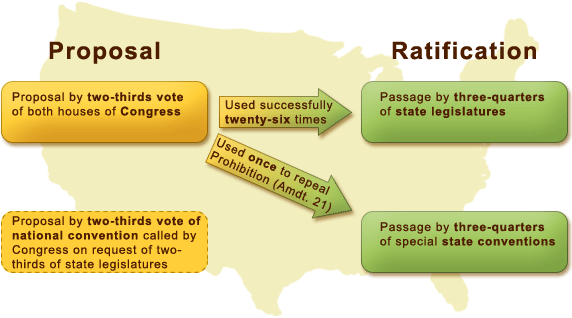
Other than that, the closest Congress has come recently to sending a proposed amendment to the states was the Flag Desecration Amendment, which would have allowed for states to punish people who burned the American flag, overturning two Supreme Court decisions stating that individuals have a free speech right to do so. The measure passed the two-thirds threshold in the House but fell one vote short in the Senate.
The New Yorker piece notes, with alarm, that the Republican Party is close to having control of two-thirds of the state legislatures, which could result in a constitutional amendment being offered via the second method above, something that, to the best of my knowledge, has never happened before. The article notes that while a constitutional convention would most likely be called only to propose a so-called Balanced Budget Amendment, things could move in a different direction once the delegates met:
The original Constitutional Convention was intended only to recommend changes to the Articles of Confederation, not to do away with them, but the delegates literally took the law into their own hands and drafted a new document. It’s easy to imagine that an Article V convention would find it difficult to limit its agenda to the technicalities of budget finance. Abortion, the most divisive social issue of the past forty years, has insinuated itself into nearly every discussion of nominees for the Supreme Court. Could a gathering intoxicated by the possibility of imposing permanent change resist the urge to achieve by amendment what decades of lobbying, protesting, and the cultivation of sympathetic judicial candidates could not? Similarly, as the battle over immigration has intensified, conservatives have toyed with the idea of ending birthright citizenship, currently guaranteed by the Fourteenth Amendment. The allure of bypassing legislative stalemate on that issue might also prove tempting.In the age of Trump, it is easy to conjure up images of American democracy as we know it seeking to exist (as anyone who has heard me discuss the constitution know, I don't believe this is a possibility). This article lays out a scenario for the dismantling of sacred rights. I suppose if Trump can be elected President, anything is possible.
12 May 2017
Investigating Trump
Stefan Kornelius had a great piece in the SZ yesterday about how President Trump is threatening the rule of law in America. Deep into the piece Kornelius writes:
As an aside, students in my Constitutional law class are getting a real time lesson in how the President can be investigated. Take a look at the slides again from last week to have a fuller understanding of what Kornelius means in the quoted paragraph above.
Sollte Trump die verwegene Idee verfolgt haben, mit dem Rauswurf die Russland-Ermittlungen beenden zu können, so hat er nun das Gegenteil erreicht. Selbst wenn der Kongress keinen Sonderermittler durchsetzen kann - das entsprechende Gesetz ist 1999 ausgelaufen, ohne erneuert worden zu sein -, so ist der Appetit an den Ermittlungen jetzt erst so richtig geweckt. Trump mag die Aufklärung verzögern, aber er kann nicht verhindern, dass seine allemal schwache Gefolgschaft im Kongress weiter schwindet und die dünne Mehrheit der Republikaner im Senat bröckelt. Amerika ist eine starke Demokratie, die auch ein Trump nicht so einfach ins Wanken bringen kann.This is exactly right. If it becomes obvious that Trump is trying to impede a legitimate investigation, Congress will act, even if it is controlled by Republicans. The Republicans might want to support Trump, but they also don't want to lose their seats when they are up for re-election in 2018. They will if they are seen to be aiding a President who is trying to obstruct justice.
As an aside, students in my Constitutional law class are getting a real time lesson in how the President can be investigated. Take a look at the slides again from last week to have a fuller understanding of what Kornelius means in the quoted paragraph above.
11 May 2017
Still Not A Constitutional Crisis, But Perhaps a Norms Crisis
The National Constitution Center followed up on the blog post I linked to yesterday with a another one entitled "Is the Comey firing causing a constitutional crisis?" They conclude that the answer is still no, at least not yet:
Noah Feldman has a piece at Bloomberg that also concludes the President's actions have not created a constitutional crisis but they do violate long-standing political norms:
The effect of the FBI director’s dismissal on the constitutional order, if there is to be any, probably depends upon whether the Constitution’s system of checks and balances will work again to take the nation through the disturbance. It was the genius of the Founders, especially James Madison, that saw ultimate stability in the contending forces of the government’s centers of power. . . .Like I mentioned in class yesterday, the ability to stop an out-of-control President most surely exits in the Constitution. The question is whether there will be the political will do so.
Noah Feldman has a piece at Bloomberg that also concludes the President's actions have not created a constitutional crisis but they do violate long-standing political norms:
It’s not a constitutional crisis. Technically, President Donald Trump was within his constitutional rights Tuesday when he fired FBI Director James Comey. The Federal Bureau of Investigation is part of the executive branch, not an independent agency. But the firing did violate a powerful unwritten norm: that the director serves a 10-year, nonrenewable term and is fired only for good cause.It should be noted that supporters of the President claim that he had good reason to fire the Director. But should it come out that the real reason for the firing was to stop an investigation into members of the President's inner circle or even into the President himself, I can almost guarantee that the constitutional controls that we discussed in class will kick in.
10 May 2017
The Firing of the FBI Director
Back in March a blog post on the National Constitution Center's blog "Constitution Daily" asked the question: "How independent is the FBI director and can he be removed from office?" Last night this theoretical question became reality as President Trump fired the FBI Director. The entire blog post is worth a read, but the short answer to the question is yes, the President can fire the FBI Director. The blog post explains:
Under the Constitution, the FBI Director is an executive branch official and can be removed if needed. But only in one instance since 1908, after the FBI and its predecessor agency were formed, has a President removed an FBI Director from office. In July 1993, President Bill Clinton dismissed William Sessions as FBI Director after allegations were made that Sessions used government resources for personal travel and that leadership conflicts existed within the Bureau. Attorney General Janet Reno recommended the dismissal.
03 May 2017
Showing Movie Not an Appealable Error
The Hollywood Reporter recently ran an article entitled "Appeals Court: Ben Affleck's 'The Town' Didn't Prejudice Bank Robbery Trial." At issue was whether showing the jury this movie improperly influenced it:
In her dissent, Judge Analisa Torres wrote: that the "goal of commercial cinema is to thrill and entertain," and that movie-making is a "manipulative art." She further contended that there was a high risk that a juror "might conflate fiction and reality is obvious," and she noted that while the issue had never been addressed by her court "other courts have expressed deep distress about such evidence’s impact on the jury."
The 2012 robbery of a Pay‐O‐Matic check‐cashing store in Queens, New York, which may have drawn inspiration from Ben Affleck's 2010 film, The Town, earned substantial attention from the 2nd Circuit Court of Appeals on Wednesday. Although judges on the circuit were at odds on whether clips from the movie should have been shown to jurors during the trial charging three men with the crime, the appeals court ultimately decides not to reverse their armed bank robbery convictions.The argument used by prosecutors was that the movie helped the defendants plan their heist. Lawyers for the defendants asked the judge to prohibit the movie from being shown, but the judged overruled their objection. This ruling on the movie amounted to grounds for appeal after the defendants were convicted. While this opened the door to an appeals hearing, it didn't, according the appeals court, amount to error that improperly prejudiced the jury.
In her dissent, Judge Analisa Torres wrote: that the "goal of commercial cinema is to thrill and entertain," and that movie-making is a "manipulative art." She further contended that there was a high risk that a juror "might conflate fiction and reality is obvious," and she noted that while the issue had never been addressed by her court "other courts have expressed deep distress about such evidence’s impact on the jury."
27 April 2017
What "Breaking Up" the 9th Circuit Means

The lines in the interview that really caught my attention are these:
"Absolutely, I have," Trump said of considering 9th Circuit breakup proposals during a far-ranging interview with the Washington Examiner at the White House. "There are many people that want to break up the 9th Circuit. It's outrageous."From reading this, I cannot help but think the President believes that breaking up the Ninth Circuit means he gets to fire the judges. Of course he does not. Instead, what breaking up the Court would mean is a few new geographical (or regional) circuits would be formed, and current judges from those regions would simply remain on the new appeals court for their region. Furthermore, there is nothing in the process of breaking up the circuit that would prevent the dreaded forum shopping that results in "semi-automatic" rulings.
"Everybody immediately runs to the 9th Circuit. And we have a big country. We have lots of other locations. But they immediately run to the 9th Circuit. Because they know that's like, semi-automatic," Trump said.
26 April 2017
Do we have a separation of powers problem?
The National Constitutional Center recently had a provocative post entitled "Does the separation of powers need a rewrite?" The gist of the article is that the standard used by the Supreme Court to judge whether the President has overstepped the power given to him by the Constitution is unclear and in need of a fine tuning. Students in my courses where we discuss executive power are encouraged to look over this article.
20 April 2017
The President Alone Cannot Overhaul American Immigration Policy
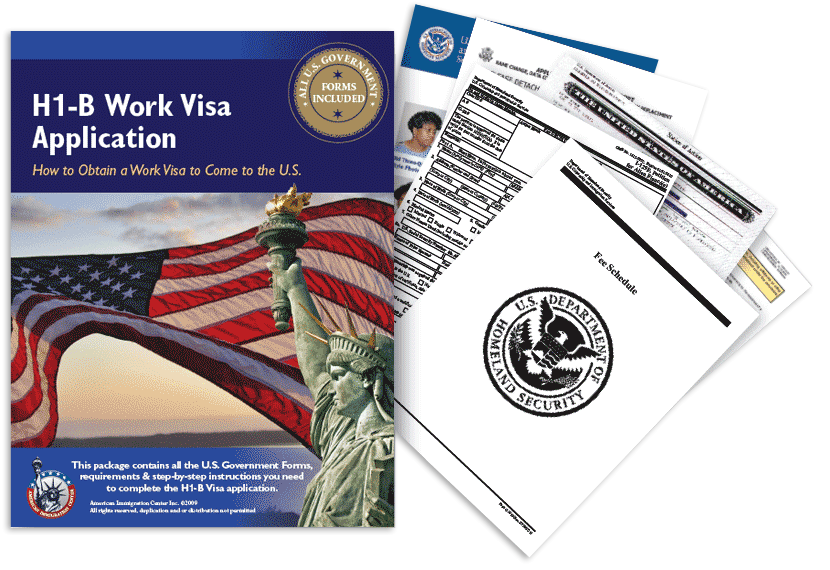
Just how is explained very nicely in the NY Mag piece:
In short, as head of the Executive Branch, President Trump is asking an executive branch agency to enforce existing rules more forcefully. He is not changing the law, he is simply asking that it be enforced differently!The order will direct the the departments of Labor, Justice, State, and Homeland Security to conduct reviews of the H-1B visa program and propose reforms. The Trump administration says current rules are going unenforced, and they want to see changes that ensure the visas are only going to “the most highly skilled workers.” According to the Washington Post, administration officials described various ways this could be accomplished: "The officials said reform could first come through administrative changes, such as raising the visa application fees, adjusting the wage scale to more accurately reflect prevailing salaries in the tech industry, and more vigorously enforcing violations. It could also change the lottery system to give foreigners with U.S. master’s degrees a leg up."
But as the article points out:
Signing an executive order lets Trump highlight his commitment to fulfilling his promise to protect American workers, but he can’t do a thorough overhaul of the program on his own. Changing certain fundamental elements, like how many visas are awarded each year, requires action from Congress.This illustrates very nicely the point I was trying to make in class: the President can change how a law is enforced, but he cannot change the law itself. Only the Legislative Branch can do that.
19 April 2017
Five Myths About the Start of the Revolutionary War
The National Constitution Center posted yesterday five myths about the start of the Revolutionary War. A good read for history buffs.
18 April 2017
Executive Branch Appointments

As the National Constitution Center (NCC) points out:
The Constitution, in Article II, Section 2, says that the President “shall nominate, and by and with the Advice and Consent of the Senate, shall appoint Ambassadors, other public Ministers and Consuls, Judges of the Supreme Court, and all other Officers of the United States, whose Appointments are not herein otherwise provided for.”The Appointments Clause allows the President to make nominations for appointed positions like cabinet officers, but the Senate controls the process, including the rules that allow a nomination vote to get to the full Senate floor.Read the rest of the NCC post to learn more about this process.
Subscribe to:
Posts (Atom)