Remarks and observations concerning American law and cultural studies as it relates to courses taken by students in the University of Osnabrück's and University of Münster's foreign law programs.
Matt LeMieux
04 January 2014
Federal Courts Divided Over NSA Spy Program
In Germany, the Basic Law allows for individuals to apply directly to the Constitutional Court if they believe state actors have violated one of their constitutional rights. This centralized form of judicial review has the advantage of avoiding the problem raised by the title of this post: namely two lower courts applying the constitution to similar facts in a different manner.
In the United States, on the other, where the constitution does not explicitly call for the creation of a constitutional court, questions concerning whether one's constitutional rights have been violated by state actors are answered by lower federal courts. The result, as is often the case, is a similar set facts can come before two different courts, and these courts can come to polar opposite conclusions.
Andrew Cohen's recent article in The Atlantic entitled "Is the NSA's Spying Constitutional? It Depends Which Judge You Ask" highlights how a decentralized system of judicial review can be messy at times. Of course, both the lower court decisions to which Cohen is alluding will be appealed, and eventually an important question of constitutional law like this one will be heard by the nation's highest court, the U.S. Supreme Court, so even in a decentralized system of judicial review, important questions of constitutional law are eventually settled.
For more on these NSA cases see Cohen's interview on PBS news and this article in the Süddeutsche Zeitung.
06 December 2013
Another English Judge Questions Legitimacy of ECHR Rulings
Declaring that Strasbourg "is not superior to our supreme court" in London, Lord Judge, who retired in October, said parliamentary sovereignty should not be exported to "a foreign court".
He is the third senior judicial figure in recent weeks to warn about the dangers of an emerging "democratic deficit" if the ECHR continues to evolve into in effect a law-making body and forces the UK government to give prisoners the vote against parliament's expressed will.
03 December 2013
U.S. Federal Appeals Process
Previously, a three-judge panel of the appeals court struck down the ban on political advertising but upheld the ban on for-profit advertising. But the federal government sought a rehearing in front of the full panel of judges.This is an excellent example of an en banc hearing before a federal court of appeals, although the phrase "en banc" appears no where in the article. Remember, when one loses in the appeals court, one has two further options for appeal, either file a request with the Supreme Court (the normal route) or ask the full bench of the appeals court to review the ruling made by the three judge appellate panel. That is what happened here.
As an aside, being granted either form of appeal is extremely rare.
02 December 2013
What is the D.C. Circuit?
While I do mention that there are two other Courts of Appeal in addition to the 11 regional appeals courts, I really do a disservice to the D.C. Court of Appeals by not talking more about it. This court is arguably the second most important court in the federal court system for the reasons set forth in an excellent Q&A put together by The Blog of the Legal Times. Students interested in obtaining a deeper knowledge of the U.S. federal court system should give this a read.
29 November 2013
English Judge Questions Supremacy of Human Rights Court
Laws, the longest-serving lord justice of appeal, questioned an important principle laid down nearly 10 years ago by Lord Bingham, who was then senior law lord.
In a case called Ullah, Bingham had said that the correct interpretation of the convention could be authoritatively expounded only by the human rights court in Strasbourg. "The meaning of the convention should be uniform throughout the states [that are] party to it," Bingham added.
But Laws disagreed. "There may perfectly properly be different answers to some human rights issues in different states on different facts. I think the Strasbourg court should recognise this."The remainder of the article is worth the read.
25 November 2013
Since at least 1985, the American Bar Association’s Section on Legal Education has published annual statistics about the rates of enrollment at American law schools, the costs of attendance, and the eventual employment of law graduates. Looking at how these numbers have changed since the financial crisis of 2008, one thing is clear: Law schools are doing quite well for themselves. Tuition at private law schools has steadily increased, climbing from a mean of $34,298 in 2008 to a mean of $40,634 today – an increase that, by my calculations, outpaces inflation by about $3,000.The remainder of the articles goes on to describe American law schools as being " toxic and hyper-capitalist," and in the long run a bad investment. It is a long read, but perhaps the contrast between the author's view of U.S. law schools and your own experience here in Germany might be of interest to you.
20 November 2013
When You Don't Want the Supreme Court Take Your Case
18 November 2013
Taking A Case to the U.S. Supreme Court
14 November 2013
German Asylum Case Headed to Supreme Court?
In April 2013, a three-judge panel of the Sixth Circuit Court of Appeals sustained the Obama administration’s revocation of asylum granted to the family in 2010.After losing the Court of Appeals, the normal route is to request a hearing before the U.S. Supreme Court. As students will recall, a hearing before the highest court is not a matter of right. Instead, the Court grants permission to only those cases it wishes to hear. It takes four of the nine Justices to agree to hear the case in order for it to reach the Court, and of the thousands of requests that the Court receives each year, usually only around 75 are heard.
The original immigration judge, Lawrence O. Burman, granted the Romeike family asylum on January 26, 2010, under the Federal Immigration and Naturalization Act (INA) because Germany’s national policy of suppressing homeschooling violated their religious faith and because German authorities were improperly motivated to suppress homeschoolers as a social group.
In its ruling against the Romeikes, the Sixth Circuit rejected the judge’s findings, stating that Germany’s harsh treatment of homeschoolers did not amount to persecution, and that the German authorities were not motivated by an improper purpose.
11 November 2013
Court TV Revisted
The Origin of Judical Lifetime Appointments in the United States
07 November 2013
Reigning in lower court judges
04 November 2013
Time for a Change?
29 October 2013
The Infamous McDonalds Coffee Case
Perhaps one of the most misunderstand stories of the American legal system and American legal culture.
28 October 2013
Quid Pro Quo?
19 October 2013
The Impact of European Law on England
15 October 2013
Getting Before the Supreme Court
02 July 2013
New Rule: You Must Be a Lawyer to Argue a Case in the Supreme Court
12 June 2013
Why Electing Judges is a Bad Idea
11 June 2013
The Supreme Court's troubling past
Korematsu case. Students in my Constitutional Law course might want to take a look at this piece as it relates to what we will be discussing on Thursday.
21 May 2013
Original Jurisdiction
If you are reading the words "original jurisdiction" and asking yourself what that means, it is time to go back and review your class notes.
14 May 2013
Jury Nullification in Action
13 May 2013
More on the UK Supreme Court
This introductory film is primarily aimed at GSCE/Standard Grade students and explores the role and the workings of the Supreme Court, the only court with UK-wide jurisdiction and the highest court in the land. It explains its relationship to the Judicial Committee of the Privy Council, the highest court for British Overseas Territories and a number of Commonwealth countries.
08 May 2013
The Right Jury Size
Isn’t a verdict in a criminal trial supposed to be unanimous? The answer is yes in 48 states and yes if the case is tried in a federal court. But two states, Oregon and Louisiana, allow convictions by a non-unanimous vote. In both states, the threshold in non-capital cases is 10 to 2.* Arguably, Herrera had to go to jail for the crime of living in Oregon.
The Supreme Court has allowed this conflict between federal and state law (as well as between state law and conventional wisdom) to persist for more than 40 years, during which time it has come up with a mishmash of seemingly arbitrary rules about what constitutes a legal trial. A jury of six, the Supreme Court has decided, is constitutional (Williams v. Florida, 1970). A jury of five, however, is not constitutional (Ballew v. Georgia, 1978). In a jury of six, conviction must be unanimous (Burch v. Louisiana, 1979). But in a jury of 12, conviction does not have to be unanimous (Johnson v. Louisiana and Apodaca v. Oregon, 1972). (At the time of these decisions, Louisiana required a 9-to-3 vote to convict in non.capital cases, which the court upheld as constitutional. The state has since changed its threshold to 10 to 2.)
06 May 2013
Learing to love Jury Duty
A jury summons is an invitation to participation. Jurors are asked to involve themselves in some of the most personal, sensational, and terrifying events in a community. It is real life, usually real tragedy, played out in court. Jurors confront disturbing facts, bloody images, or heart-wrenching testimony. A jury may have to decide whether a man lives or dies, or whether a multimillion-dollar company goes bankrupt. A jury will have to pass judgment in a way that will have real-world effects on both parties before the court. This active role was not accidental. Participation in jury service teaches the skills required for democratic self-government. Being a juror lets you develop the habits and skills of citizenship.
29 April 2013
The "Informal" UK Supreme Court
28 April 2013
Listening to the Supreme Court
20 April 2013
Agency Alphabet Soup
10 April 2013
A Lawyer Shortage in America?
But there appears to be a lawyer shortage in some parts of America. The New York recently ran an interesting article about a remote parts of Nebraska and South Dakota where no lawyer can be found for more then a 100 mile radius. The situation is so desperate that the State of South Dakota recently passed a law offering subsidies to those lawyers willing to move these remote parts of the state.
Shakespare famously wrote "the first thing we do, let's kill all the lawyers." But in South Dakota they are looking to kill, rather they are looking subsidize their existence!
01 February 2013
Law School Applications Drop in U.S.
- applications have dropped 38% from where they were in 2010.
- the average public law school graduate left school with over $75,000 in debt from tuition costs.
- the law profession is bloated and there are no jobs to be had.
17 January 2013
Floating Home or Residential Boat?
Just this week the U.S. Supreme Court had a similar issue before it involving a house boat. The question was whether the vessel should be considered a residence or a boat. The characterization of the vessel obviously would lead the Court in two different directions (otherwise the case would not have made this far in the system), and it was up to the Court to determine whether this was a boat or a home.
The Washington Post has more on this case.
14 January 2013
Political Judges
10 January 2013
Precedent at Work
The L.A. Times nicely sums the case up so:
The ruling came in a lawsuit by Smriti Nalwa, who fractured her wrist in 2005 while riding in a bumper car with her 9-year-old son and being involved in a head-on collision. Rosenberg said Great America had told ride operators not to allow head-on collisions, but failed to ask patrons to avoid them.The legal doctrine at issue is the common law (i.e. judge made) principle of assumption of risk, whereby someone who undertakes an activity knowing of the risks involved cannot later sue the person who organized or oversaw the activity. Up to this point, California courts had apparently limited the use of the doctrine to risky sports, but in this case they drew an analogy between risky sports and risky amusement park rides and found them to be sufficiently similar to allow for an extension of the doctrine.
The court said Nalwa's injury was caused by a collision with another bumper car, a normal part of the ride. To reduce all risk of injury, the ride would have to be scrapped or completely reconfigured, the court said.
"A small degree of risk inevitably accompanies the thrill of speeding through curves and loops, defying gravity or, in bumper cars, engaging in the mock violence of low-speed collisions," Justice Kathryn Mickle Werdegar wrote for the majority. "Those who voluntarily join in these activities also voluntarily take on their minor inherent risks."
Monday's decision extended a legal doctrine that has limited liability for risky sports, such as football, to now include recreational activities.
08 January 2013
The Right to Bear Arms
In the wake of the tragic events that unfolded last month in a Connecticut elementary school, the German press has highlighted the gun culture in America and how the U.S. Constitution seemly makes it quite difficult to put limitations on this culture. At issue, of course, is the Second Amendment to the U..S. Constitution, which states:A well regulated Militia, being necessary to the security of a free State, the right of the people to keep and bear Arms, shall not be infringed.The meaning of this awkwardly written sentence has been argued from the halls of academia to the chambers of the U.S. Supreme Court. And the arguments appear to be more about grammar and punctuation then anything else, as a recent post at the University of Pennsylvania's "Language Log" reminds us.
This post is a must read for anyone who is interested in the debate about how the Second Amendment can be interpreted and the role that language plays in this debate.
19 December 2012
The Two Headed Supreme Court
18 December 2012
Gun Control in America
17 December 2012
More on Judicial Recusal
13 December 2012
The Politics of Appointing Judges
10 December 2012
Too Hard to Change?
06 December 2012
Recusal
During each Supreme Court term, there typically are a handful of cases in which justices recuse themselves. Members of the court make those decisions based on a federal statute, court rules and personal judgment.
In its "Statement of Recusal Policy," the court spells out situations where a justice must bow out. These include cases in which a relative of a justice has appeared as a lawyer or a justice has a financial interest in the outcome. At the same time, the guidelines caution that members of the court should not go beyond the required recusals.
05 December 2012
Finding A Lawyer
22 November 2012
Green Rush
The election in the United States a few weeks ago was about much more than just who would be the next President. Voters in many states were faced with important, ground breaking and controversial ballot initiatives. For the first time in U.S. history voters in two states decided to recognize same gender marriage. Up to now, these marriages were recognized in a handful of states either by courts or statute.
But perhaps even more surprisingly, voters in two states decided to legalize the possession of small amounts of marijuana. While the coffee house culture in Holland might be dying, it has perhaps found a new home in the states of Washington and Colorado.
The video above from Reuters and the SZ explains. One thing of particular note is the discussion near the end about what the federal government might do about these new state laws. State pot laws offer perhaps the best example of how confusing American federalism can be. More on that next semesters, at least for students in their 3rd semester of Uni Osnbrück's FFA.
20 November 2012
The Price of Electing Judges
This year’s round of state judicial elections broke previous records for the amounts spent on judicial campaigns around the country. The dominant role played by special-interest money — including money from super PACs financed by undisclosed donors — has severely weakened the principle of fair and impartial courts.The editorial goes on by citing Florida and my home state of Michigan as extreme of examples of campaign spending on judicial elections gone out of control.
04 November 2012
What Happens in the Event of A Tie
02 November 2012
The Role of Campaign Contributions in American Politics
31 October 2012
Much More Than the Presidency is at Stake
More importantly, as the SZ points out, who controls the Senate may also determine what the next President can accomplish:
"Zurzeit sind fünf Szenarien denkbar, die zeigen, wie unterschiedlich groß der mögliche Spielraum für Obama und Romney trotz eines Sieges sein kann. (see here for the five scenarios)"
How We Pick Our Judges: Missouri Style
Under an alternative plan that will be on the ballot next Tuesday, the Supreme Court judge would be replaced with a forth gubernatorial appointee. But the fiercest critics of the judicial nomination system in Missouri are not endorsing this alternative plan, instead continuing their push for open and contested elections for all judges.
“The issue is very important,” said Gary Harris of the advocacy group Better Courts for Missouri. “Everyone wants access to fair and impartial courts and everyone wants judges who are impartial.”
A question for students to ponder. If the goal is indeed fair and impartial courts, is a push for elected judges really the answer?
23 October 2012
All About the Swing States
16 October 2012
Everything You Need to Know About Presidential Debate History
26 June 2012
Engel v. Vitale at 50
19 June 2012
When Government Breaches for Non-Payment
Apparently Congress has created something called a "Judgment Fund" to cover costs related to court judgments issued against it. The Court determined that when the government breaches a contract, it must dip into this fund to make good on the promises it made under the contract.
Why? Lyle Denniston at SCOTUS blog sums up the Court's rationale nicely:
In stressing that the government must live up to what it promises its contracting partners, the Court majority said that this would actually benefit the government’s overall contracting operations, because more partners will be willing to join in contracts with the government if they know that the government has to meet whatever obligations it commits itself to satisfy. Those who would enter a contract without such an assurance, the Court added, are likely to insist that the government pay a premium to “account for the risk of nonpayment.”
18 June 2012
The Court is an Issue
15 June 2012
No One is Popular
14 June 2012
Time for a Fix?
Last week, U.S. Supreme Court reporter Linda Greenhouse weighed in on the question of whether there should be term-limits, like those that exist for member of the Bundesverfassungsgericht, for members of the U.S. Supreme Court. It is an interesting, and yes short read. Check it out.
As an aside, the Slate series was inspired by the new comedic book by Kevin Bleyer, a writer for the very popular fake news program The Daily Show entitled Me the People.
12 June 2012
Not Again
05 June 2012
Election Time is Fast Approaching
30 May 2012
Supreme Court declines to hear 'So help me God' lawsuit
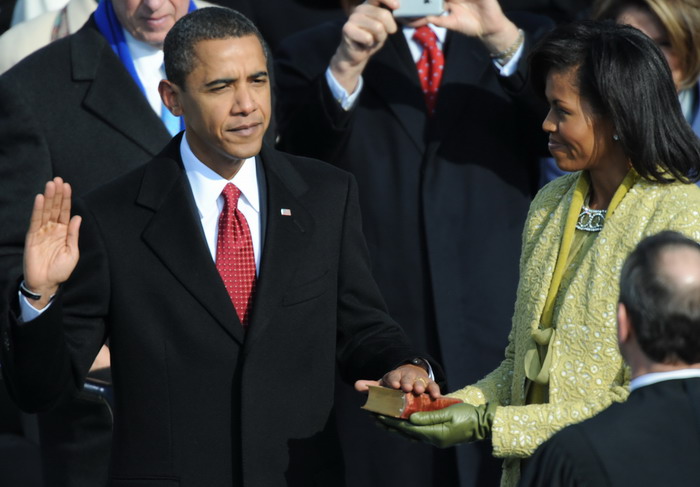
But if there really is this wall separating church and state in America, why are references to God seemingly everywhere: on money, in the national motto, in the pledge of allegiance, said by the President after almost every televised speech, as so on. Recently the U.S. Supreme Court was asked to consider the same question in the context of an Establishment Clause challenge to the taking of the Presidential oath whereby the Chief Justice finishes the oath by asking the soon-to-be President to repeat "so help me God."
21 May 2012
Time for a Change?
2010 candidates for the Michigan Supreme Court raised a total of $2.6 million. The political parties and state-based interest groups reported spending another $2.5 million. But data collected from the public files of state television broadcasters and cable systems showed that an additional $6.3 million was spent by the political parties and interest groups.Among the ideas suggested: scrap elections of judges!
16 May 2012
Do Away With Life Tenure?
15 May 2012
The Electoral College
Just in case my explanation of the way Americans choose their President was not clear, the Economist magazine has a very clear and concise one. The wonderful British accent of the narrator perhaps makes this explanation much more enjoyable to listen to than the one I provided in class.
11 May 2012
Jury Nullification. Unlawful?
But would happen if a private citizen tried to inform potential jurors of this right on their way into the courthouse? Could that be considered tampering with the judicial system? Illegal? It should be, argued New York prosecutors in a case they brought against an 80 year old retired professor who stood outside courthouses and distributed information to people about jury nullification. See here for the result.
04 May 2012
The Veepstakes
But my real point here is not rehash what we learned in class, but to direct you to an in-depth article in Die Zeit about the current speculation as to who GOP presidential nominee Mitt Romney will select as his running mate. The article goes into why this choice may be important, and gives examples of how a bad choice can hurt the presidential candidate. A good, albeit long, read. At least its in German.
02 May 2012
Kiffen gegen die Staatskrise
Students in any of my courses where we have discussed the American version of federalism should immediately know why this law is of interest to us. Students currently in my American Constitutional Law course will learn why next week. Either way, anyone interested in learning more about California's somewhat controversial law should take a look at the article in Die Zeit.
19 April 2012
Tweeting in the Courtroom
The judge in the Illinois case fears that feverish tweeting on smartphones could distract jurors and witnesses when testimony begins April 23.
"Tweeting takes away from the dignity of a courtroom," said Irv Miller, media liaison for Cook County Judge Charles Burns. "The judge doesn't want the trial to turn into a circus."Burns is allowing reporters to bring cellphones and to send e-mails periodically, a notable concession in a state that has only recently announced it will begin experimenting with cameras in court and where cellphones are often barred from courtrooms altogether.There's also an overflow courtroom where reporters can tweet freely. But there will be no audio or video of proceedings in the room, just live transcripts scrolling across a screen.The issue extends beyond journalists to jurors, whose tweets have raised issues of their own across the country.Last year, the Arkansas Supreme Court threw out a death row inmate's murder conviction after one juror tweeted during proceedings and another slept. Juror Randy Franco's tweets ranged from the philosophical to the mundane. One read, "The coffee sucks here." Less than an hour before the jury returned with a verdict, he tweeted, "It's all over."
11 January 2012
Using Google to Choose a Jury

The selection of a jury in the United States can be a complicated matter. In fact, it can at times look like a game. As more and more Americans make information about themselves available via social networks and the like, it was bound to happen sooner or later that clever lawyers would start conducting Google searches on prospective jurors. But is it OK for lawyers to google jurors during jury selection? Recently a New Jersey court answered the question affirmatively.
08 January 2012
Stille Nacht an Currywurst mit Grünkohl

I forgot to post this link to an article that Die Zeit ran before Christmas about the revival of interest in German culture among Americans. Since then I have read a few more articles in Die Zeit along the same lines. Anyway, my students studying American law may find this short article to be a nice diversion.
07 January 2012
Is A Disgraced Reporter Morally Fit to be A Lawyer?
07 December 2011
TV's in the Courtroom
20 November 2011
What They Don't Teach in Law Schools: Lawyering
14 November 2011
How Powerful is the Federal Government?
08 November 2011
Juries in the Age of Facebook
The article goes on to discuss issues like jurors using Google Street View to visit the scene of a crime, something they are physically prohibited from doing, but virtually? It gives an example of a murder conviction being overturned because a juror consulted Wikipedia as part of the deliberation process. The questions raised in this article are numerous and important!Judges have long instructed jurors not to talk about their jury service with anyone, including fellow jurors, and to avoid reading newspaper stories about trials. The fear is that jurors might develop a bias from information that's not been admitted in court. The right to an impartial jury is one of the principles of the American justice system.
But that right is threatened in a digital age when people post personal thoughts onto the Internet, whether on a blog or social networking sites such as Facebook and Twitter. It's also become second nature to satisfy curiosities by searching for immediate answers on the Internet.
05 November 2011
Too Much Independence?

The main purpose of the 2005 constitutional reforms in the United Kingdom, which created a new Supreme Court, was to increase the independence of the judiciary. But now some three years into this constitutional experiment, some are questioning whether the Court has become too independent. The Guardian has more.
18 June 2011
Finding a Rational Basis to Prohibit Gay Marriage
11 June 2011
When Will They Learn?

Hardly month goes by without the news reporting some case of a person being arrested and charged with a crime for swearing in public. Time and time again the courts throw these cases out on the basis of the First Amendment's free speech protection. It makes me wonder whether prosecutors have ever read the Constitution. This recent case out of Arizona is a nice example.
10 June 2011
Judicial Review Under Review
09 June 2011
Can Private Parties Enforce Federal Regulations?
A federal judge on Tuesday permitted two environmental groups to sue a Texas refinery owned by ExxonMobil Corp. [corporate website] for failing to enforce federal environmental standards. The Sierra Club and Environment Texas [advocacy websites] filed the lawsuit [Reuters report] in December in the US District Court for the Southern District of Texas [official website] against ExxonMobil's Baytown, Texas, refinery and the adjacent chemical plant for allegedly releasing over 8 million pounds of pollutants beyond the levels permitted under the CAA in the last five years. The Clean Air Act (CAA) [materials] contains a provision permitting private individuals to seek enforcement of federal pollution laws when the US Environmental Protection Agency (EPA) [official website] fails to do so.you can read the rest here.
30 May 2011
Senate Vote Thresholds
Votes need to conduct business (quorum) - a majority of seats currently filled by elected, living members.
Votes to pass a bill - a majority of members present for the vote.
Votes needed to end a filibuster (Cloture Vote) - 3/5 of the full Senate, i.e. of seats not vacant. Remember, the filibuster only exists in the Senate.
Votes needed to confirm a Presidential Appointee - majority of members present for the vote. Remember, only the Senate as confirmation power.
Votes needed to ratify a treaty - 2/3 of Senators present. Remember, only the Senate has ratification power.
Votes needed to convict and remove - 2/3 of Senators present. Remember, the House, by a simple majority, begins this process by impeaching the person.
Votes needed to override a veto - 2/3 of Senators present (House of Representatives are also needed).
Votes needed to propose an Amendment to the Constitution - 2/3 of member present. (House must also vote).
18 May 2011
How Important Are Oral Arguments

Students in my Conversation and Presentation Skills for Lawyers course just finished a moot court exercise. For those of you not familiar with mooting, the exercise is essentially modeled on an appellate court proceeding. As I point out to students, these oral arguments in real life give appellate judges the opportunity to ask questions they may have on points of law, but more specifically it gives judges the opportunity to think about how their decision might impact future cases. As I like to point out to students, many of the questions asked by Supreme Court Justices during oral arguments are hypothetical in nature for the very reason that they are struggling with trying to determine how a particular rule they develop could be used in the future. But how important are these oral arguments? After all, both parties submit detailed legal briefs outlining their legal arguments. One sitting Supreme Court Justice, Clarence Thomas, has famously not asked a question during oral arguments for several years now. His position, apparently, is that these oral arguments aren't worth very much. Now it appears that at least one other Justice feels the same way.
17 May 2011
Our Aging Judiciary

Is giving judges lifetime appointments a good idea? Not really according to this recent piece in Slate Magazine.
09 May 2011
Under the U.S. Supreme Court: The president makes war in Libya
08 May 2011
Jury Selection
Experts say trials are won and lost in jury selection.The rest of the story and the video are worth your time if you are interested in getting a better look at jury selection in high profile cases.This is why an entire jury-consulting industry is devoted to reading the body language of would-be jurors, profiling them based on personal characteristics and learning as much as possible about these individuals to sift out the "dangerous jurors."
28 April 2011
The Rise of the States

To fully understand the constitutional argument surrounding President Obama's attempt to provide health care to all Americans, one must also understand how federalism works in the United States. The struggle for power between the states and the federal government has been a part of the political debate in the U.S. since its founding. And even today the States are looking for ways to increase their power, including this proposal to amend the U.S. Constitution in a way that would allow the States to veto federal law.
25 January 2011
Biden Called to Serve
19 January 2011
More on Racial Preferences
14 January 2011
Courts of Appeals in the States
So here is a quick quiz. How many states do NOT have a court appeals in their judicial system?Students in my introduction to common law courses are by now familiar with the basic structure of court systems in the United States: trial court, appeals court, supreme court. As I mentioned, many states deviate from this basic structure in one way or another. For instance, the highest court in New York is not called Supreme Court but Court of Appeals, while one of the lower courts is called Supreme Court. A bit confusing. Wikipedia has collected a few more differences that exist between state court systems.
But a more substantial deviation from this basic structure is the absence of a Court of Appeals. In these states one finds a trial court and a Supreme Court with nothing in between. In some of these states losers in the trial court have the right to have their appeal heard by the Supreme Court!
The Las Vegas Sun recently published an editorial urging the Nevada Legislature to create a Court of Appeals in Nevada. Because Nevada is a state where one has an appeal as of right to the Supreme Court, the system is inefficient with a bottleneck of cases at the top of the pyramid, at least so argues the Sun.
So back to my question. How many states do not have an intermediate court? The answer: 10! Wow. More on the various differences between the state systems regarding appeals can be found here.
07 January 2011
A Split in the Courts
A recent California Supreme Court decision says police do not need search warrants to examine the cellphones of those under arrest. But local judges and a deputy chief for the Dallas Police Department say officers should obtain warrants before reading the contents of cellphones. . . . "The safer way would be to get a warrant until the [Texas] Court of Criminal Appeals rules or the [U.S.] Supreme Court rules," said Adams, presiding judge for the felony courts.Indeed. A case in California has no binding effect on courts in Texas. Only the U.S. Supreme and top court in Texas, in this case the criminal court of appeals, can create binding precedent that lower Texas courts must follow.
23 December 2010
The House Over Time
22 December 2010
Census Numbers Are In

In each of my courses, at some point or another, we touch upon how the membership of House of Representative is apportioned, and reapportioned every ten years. As students in my courses this semester have heard me say a number of times, this year reapportionment will once again take place because the United States just completed its census. Well, the numbers are in. Politico has more about which states were the winners and which the losers when it comes to membership in the House.
21 December 2010
Tweeting from the Jury Box
Reuters recently had an interesting article on the impact social media is having on juries. The article begins:The explosion of blogging, tweeting and other online diversions has reached into U.S. jury boxes, raising serious questions about juror impartiality and the ability of judges to control courtrooms.The article not only explains how this new media is threatening fairness in jury trials, but also provides numerous examples of instances where a judge ordered a NEW TRIAL because of a juror's online conduct during the trial.
18 December 2010
Advise and Obstruct
09 December 2010
A very rare event
The US House of Representatives [official website] voted unanimously [JURIST report] in March to impeach Porteous. After an investigation [report text, PDF] by a special committee, the Judicial Conference found "substantial evidence" that Porteous had signed false financial disclosure forms, falsified statements in a personal bankruptcy proceeding, made false representations to secure a bank loan and violated criminal laws [text] and ethical rules by soliciting and receiving "cash and other things of value" from lawyers in a bench trial over which he was presiding. Porteous' decision in that case, In re Liljeberg enters v. Lifemark Hospitals, was later partially reversed [opinion text] by the Fifth Circuit, which earlier this year reprimanded Porteous [text, PDF]. A House committee began investigating Porteous [JURIST report] in 2008.'>Senate votes to remove federal judge from bench
28 November 2010
Originalism

How one should interpret the U.S. Constitution is a hotly debated topic in the United States. At the heart of this debate is whether the Constitution should be interpreted in a manner consistent with how the founders back in the 1780s would have interpreted it, or whether the Constitution should be interpreted to reflect changes in modern society. This idea of looking back 230 years to find the proper interpretation of the Constitution is called originalism. Prof. Lawrence Solum has an excellent primer on what originalism is and what all the hubbub is about.
27 November 2010
Cameras in Courtrooms

Should hearings before a high court be televised? American academics, jurists and members of the media have been discussing this for several years now. The Brits have actually said yes to this question, and have allowed their new Supreme Court to hold hearings before the camera since last year. And now the head of the German Constitutional Court has entered the fray (see Spiegel's "Voßkuhle will Fernsehkameras im Gericht zulassen").
04 November 2010
Gone
03 November 2010
The Passive Voice
I came across a short, concise description of how the passive voice is used, and not used, in English. I have to admit that I found it while trying to understand how the passive voice is used in German, something with which I am still struggling.
01 November 2010
More on Electing Judges
29 October 2010
Electing Judges
Richard Hansen and Dalia Lithwick over at Slate write:
If you're a fan of The Exorcist and Carrie, if you like sex and violence and ominous music, you've come to the right place. Because we have gathered some of the most spine-chilling Halloween footage you will ever see—all produced in an effort to influence state judicial elections.Be sure to take quick look at some of these campaign ads for judges.