Since at least 1985, the American Bar Association’s Section on Legal Education has published annual statistics about the rates of enrollment at American law schools, the costs of attendance, and the eventual employment of law graduates. Looking at how these numbers have changed since the financial crisis of 2008, one thing is clear: Law schools are doing quite well for themselves. Tuition at private law schools has steadily increased, climbing from a mean of $34,298 in 2008 to a mean of $40,634 today – an increase that, by my calculations, outpaces inflation by about $3,000.The remainder of the articles goes on to describe American law schools as being " toxic and hyper-capitalist," and in the long run a bad investment. It is a long read, but perhaps the contrast between the author's view of U.S. law schools and your own experience here in Germany might be of interest to you.
25 November 2013
Salon.com has an incredible take down of the American legal education system:

20 November 2013
When You Don't Want the Supreme Court Take Your Case
We sometimes forget that one of the two parties whose case is being petitioned to the U.S. Supreme Court actually would rather the Court not take their case. Of course this is because one of the parties won in the Court of Appeals. The Washington Post has some recent examples of this desire to have your case rejected.
18 November 2013
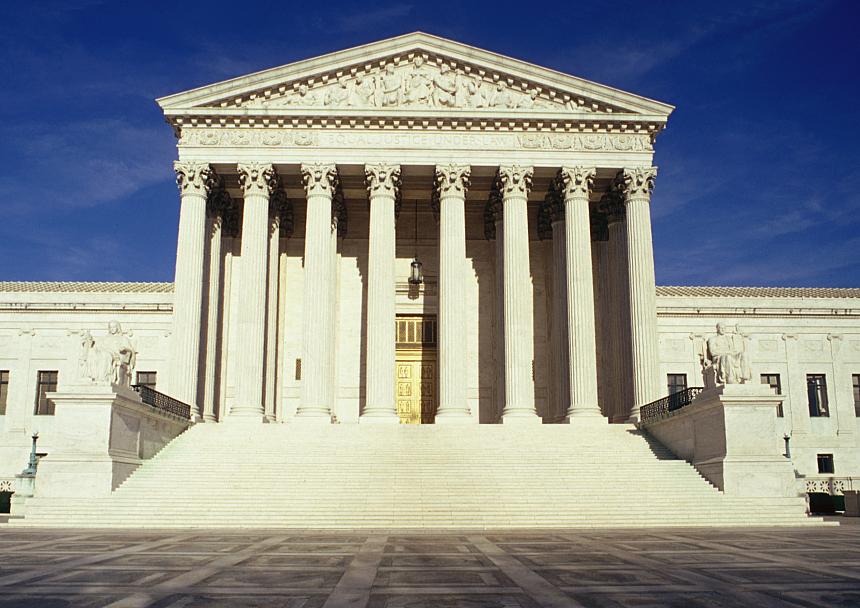
Taking A Case to the U.S. Supreme Court
14 November 2013
German Asylum Case Headed to Supreme Court?
A recent press release from the Home School Legal Defense Association (HSLDA) gives us the details of this unique case that might be headed to the United States Supreme Court:
In April 2013, a three-judge panel of the Sixth Circuit Court of Appeals sustained the Obama administration’s revocation of asylum granted to the family in 2010.After losing the Court of Appeals, the normal route is to request a hearing before the U.S. Supreme Court. As students will recall, a hearing before the highest court is not a matter of right. Instead, the Court grants permission to only those cases it wishes to hear. It takes four of the nine Justices to agree to hear the case in order for it to reach the Court, and of the thousands of requests that the Court receives each year, usually only around 75 are heard.
The original immigration judge, Lawrence O. Burman, granted the Romeike family asylum on January 26, 2010, under the Federal Immigration and Naturalization Act (INA) because Germany’s national policy of suppressing homeschooling violated their religious faith and because German authorities were improperly motivated to suppress homeschoolers as a social group.
In its ruling against the Romeikes, the Sixth Circuit rejected the judge’s findings, stating that Germany’s harsh treatment of homeschoolers did not amount to persecution, and that the German authorities were not motivated by an improper purpose.
11 November 2013
Court TV Revisted

The Origin of Judical Lifetime Appointments in the United States
A quick reading of the U.S. Constitution might leave one puzzled as to how long federal court judges are allowed to serve. No where in the document does it specifically say that federal judges are lifetime appointments. Instead, the Constitution mysteriously says that judges shall serve "during good behavior." Lyle Denniston, veteran Supreme Court watcher, explains how this phrase came to mean lifetime appointment.
07 November 2013
Reigning in lower court judges
Judges in the federal courts system of the United States must abide by a judicial code of conduct, and when they deviate from that code, they can be removed from a case, as one U.S. District Court Judge recently found out.
04 November 2013
Time for a Change?

29 October 2013
The Infamous McDonalds Coffee Case
Perhaps one of the most misunderstand stories of the American legal system and American legal culture.
28 October 2013
Quid Pro Quo?

19 October 2013
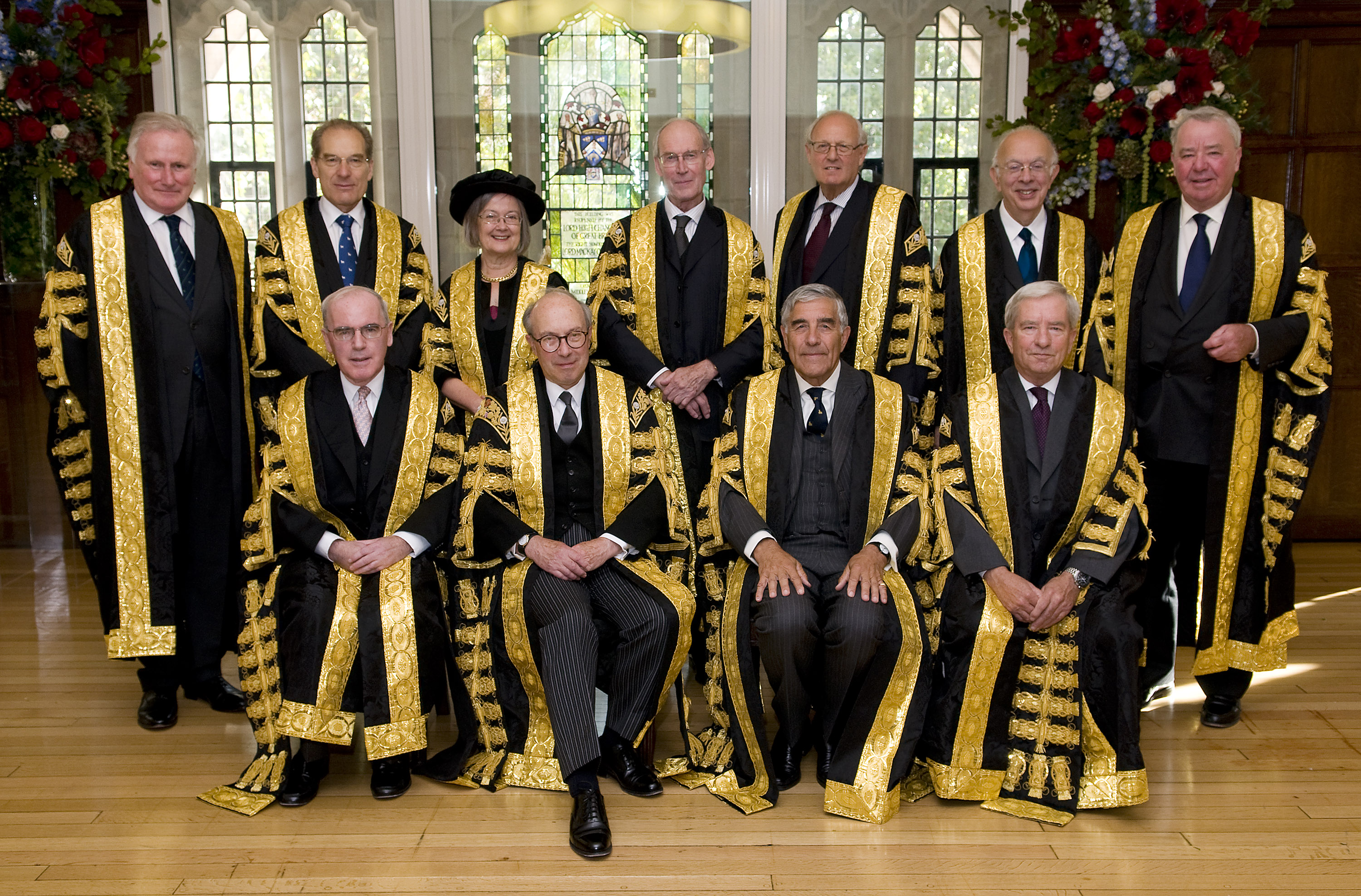
The Impact of European Law on England
15 October 2013
Getting Before the Supreme Court
Having your case heard before the United States Supreme Court is no easy task. In fact, as this USA Today article points out, its down right almost impossible.
02 July 2013
New Rule: You Must Be a Lawyer to Argue a Case in the Supreme Court
This seems like stating the obvious, but up until recently, there was nothing prohibiting non-lawyers from arguing cases before the U.S. Supreme Court. While this hasn't happened in over 30 years, technically non-lawyers could argue cases brought on their own behalf before the Court. Until now. The AP has more.
12 June 2013
Why Electing Judges is a Bad Idea

11 June 2013
The Supreme Court's troubling past
The Washington Post's George Will recently devoted one of his columns to the
Korematsu case. Students in my Constitutional Law course might want to take a look at this piece as it relates to what we will be discussing on Thursday.
Korematsu case. Students in my Constitutional Law course might want to take a look at this piece as it relates to what we will be discussing on Thursday.
21 May 2013
Original Jurisdiction
The Desert News had a recent article that began by saying "The U.S. Supreme Court is set to hear arguments Tuesday in a case that
could have implications for states that rely on interstate water
compacts." The case in question concerns a water rights dispute between six western states, and is an excellent example of case that begins and ends in the U.S. Supreme Court, as the Court has original jurisdiction to hear disputes between the states.
If you are reading the words "original jurisdiction" and asking yourself what that means, it is time to go back and review your class notes.
If you are reading the words "original jurisdiction" and asking yourself what that means, it is time to go back and review your class notes.
14 May 2013
Jury Nullification in Action
For those students interested in reading about a case where jury nullification was used to find a defendant not guilty, take look at this post.
13 May 2013
More on the UK Supreme Court
I just came across this nice little introductory video about the UK Supreme Court. According to its website:
This introductory film is primarily aimed at GSCE/Standard Grade students and explores the role and the workings of the Supreme Court, the only court with UK-wide jurisdiction and the highest court in the land. It explains its relationship to the Judicial Committee of the Privy Council, the highest court for British Overseas Territories and a number of Commonwealth countries.
08 May 2013
The Right Jury Size
More on juries, this time related to the size of juries in the United States. Slate Magazine recently ran an interesting article on jury size noting that all but two states require juries that contain 12 people to give unanimous verdicts. The article runs down nicely how the Supreme Court has ruled in the past regarding jury size:
Isn’t a verdict in a criminal trial supposed to be unanimous? The answer is yes in 48 states and yes if the case is tried in a federal court. But two states, Oregon and Louisiana, allow convictions by a non-unanimous vote. In both states, the threshold in non-capital cases is 10 to 2.* Arguably, Herrera had to go to jail for the crime of living in Oregon.
The Supreme Court has allowed this conflict between federal and state law (as well as between state law and conventional wisdom) to persist for more than 40 years, during which time it has come up with a mishmash of seemingly arbitrary rules about what constitutes a legal trial. A jury of six, the Supreme Court has decided, is constitutional (Williams v. Florida, 1970). A jury of five, however, is not constitutional (Ballew v. Georgia, 1978). In a jury of six, conviction must be unanimous (Burch v. Louisiana, 1979). But in a jury of 12, conviction does not have to be unanimous (Johnson v. Louisiana and Apodaca v. Oregon, 1972). (At the time of these decisions, Louisiana required a 9-to-3 vote to convict in non.capital cases, which the court upheld as constitutional. The state has since changed its threshold to 10 to 2.)
06 May 2013
Learing to love Jury Duty

A jury summons is an invitation to participation. Jurors are asked to involve themselves in some of the most personal, sensational, and terrifying events in a community. It is real life, usually real tragedy, played out in court. Jurors confront disturbing facts, bloody images, or heart-wrenching testimony. A jury may have to decide whether a man lives or dies, or whether a multimillion-dollar company goes bankrupt. A jury will have to pass judgment in a way that will have real-world effects on both parties before the court. This active role was not accidental. Participation in jury service teaches the skills required for democratic self-government. Being a juror lets you develop the habits and skills of citizenship.
Subscribe to:
Posts (Atom)