24 November 2014
Divided Government and the Appointment of Supreme Court Justices
By now, students in all three of my courses are familiar with how vacancies on the United States Supreme Court are filled. And those of my students who have been paying attention to developments in the United States realize that Republicans will soon be taking control of the United States Senate, the body charged with approving the President's nominees to the Supreme Court. Lyle Denniston has an interesting post on the National Constitution Center website explaining who likely it would for a nominee of President Obama's to get through the hostile Senate.

22 November 2014
How Presidents Have Used Their Veto Power
While we have not expressly discussed the President's veto power in my courses this semester, this power does fit into the general discussion we have had concerning American government, and at least someone in one of my courses was curious enough about this power to ask whether the President can exercise this power for any reason, or only when he feels the bill he is being asked to sign violates the Constitution. I recently came across a short and informative blog post on the National Constitution Center's blog that anyone interested in the President's veto power should read.
14 November 2014
Nevada Gets an Appeals Court
The AP reports that Nevada is joining the 40 other states that have an intermediate level appeals court. To be honest, I'm amazed there are that many states without an appeals court. Anyway, the article points out why not having an intermediate level appeals court can cause problems:
That meant that every appeal from each of the state's 82 district courts - death penalty convictions, medical malpractice judgments, prison food complaints, administrative hearing reviews, driver's license revocations - had to be heard by a very busy seven-member Nevada Supreme Court.The article goes on to note that last year the Supreme Court rendered about 2,300 rulings!
13 November 2014
Americans Don't Trust Their Courts
At least that is what Francis Barry argues in a recent Bloomberg News piece. Barry argues that the increasing number of amendments to state constitutions show a growing distrust of the judiciary. To understand why, give this short piece a read.
10 November 2014
Time for a change?
A recent Billings Gazette editorial points out the problems with open elections for judges in this era of outside groups spending unlimited money on trying to influence elections. The editorial also points out two other ways that states select judges, which might be more appropriate for Montana. The editorial is short and very informative.
06 November 2014
Judge Retains Seat
From the Associated Press: a day after elections an Illinois Supreme Court Justice appears to have retained his seat. This is a wonderful opportunity to review how some judges in the United States are selected. Here is what the AP had to say:
To review: some judges must face retention votes when their term expires. A retention vote is nothing more than having the name of the judge on the ballot with a "Yes" or "No" answer to the question of whether the judge should be retained. In Illinois a judge must get 60% yes votes in order to keep his or her seat. Remember, not all retention votes run this way. Each state can have their own system.
ST. LOUIS — An Illinois Supreme Court justice targeted for ouster by plaintiffs' attorneys who spent more than $1 million publicly characterizing him as partial to corporate interests appears to have retained his seat, which he won a decade ago in a race that set national spending records.
Just from these two paragraphs we can tell a few things about how Supreme Court Justices are keep their seats in Illinois. While we cannot tell how they are actually selected (whether the governor does the selecting or some kind of committee), we can tell that each Justice must face a retention vote, and in order to survive the vote the judge must obtain a super majority of 60% of the vote. We can also tell that Justices on the Illinois Supreme Court apparently represent only a part of the state. This likely is meant to ensure that the Court is made up of Justices from throughout the entire state.With more than 99 percent of Tuesday's votes counted, Lloyd Karmeier finished less than 1 percentage point above the 60 percent threshold he needed for retention. Several of the 37 southernmost Illinois counties making up Karmeier's district still were counting absentee and provisional ballots Wednesday.
To review: some judges must face retention votes when their term expires. A retention vote is nothing more than having the name of the judge on the ballot with a "Yes" or "No" answer to the question of whether the judge should be retained. In Illinois a judge must get 60% yes votes in order to keep his or her seat. Remember, not all retention votes run this way. Each state can have their own system.
05 November 2014
Studying Law is Easy . . .
At least that is what Bundesgerichtshof Judge Thomas Fischer recently told Die Zeit. Fischer makes numerous observations about the shortcomings of the German legal education (whether they are fair or not, I will not judge) and more importantly, he draws a comparison to the study of law in common law countries:
ZEIT Campus: Was fehlt den Absolventen?
Fischer: Meistens die Softskills, also die sozialpsychologischen Fähigkeiten. Die werden fast nicht gelehrt: Verhandlungskompetenz erwirbt man im Studium nicht, den meisten mangelt es auch an kommunikativer Sorgfalt.
ZEIT Campus: Warum wäre das wichtig?
Fischer: Jura ist eine Wissenschaft, die sich fast ausschließlich mit Sprache beschäftigt. Sie müssen im Beruf Reden halten, Positionen verteidigen, Konfliktsituationen lösen und vor allem Empathie für fremde Personen haben.
ZEIT Campus: Kann man das an der Uni lernen?
Fischer: Im angloamerikanischen Raum fordern Professoren die Studenten ständig auf, ihre Meinung zu sagen und sich mit Gegenpositionen auseinanderzusetzen. Sie sind von Anfang an in einem System, das sie in die Lage versetzt, juristische Berufe auszuüben.The rest of the interview is well worth a read. His views on the Repetitorien (he refers to it as a "sinnloser Aufwand") and why making big money working for a large law firm might not be worth it are amusing. The comments made by readers are rather amusing as well.
30 October 2014
Politicians as Supreme Court Justices
There once was a time where tried and test politicians were appointed to the highest court in America. Perhaps the most famous of these is former Chief Justice Earl Warren, who was Governor of California before being appointed to the high court, and one former President sat on the Court AFTER serving as President! The National Constitutional Center recently posted an article tracing the history of appointing politicians to the high court in the context of whether President Obama might one day be interesting in serving there.
27 October 2014
Judicial Elections, Jury Nullification?
The headline of a recent Great Fall Tribune article reads "Supreme Court Candidate supports jury nullification." Within the next few weeks students in all of my courses should understand what the article means by "court candidate" (yes, some judges in America are elected by popular vote!) and "jury nullification." For a sneak peak, take a look at the article.
25 October 2014
Does Supreme Court Silence Mean Something
The National Constitutional Center recently posted an article focusing on what the Supreme Court means to say when it rejects hearing a case on appeal. The Center's Lyle Denniston explains:
At the beginning of each term, in early October, the court turns down hundreds of cases that have built up on its docket over its summer recess. If it had to explain each refusal, the task would be simply unmanageable. But it is frustrating, to the public as a whole and to lawyers, lower court judges and journalists, when the court does not say why it denies review of a really big case, or cases.
That happened, on opening day this term, when the Justices turned aside seven appeals dealing with the issue of same-sex marriage. In each of those seven, coming from five different states, a federal appeals court had ruled unconstitutional a state’s ban on such marriages – and each appeals court had done so with a full opinion, going over all of the reasons.The rest of the explanation can be found here.
22 October 2014
Five Key UK Supreme Court Cases
Lord Neuberger talks about the five most important cases decided by the relatively new UK Supreme Court in the past five years. The article is worth a quick read.
10 July 2014
08 July 2014
SZ: "Fünf ältere Herren gegen das liberale Amerika"
The SZ recently had a piece with the catchy title above. Their take concerned a recent Supreme Court decision that some claim is anti-woman. Students of American Law should give it a quick look. It's in German!
07 July 2014
The always informative Constitution Center website has a fascinating post asking the question of whether it is too hard to amend the U.S. Constitution. For a review of what is necessary to make changes to the constitution, I encourage you to check out the post.
03 July 2014
Can Congress Sue the President
Republicans in Congress are mad. They are mad at President Obama for, as they claim, failing to enforce the laws they have passed. They are so mad that they are threatening to sue the President. But can they do that? In class, as part of our discussion about the "cases and controversies" requirement found in Article III of the Constitution, I have basically told you that the answer is no. See what the experts think.
02 July 2014
Unanimity on the Supreme Court

13 June 2014
CSI and Juries
Much has been written about the so-called CSI effect on juries. Wikipedia defines the CSI effect as:
any of several ways in which the exaggerated portrayal of forensic science on crime television shows such as CSI: Crime Scene Investigation influences public perception. The term most often refers to the belief that jurors have come to demand more forensic evidence in criminal trials, thereby raising the effective standard of proof for prosecutors.But recently Slate Magazine had an article casting the CSI effect in a different light:
How could forensic evidence, widely seen as factual and unbiased, nearly send an innocent person to his death? The answer is profoundly disturbing—and suggests that for every Earl Washington freed, untold more are sent to their deaths. Far from an infallible science, forensics is a decades-long experiment in which undertrained lab workers jettison the scientific method in favor of speedy results that fit prosecutors’ hunches. No one knows exactly how many people have been wrongly imprisoned—or executed—due to flawed forensics.Anyone interested in how shows like CSI might influence jury trials in America should read the rest of this article.
09 June 2014
If You Think Today's Congress Is A Hostile Place, Think Again
The National Constitution Center has a great history piece on how violent things in the Congress leading up the American Civil War:
On May 22, 1856, Representative Preston Brooks attacked Senator Charles Sumner with a metal-tipped cane, leaving Sumner seriously injured. Brooks received a $300 fine. The incident started when Senator Sumner, an abolitionist from Massachusetts, went on a two-day rant on the Senate floor after an incident in Kansas. Sumner made fun of Brooks’ relative, Senator Andrew Butler of South Carolina, who had suffered from a stroke, and he used language that compared the South’s use of slavery to prostitution.
03 June 2014
Supreme Court Under Attack
The Supreme Court has recently come under attack by several academics for reasons ranging from its unwillingness to televise its hearings to the life time terms (this link will take you to interesting piece arguing for term limits of the Justices) that the Justices serve. But in a recent blog post Prof. Geoffrey Stone asks the enticing question: "Do we need the Supreme Court?"
Stone sets forth 20 of the more controversial/landmark decisions and then asks:
Stone sets forth 20 of the more controversial/landmark decisions and then asks:
How many of these 20 decisions do you think reflect good policy for the nation? Do you agree with the Supreme Court that on such matters the People should not be permitted through their elected representatives to act contrary to these decisions? What do you think led you to think that some decisions were "good" while others were "bad? Can you discern any principle that leads you to judge some decisions as "good" and others as "bad"? Or is it just a matter of opinion? When all is said and done, has the Supreme Court's exercise of the power of judicial review been good or bad for the nation? Do we need the Supreme Court?His point obviously is whether nine judges should be determining important questions of law or whether elected representatives should be.
Jealous Wife Cannot Be Charged Under International Treaty
Yesterday the U.S. Supreme Court ruled that jealous wife who used a mixture of chemical toxins to harm her husband's lover could not be charged with a violation of the Chemical Weapons Treaty signed by the U.S. and incorporated into federal criminal law. The case provides us with an opportunity to review some of the concepts we have been discussing in American Constitutional Law. Specifically, the article raises questions about the role of the 10th Amendment in this case, and whether treaties can trump trample on state authority.
22 May 2014
Are Judges Really Like Referees?
In class I sometimes characterize the role of common law judges as being akin to referees. In a recent editorial entitled "Wading through the malarkey of judges as umpires" Prof. Alan Garfield makes a convincing argument why sometimes judges aren't really like referees. To be clear, when I talk about judges being like referees, I mean the role they play at the trial court level. Here Prof. Garfield is talking about appellate court judges, specifically Supreme Court Justices, whose job primarily is to apply the law, not oversee a trial. I encourage you read his piece.
20 May 2014
Judges for Sale
The New York Times is most certainly not a fan of judicial elections. As students in my courses know, many states in the United States select their judges through an open election process. In a recent editorial, the New York illustrated why this might be sometimes problematic:
In North Carolina’s Supreme Court primary on May 5, for example, Justice Robin Hudson endured attack ads charging that she coddled child molesters and “sided with the predators” in a dissent while on the bench. The ad’s source was not her two opponents but a shadowy independent group that received $900,000 from the Republican State Leadership Committee in Washington, which channels donations from corporations and individuals to promote conservatives in state politics.You can read the rest of the editorial here.
17 May 2014
Term Limits for Supreme Court Justices?
An editorial in The Week recently made the argument that it's time for America to limit the terms of its federal judges:
"Unlike in nearly every other democracy in the world, justices appointed to our highest court remain there for life. This is purportedly done to promote judicial independence. But in reality these lifelong Supreme Court appointments generate an absurd political spectacle: A court that is both nakedly partisan and less democratic."You can find the rest of the piece here.
08 May 2014
Americans Want Term Limits for Supreme Court

03 May 2014
Selection of Judges in the United States
The Salt Lake Tribune recently published a very well-written editorial by the Chief Justice of the Utah Supreme Court, which does an excellent job of explaining how the retention system of judicial selection works. Students interested in understanding how this method of judicial selection operates are encouraged to give it a read.
15 January 2014
Taking the Fifth
The Constitution Center has a great post explaining what "taking the Fifth" means:
Someone pleading the Fifth Amendment in a public proceeding is ingrained in our popular culture, thanks for decades of movies, television shows, and public hearings where the accused defiantly refuses to testify in a moment of high drama. In reality, a person isn’t pleading the entire Fifth Amendment, but just the part that refers to self-incrimination.The post goes on to explain how this right was expanded to state court proceedings and hearings beyond the criminal courts. FFA students should take particular note of this article, as it touches upon concepts that you most certainly will be exposed to during your FFA studies.
13 January 2014
No Bar Exam Required
The State of Iowa is considering joining Wisconsin as the only states to allow graduates from in-state law schools to start practicing law immediately after graduation. No practical training, no bar exam! The Des Moines Register has a short article explaining the proposal:
Graduates of Iowa’s two law schools could begin practicing law in the state soon after graduation rather than waiting until they pass the bar exam, under a proposal before the Iowa Supreme Court.
The proposal would apply only to law school graduates who stay in Iowa to work. Law school graduates would still have to pass an ethics exam and screening and background checks, according to the proposal. It also would require students to take an Iowa-specific law and procedure course.
07 January 2014
Loser Pays Coming to America?
For the most part, the U.S. court system has tended to reject a loser pay system. As a general rule, each side is responsible for covering the cost of their legal representation, regardless of who wins. There are of course exceptions to this general rule, normally set forth in statutes that require a defendant in certain circumstances to pay the legal fees of the plaintiff should the plaintiff prevail.
But the problem of "patent trolls" is making the federal courts and Congress rethink their aversion to a pure loser pay system. Bloomberg News has more on this developing story.
But the problem of "patent trolls" is making the federal courts and Congress rethink their aversion to a pure loser pay system. Bloomberg News has more on this developing story.
04 January 2014
Federal Courts Divided Over NSA Spy Program

In Germany, the Basic Law allows for individuals to apply directly to the Constitutional Court if they believe state actors have violated one of their constitutional rights. This centralized form of judicial review has the advantage of avoiding the problem raised by the title of this post: namely two lower courts applying the constitution to similar facts in a different manner.
In the United States, on the other, where the constitution does not explicitly call for the creation of a constitutional court, questions concerning whether one's constitutional rights have been violated by state actors are answered by lower federal courts. The result, as is often the case, is a similar set facts can come before two different courts, and these courts can come to polar opposite conclusions.
Andrew Cohen's recent article in The Atlantic entitled "Is the NSA's Spying Constitutional? It Depends Which Judge You Ask" highlights how a decentralized system of judicial review can be messy at times. Of course, both the lower court decisions to which Cohen is alluding will be appealed, and eventually an important question of constitutional law like this one will be heard by the nation's highest court, the U.S. Supreme Court, so even in a decentralized system of judicial review, important questions of constitutional law are eventually settled.
For more on these NSA cases see Cohen's interview on PBS news and this article in the Süddeutsche Zeitung.
06 December 2013
Another English Judge Questions Legitimacy of ECHR Rulings
Last week I linked to an article where a senior English judge questioned whether English courts should have to follow rulings issued by the European Court of Human Rights. A few days ago the former head of the English judiciary made a similar remark:
Declaring that Strasbourg "is not superior to our supreme court" in London, Lord Judge, who retired in October, said parliamentary sovereignty should not be exported to "a foreign court".
He is the third senior judicial figure in recent weeks to warn about the dangers of an emerging "democratic deficit" if the ECHR continues to evolve into in effect a law-making body and forces the UK government to give prisoners the vote against parliament's expressed will.
03 December 2013
U.S. Federal Appeals Process
I recently came across an article headlined "Appeals court upholds law banning political ads on public broadcasting." When I read deeper into the article, I came across this passage:
As an aside, being granted either form of appeal is extremely rare.
Previously, a three-judge panel of the appeals court struck down the ban on political advertising but upheld the ban on for-profit advertising. But the federal government sought a rehearing in front of the full panel of judges.This is an excellent example of an en banc hearing before a federal court of appeals, although the phrase "en banc" appears no where in the article. Remember, when one loses in the appeals court, one has two further options for appeal, either file a request with the Supreme Court (the normal route) or ask the full bench of the appeals court to review the ruling made by the three judge appellate panel. That is what happened here.
As an aside, being granted either form of appeal is extremely rare.
02 December 2013
What is the D.C. Circuit?

While I do mention that there are two other Courts of Appeal in addition to the 11 regional appeals courts, I really do a disservice to the D.C. Court of Appeals by not talking more about it. This court is arguably the second most important court in the federal court system for the reasons set forth in an excellent Q&A put together by The Blog of the Legal Times. Students interested in obtaining a deeper knowledge of the U.S. federal court system should give this a read.
29 November 2013
English Judge Questions Supremacy of Human Rights Court
The UK's longest serving Court of Appeal judge is causing a bit of stir in English legal circles. As part of a series of lectures, Sir John Laws (high courts judges automatically obtain a title upon appointment to the court) said, "I have, in common with others, come to think that this approach
[treating Strasbourg decisions as authoritative] represents an important
wrong turning in our law." Coverage by the Guardian also notes:
Laws, the longest-serving lord justice of appeal, questioned an important principle laid down nearly 10 years ago by Lord Bingham, who was then senior law lord.
In a case called Ullah, Bingham had said that the correct interpretation of the convention could be authoritatively expounded only by the human rights court in Strasbourg. "The meaning of the convention should be uniform throughout the states [that are] party to it," Bingham added.
But Laws disagreed. "There may perfectly properly be different answers to some human rights issues in different states on different facts. I think the Strasbourg court should recognise this."The remainder of the article is worth the read.
25 November 2013
Salon.com has an incredible take down of the American legal education system:
Since at least 1985, the American Bar Association’s Section on Legal Education has published annual statistics about the rates of enrollment at American law schools, the costs of attendance, and the eventual employment of law graduates. Looking at how these numbers have changed since the financial crisis of 2008, one thing is clear: Law schools are doing quite well for themselves. Tuition at private law schools has steadily increased, climbing from a mean of $34,298 in 2008 to a mean of $40,634 today – an increase that, by my calculations, outpaces inflation by about $3,000.The remainder of the articles goes on to describe American law schools as being " toxic and hyper-capitalist," and in the long run a bad investment. It is a long read, but perhaps the contrast between the author's view of U.S. law schools and your own experience here in Germany might be of interest to you.
20 November 2013
When You Don't Want the Supreme Court Take Your Case
We sometimes forget that one of the two parties whose case is being petitioned to the U.S. Supreme Court actually would rather the Court not take their case. Of course this is because one of the parties won in the Court of Appeals. The Washington Post has some recent examples of this desire to have your case rejected.
18 November 2013
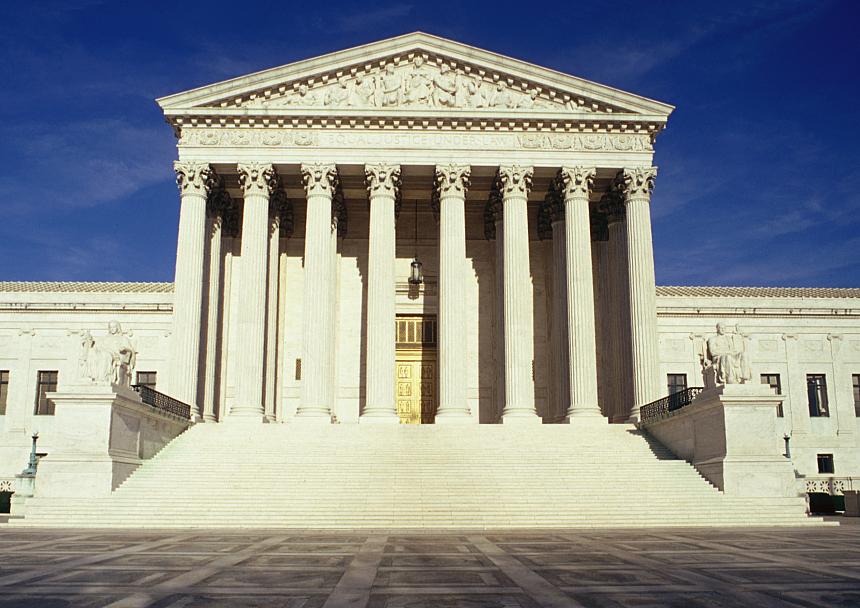
Taking A Case to the U.S. Supreme Court
14 November 2013
German Asylum Case Headed to Supreme Court?
A recent press release from the Home School Legal Defense Association (HSLDA) gives us the details of this unique case that might be headed to the United States Supreme Court:
In April 2013, a three-judge panel of the Sixth Circuit Court of Appeals sustained the Obama administration’s revocation of asylum granted to the family in 2010.After losing the Court of Appeals, the normal route is to request a hearing before the U.S. Supreme Court. As students will recall, a hearing before the highest court is not a matter of right. Instead, the Court grants permission to only those cases it wishes to hear. It takes four of the nine Justices to agree to hear the case in order for it to reach the Court, and of the thousands of requests that the Court receives each year, usually only around 75 are heard.
The original immigration judge, Lawrence O. Burman, granted the Romeike family asylum on January 26, 2010, under the Federal Immigration and Naturalization Act (INA) because Germany’s national policy of suppressing homeschooling violated their religious faith and because German authorities were improperly motivated to suppress homeschoolers as a social group.
In its ruling against the Romeikes, the Sixth Circuit rejected the judge’s findings, stating that Germany’s harsh treatment of homeschoolers did not amount to persecution, and that the German authorities were not motivated by an improper purpose.
11 November 2013
Court TV Revisted

The Origin of Judical Lifetime Appointments in the United States
A quick reading of the U.S. Constitution might leave one puzzled as to how long federal court judges are allowed to serve. No where in the document does it specifically say that federal judges are lifetime appointments. Instead, the Constitution mysteriously says that judges shall serve "during good behavior." Lyle Denniston, veteran Supreme Court watcher, explains how this phrase came to mean lifetime appointment.
07 November 2013
Reigning in lower court judges
Judges in the federal courts system of the United States must abide by a judicial code of conduct, and when they deviate from that code, they can be removed from a case, as one U.S. District Court Judge recently found out.
04 November 2013
Time for a Change?

29 October 2013
The Infamous McDonalds Coffee Case
Perhaps one of the most misunderstand stories of the American legal system and American legal culture.
28 October 2013
Quid Pro Quo?

19 October 2013
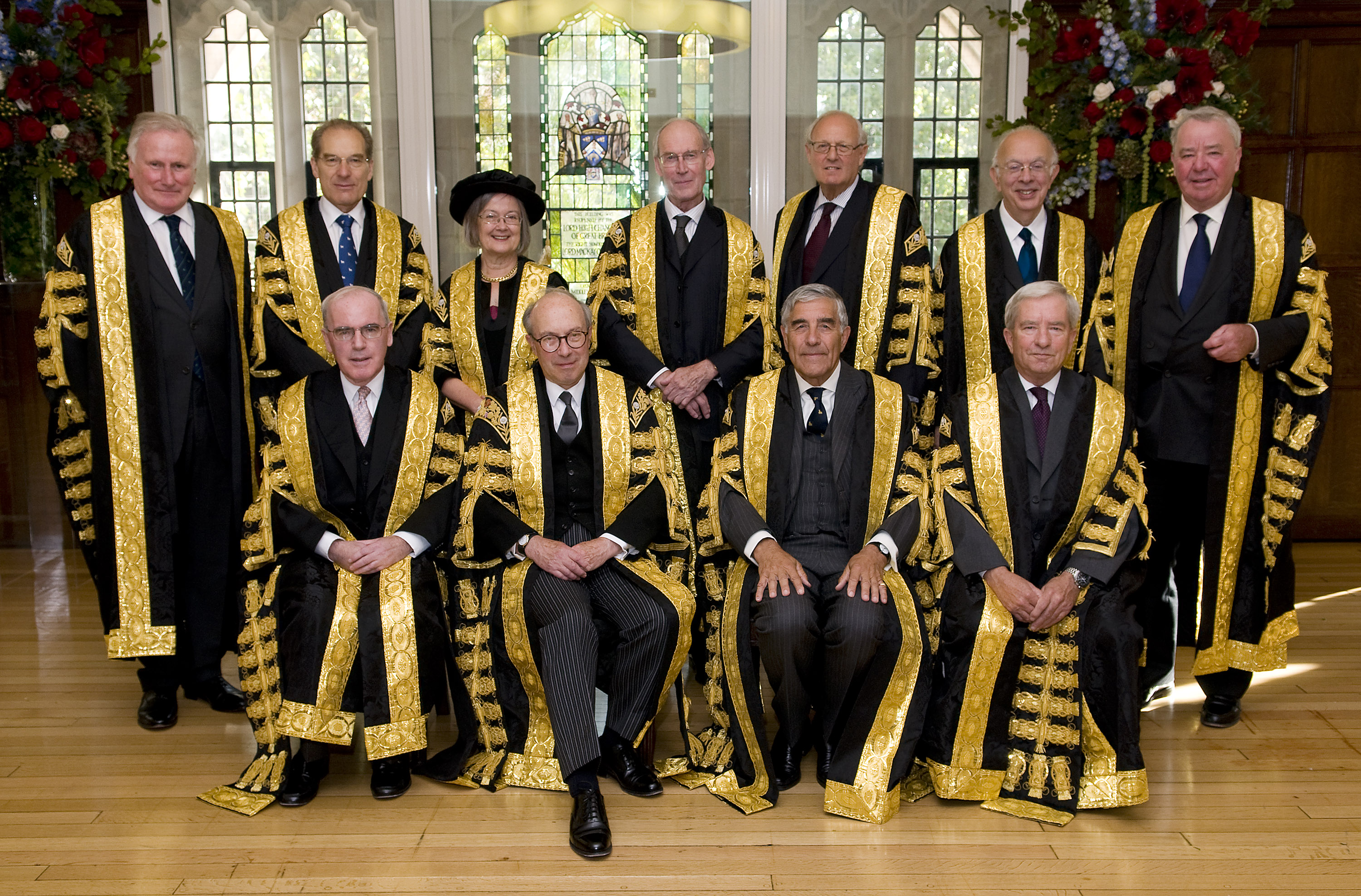
The Impact of European Law on England
15 October 2013
Getting Before the Supreme Court
Having your case heard before the United States Supreme Court is no easy task. In fact, as this USA Today article points out, its down right almost impossible.
02 July 2013
New Rule: You Must Be a Lawyer to Argue a Case in the Supreme Court
This seems like stating the obvious, but up until recently, there was nothing prohibiting non-lawyers from arguing cases before the U.S. Supreme Court. While this hasn't happened in over 30 years, technically non-lawyers could argue cases brought on their own behalf before the Court. Until now. The AP has more.
12 June 2013
Why Electing Judges is a Bad Idea

11 June 2013
The Supreme Court's troubling past
The Washington Post's George Will recently devoted one of his columns to the
Korematsu case. Students in my Constitutional Law course might want to take a look at this piece as it relates to what we will be discussing on Thursday.
Korematsu case. Students in my Constitutional Law course might want to take a look at this piece as it relates to what we will be discussing on Thursday.
21 May 2013
Original Jurisdiction
The Desert News had a recent article that began by saying "The U.S. Supreme Court is set to hear arguments Tuesday in a case that
could have implications for states that rely on interstate water
compacts." The case in question concerns a water rights dispute between six western states, and is an excellent example of case that begins and ends in the U.S. Supreme Court, as the Court has original jurisdiction to hear disputes between the states.
If you are reading the words "original jurisdiction" and asking yourself what that means, it is time to go back and review your class notes.
If you are reading the words "original jurisdiction" and asking yourself what that means, it is time to go back and review your class notes.
14 May 2013
Jury Nullification in Action
For those students interested in reading about a case where jury nullification was used to find a defendant not guilty, take look at this post.
13 May 2013
More on the UK Supreme Court
I just came across this nice little introductory video about the UK Supreme Court. According to its website:
This introductory film is primarily aimed at GSCE/Standard Grade students and explores the role and the workings of the Supreme Court, the only court with UK-wide jurisdiction and the highest court in the land. It explains its relationship to the Judicial Committee of the Privy Council, the highest court for British Overseas Territories and a number of Commonwealth countries.
08 May 2013
The Right Jury Size
More on juries, this time related to the size of juries in the United States. Slate Magazine recently ran an interesting article on jury size noting that all but two states require juries that contain 12 people to give unanimous verdicts. The article runs down nicely how the Supreme Court has ruled in the past regarding jury size:
Isn’t a verdict in a criminal trial supposed to be unanimous? The answer is yes in 48 states and yes if the case is tried in a federal court. But two states, Oregon and Louisiana, allow convictions by a non-unanimous vote. In both states, the threshold in non-capital cases is 10 to 2.* Arguably, Herrera had to go to jail for the crime of living in Oregon.
The Supreme Court has allowed this conflict between federal and state law (as well as between state law and conventional wisdom) to persist for more than 40 years, during which time it has come up with a mishmash of seemingly arbitrary rules about what constitutes a legal trial. A jury of six, the Supreme Court has decided, is constitutional (Williams v. Florida, 1970). A jury of five, however, is not constitutional (Ballew v. Georgia, 1978). In a jury of six, conviction must be unanimous (Burch v. Louisiana, 1979). But in a jury of 12, conviction does not have to be unanimous (Johnson v. Louisiana and Apodaca v. Oregon, 1972). (At the time of these decisions, Louisiana required a 9-to-3 vote to convict in non.capital cases, which the court upheld as constitutional. The state has since changed its threshold to 10 to 2.)
06 May 2013
Learing to love Jury Duty

A jury summons is an invitation to participation. Jurors are asked to involve themselves in some of the most personal, sensational, and terrifying events in a community. It is real life, usually real tragedy, played out in court. Jurors confront disturbing facts, bloody images, or heart-wrenching testimony. A jury may have to decide whether a man lives or dies, or whether a multimillion-dollar company goes bankrupt. A jury will have to pass judgment in a way that will have real-world effects on both parties before the court. This active role was not accidental. Participation in jury service teaches the skills required for democratic self-government. Being a juror lets you develop the habits and skills of citizenship.
29 April 2013
The "Informal" UK Supreme Court
The Financial Times recently ran an interesting piece on the UK Supreme Court subtitle: "The most striking fact about this place is its informality. Grandeur and remoteness have been swept away." Students in my "Juristische Technik und Methodik des Common Law" course in Münster my find it interesting.
28 April 2013
Listening to the Supreme Court
Ever wonder what oral arguments in front of the U.S. Supreme Court sound like? Wonder no longer. NPR reports, fittingly via a podcast of a segment from one of its radio programs, that the Oyez Project now has digitized oral arguments heard before the Court dating all the way back to 1955! The manner in which arguments are conducted before the Court have changed dramatically over the past several decades. As a point of reference, take a quick listen to an argument from the early 1960s and then compare that to a recent argument. Today's Justices are much more active with their questioning. That is except for one. Justice Clarence Thomas has famously not asked a question during oral argument for several years now.
20 April 2013
Agency Alphabet Soup
Early on in the massive manhunt for the suspects involved in the Boston Marathon bombing, the Atlantic ran an interesting piece entitled "The Alphabet Soup of Agencies Hunting in Boston." Students in my American Administrative Law course last week heard me say that the structure of agencies in the United States amounted to a web of various agencies with overlapping responsibilities. This manhunt and the agencies involved in it provides an excellent example of what I was talking about:

10 April 2013
A Lawyer Shortage in America?

But there appears to be a lawyer shortage in some parts of America. The New York recently ran an interesting article about a remote parts of Nebraska and South Dakota where no lawyer can be found for more then a 100 mile radius. The situation is so desperate that the State of South Dakota recently passed a law offering subsidies to those lawyers willing to move these remote parts of the state.
Shakespare famously wrote "the first thing we do, let's kill all the lawyers." But in South Dakota they are looking to kill, rather they are looking subsidize their existence!
01 February 2013
Law School Applications Drop in U.S.
The Atlantic has a fascinating piece on how law school applications in the United States have dropped to a thirty-year low. A few bullet points from the article:
- applications have dropped 38% from where they were in 2010.
- the average public law school graduate left school with over $75,000 in debt from tuition costs.
- the law profession is bloated and there are no jobs to be had.
17 January 2013
Floating Home or Residential Boat?

Just this week the U.S. Supreme Court had a similar issue before it involving a house boat. The question was whether the vessel should be considered a residence or a boat. The characterization of the vessel obviously would lead the Court in two different directions (otherwise the case would not have made this far in the system), and it was up to the Court to determine whether this was a boat or a home.
The Washington Post has more on this case.
14 January 2013
Political Judges
Are judges in America actually politicians? This is a question posed by former Obama Administration official and renowned law professor Cass Sunstein in a recent essay published by Bloomberg News. What Sunstein is really asking here deals more with the role ideology plays in judicial decision making, but the point is well taken and worth consideration. The essay is highly recommended.
10 January 2013
Precedent at Work

The L.A. Times nicely sums the case up so:
The ruling came in a lawsuit by Smriti Nalwa, who fractured her wrist in 2005 while riding in a bumper car with her 9-year-old son and being involved in a head-on collision. Rosenberg said Great America had told ride operators not to allow head-on collisions, but failed to ask patrons to avoid them.The legal doctrine at issue is the common law (i.e. judge made) principle of assumption of risk, whereby someone who undertakes an activity knowing of the risks involved cannot later sue the person who organized or oversaw the activity. Up to this point, California courts had apparently limited the use of the doctrine to risky sports, but in this case they drew an analogy between risky sports and risky amusement park rides and found them to be sufficiently similar to allow for an extension of the doctrine.
The court said Nalwa's injury was caused by a collision with another bumper car, a normal part of the ride. To reduce all risk of injury, the ride would have to be scrapped or completely reconfigured, the court said.
"A small degree of risk inevitably accompanies the thrill of speeding through curves and loops, defying gravity or, in bumper cars, engaging in the mock violence of low-speed collisions," Justice Kathryn Mickle Werdegar wrote for the majority. "Those who voluntarily join in these activities also voluntarily take on their minor inherent risks."
Monday's decision extended a legal doctrine that has limited liability for risky sports, such as football, to now include recreational activities.
08 January 2013
The Right to Bear Arms
 In the wake of the tragic events that unfolded last month in a Connecticut elementary school, the German press has highlighted the gun culture in America and how the U.S. Constitution seemly makes it quite difficult to put limitations on this culture. At issue, of course, is the Second Amendment to the U..S. Constitution, which states:
A well regulated Militia, being necessary to the security of a free State, the right of the people to keep and bear Arms, shall not be infringed.The meaning of this awkwardly written sentence has been argued from the halls of academia to the chambers of the U.S. Supreme Court. And the arguments appear to be more about grammar and punctuation then anything else, as a recent post at the University of Pennsylvania's "Language Log" reminds us.
This post is a must read for anyone who is interested in the debate about how the Second Amendment can be interpreted and the role that language plays in this debate.
19 December 2012
The Two Headed Supreme Court

18 December 2012
Gun Control in America

17 December 2012
More on Judicial Recusal
Thomson, Reuters has a nice article explaining why outspoken Justices of the Supreme Court should not have to recuse themselves simply because they have already taken a public stance on an upcoming case. More importantly, the article gives good examples of when it is appropriate for Justices to remove themselves from a case. For that reason alone, it is well worth a quick read.
13 December 2012
The Politics of Appointing Judges
The New York Times reminds us yesterday that the process for appointing federal judges in the United States has become extremely political in the past few decades, culminating with a current vacancy rate of 9% of all federal judgeships. The editorial is a good review of how federal judges are selected and what role the filibuster now plays in the U.S. Senate to stop a President from filling judicial vacancies.
10 December 2012
Too Hard to Change?
Is the American Constitution too hard to amend? Here is one person, among many, who thinks so. For what it's worth, I think the answer is: it depends on who is trying to changing it and for what purpose.
06 December 2012
Recusal
When must a judge or justice remove himself or herself from a case because of a conflict of interest? The question is rarely easy to answer as what amounts to a conflict of interest can be disputed. Recently, Supreme Court Justice Stephen Breyer recused himself from two upcoming cases concerning environmental regulations. Justice normally do not say why they are recusing themselves, but some speculate that Justice Breyer is taking a pass because his brother was on the appeals court panel that ruled on these two cases in the lower court. Reuters has an article detailing Breyer's recusal, including this interesting tidbit:
During each Supreme Court term, there typically are a handful of cases in which justices recuse themselves. Members of the court make those decisions based on a federal statute, court rules and personal judgment.
In its "Statement of Recusal Policy," the court spells out situations where a justice must bow out. These include cases in which a relative of a justice has appeared as a lawyer or a justice has a financial interest in the outcome. At the same time, the guidelines caution that members of the court should not go beyond the required recusals.
05 December 2012
Finding A Lawyer

22 November 2012
Green Rush
The election in the United States a few weeks ago was about much more than just who would be the next President. Voters in many states were faced with important, ground breaking and controversial ballot initiatives. For the first time in U.S. history voters in two states decided to recognize same gender marriage. Up to now, these marriages were recognized in a handful of states either by courts or statute.
But perhaps even more surprisingly, voters in two states decided to legalize the possession of small amounts of marijuana. While the coffee house culture in Holland might be dying, it has perhaps found a new home in the states of Washington and Colorado.
The video above from Reuters and the SZ explains. One thing of particular note is the discussion near the end about what the federal government might do about these new state laws. State pot laws offer perhaps the best example of how confusing American federalism can be. More on that next semesters, at least for students in their 3rd semester of Uni Osnbrück's FFA.
20 November 2012
The Price of Electing Judges
The New York Times had an interesting editorial yesterday about how judicial elections in the United States are becoming more and more expensive. The Times says:
This year’s round of state judicial elections broke previous records for the amounts spent on judicial campaigns around the country. The dominant role played by special-interest money — including money from super PACs financed by undisclosed donors — has severely weakened the principle of fair and impartial courts.The editorial goes on by citing Florida and my home state of Michigan as extreme of examples of campaign spending on judicial elections gone out of control.
04 November 2012
What Happens in the Event of A Tie

02 November 2012
The Role of Campaign Contributions in American Politics
From the SZ and Reuters, a great video on the impact of money on the American presidential campaign:
31 October 2012
Much More Than the Presidency is at Stake
The SZ has a nice piece on the battle to control the U.S. Senate, which is also up for grabs next Tuesday. Who controls the Senate is important because the Senate, in many instances, can directly check the power of the President (treaties, nominations, etc.). But equally important is the fact that the Senate is a co-equal partner with the House of Representative in the legislative process. Put a different way, if one party controls both the House and Senate, that party is more likely to be able to draft bills that they favor.
More importantly, as the SZ points out, who controls the Senate may also determine what the next President can accomplish:
More importantly, as the SZ points out, who controls the Senate may also determine what the next President can accomplish:
"Zurzeit sind fünf Szenarien denkbar, die zeigen, wie unterschiedlich groß der mögliche Spielraum für Obama und Romney trotz eines Sieges sein kann. (see here for the five scenarios)"
How We Pick Our Judges: Missouri Style

Under an alternative plan that will be on the ballot next Tuesday, the Supreme Court judge would be replaced with a forth gubernatorial appointee. But the fiercest critics of the judicial nomination system in Missouri are not endorsing this alternative plan, instead continuing their push for open and contested elections for all judges.
“The issue is very important,” said Gary Harris of the advocacy group Better Courts for Missouri. “Everyone wants access to fair and impartial courts and everyone wants judges who are impartial.”
A question for students to ponder. If the goal is indeed fair and impartial courts, is a push for elected judges really the answer?
23 October 2012
All About the Swing States
Der Spiegel has a rather accurate description of what the U.S. Presidential Election has come down to: Swing States. The modern Presidential Election is fought not nationwide, but in a few states where the election close. Places like California, Texas, and New York are rarely visited by the candidates despite having the most votes in the Electoral College, because it is already assumed that one candidate or the other will win the state. I would be curious to hear what students think about this system after reading the Spiegel piece.
16 October 2012
Everything You Need to Know About Presidential Debate History

26 June 2012
Engel v. Vitale at 50

19 June 2012
When Government Breaches for Non-Payment

Apparently Congress has created something called a "Judgment Fund" to cover costs related to court judgments issued against it. The Court determined that when the government breaches a contract, it must dip into this fund to make good on the promises it made under the contract.
Why? Lyle Denniston at SCOTUS blog sums up the Court's rationale nicely:
In stressing that the government must live up to what it promises its contracting partners, the Court majority said that this would actually benefit the government’s overall contracting operations, because more partners will be willing to join in contracts with the government if they know that the government has to meet whatever obligations it commits itself to satisfy. Those who would enter a contract without such an assurance, the Court added, are likely to insist that the government pay a premium to “account for the risk of nonpayment.”
18 June 2012
The Court is an Issue
Every four years Americans are reminded by the press about just how important the Presidential Election is to the U.S. Supreme Court, or at least to the composition of the Court. A recent piece in the U.S. Today begins by stating that "[t]his presidential election year, the most important numbers at the court
could be 79, 76, 75 and 73. Those are the ages" of four of its members. Put a different way, up to four Justices might be retiring in the near future. Now might be good time for students in my American Constitutional Law and Common Law Legal System courses to reflect on our discussions about the Court and how its members are selected.
15 June 2012
No One is Popular
14 June 2012
Time for a Fix?
Recently I came across a series in Slate Magazine that has somehow escaped my attention: How Can We Fix the Constitution. This is certainly not a new topic. Heck the founders were talking about how to fix the Constitution even before they ratified it. Remember, the Bill of Rights was basically a concession to anti-federalists who feared the strong central government being created by the new governing document. Put a different way, the Bill of Rights was kind of a fix to the new Constitution.
Last week, U.S. Supreme Court reporter Linda Greenhouse weighed in on the question of whether there should be term-limits, like those that exist for member of the Bundesverfassungsgericht, for members of the U.S. Supreme Court. It is an interesting, and yes short read. Check it out.
As an aside, the Slate series was inspired by the new comedic book by Kevin Bleyer, a writer for the very popular fake news program The Daily Show entitled Me the People.
Last week, U.S. Supreme Court reporter Linda Greenhouse weighed in on the question of whether there should be term-limits, like those that exist for member of the Bundesverfassungsgericht, for members of the U.S. Supreme Court. It is an interesting, and yes short read. Check it out.
As an aside, the Slate series was inspired by the new comedic book by Kevin Bleyer, a writer for the very popular fake news program The Daily Show entitled Me the People.
12 June 2012
Not Again
I touch upon freedom of speech in several of my courses. When I do, I always like to point out that even offensive speech like swearing or flipping someone the bird is protected speech under the U.S. Constitution's First Amendment. I also like to point out that not a year goes by that I fail to see some news article about some city who has tried to punish someone for swearing in public. And right on cue comes an Associated Press piece about a small town in Massachusetts who just passed a local ordinance banning "loud, profanity-laden language." Incredibly, or maybe not, I wrote a similar post a year and one day ago about another local government punishing someone for swearing.
05 June 2012
Election Time is Fast Approaching
The SZ recently published two interesting articles concerning the upcoming elections in America. One looks at the influence of the 24-hour cable news network Fox News, while the other explains how a recent U.S. Supreme Court ruling has led to even more reliance on campaign contributions and created a situation where outside, so-called Political Action Groups may have more influence on the elections then the candidates themselves. The articles should be of interest to anyone interested in the American political system, which I assume some of you studying American law are.
30 May 2012
Supreme Court declines to hear 'So help me God' lawsuit
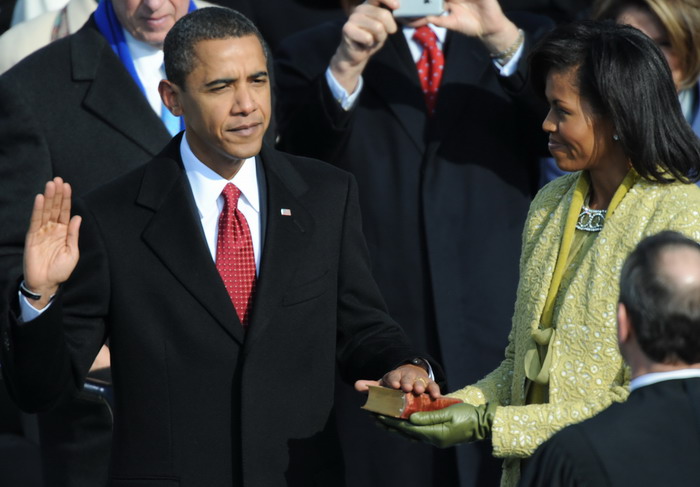
But if there really is this wall separating church and state in America, why are references to God seemingly everywhere: on money, in the national motto, in the pledge of allegiance, said by the President after almost every televised speech, as so on. Recently the U.S. Supreme Court was asked to consider the same question in the context of an Establishment Clause challenge to the taking of the Presidential oath whereby the Chief Justice finishes the oath by asking the soon-to-be President to repeat "so help me God."
21 May 2012
Time for a Change?
2010 candidates for the Michigan Supreme Court raised a total of $2.6 million. The political parties and state-based interest groups reported spending another $2.5 million. But data collected from the public files of state television broadcasters and cable systems showed that an additional $6.3 million was spent by the political parties and interest groups.Among the ideas suggested: scrap elections of judges!
16 May 2012
Do Away With Life Tenure?
15 May 2012
The Electoral College
Just in case my explanation of the way Americans choose their President was not clear, the Economist magazine has a very clear and concise one. The wonderful British accent of the narrator perhaps makes this explanation much more enjoyable to listen to than the one I provided in class.
11 May 2012
Jury Nullification. Unlawful?
One concept that seems to boggle the minds of students learning about the common law jury system is jury nullification. As students have learned, generally this is the principle whereby jurors may ignore the law when reaching their verdict if they believe in good conscience that applying the law strictly in a case would be unjust. As I repeatedly tell students, most jurors have no idea that they have such power, and no judge in his or her right mind would instruct the jury about this right.
But would happen if a private citizen tried to inform potential jurors of this right on their way into the courthouse? Could that be considered tampering with the judicial system? Illegal? It should be, argued New York prosecutors in a case they brought against an 80 year old retired professor who stood outside courthouses and distributed information to people about jury nullification. See here for the result.
But would happen if a private citizen tried to inform potential jurors of this right on their way into the courthouse? Could that be considered tampering with the judicial system? Illegal? It should be, argued New York prosecutors in a case they brought against an 80 year old retired professor who stood outside courthouses and distributed information to people about jury nullification. See here for the result.
04 May 2012
The Veepstakes
Yes, even the selection process for choosing a potential Vice-President of the United States has been boiled down to some catchy, made for TV tagline. Today we refer to the selection of a running mate for a presidential election as the "Veepstakes." Probably not what the founders had in mind when they created the position in Article II of the U.S. Constitution. Of course, as students in my American Constitutional Law course should already know, the founders set forth a different means for choosing a Vice-President than the one we have today. It was changed by the 12th Amendment.
But my real point here is not rehash what we learned in class, but to direct you to an in-depth article in Die Zeit about the current speculation as to who GOP presidential nominee Mitt Romney will select as his running mate. The article goes into why this choice may be important, and gives examples of how a bad choice can hurt the presidential candidate. A good, albeit long, read. At least its in German.
But my real point here is not rehash what we learned in class, but to direct you to an in-depth article in Die Zeit about the current speculation as to who GOP presidential nominee Mitt Romney will select as his running mate. The article goes into why this choice may be important, and gives examples of how a bad choice can hurt the presidential candidate. A good, albeit long, read. At least its in German.
02 May 2012
Kiffen gegen die Staatskrise
Well actually "Kiffen gegen Schmerzen" is the name of a very informative Die Zeit article on California's medical marijuana law, although the article also notes that "Kiffen gegen die Staatskrise" may be equally applicable as the State of California receives over $1 billion dollars annually in tax revenue from the sale of medical pot. But I digress.
Students in any of my courses where we have discussed the American version of federalism should immediately know why this law is of interest to us. Students currently in my American Constitutional Law course will learn why next week. Either way, anyone interested in learning more about California's somewhat controversial law should take a look at the article in Die Zeit.
Students in any of my courses where we have discussed the American version of federalism should immediately know why this law is of interest to us. Students currently in my American Constitutional Law course will learn why next week. Either way, anyone interested in learning more about California's somewhat controversial law should take a look at the article in Die Zeit.
19 April 2012
Tweeting in the Courtroom
Does the use of Twitter by reporters to send out real-time reports of a courtroom proceeding endanger the rights of criminal defendants? According to one Chicago judge presiding over a highly publicised case, yes:
The judge in the Illinois case fears that feverish tweeting on smartphones could distract jurors and witnesses when testimony begins April 23.
"Tweeting takes away from the dignity of a courtroom," said Irv Miller, media liaison for Cook County Judge Charles Burns. "The judge doesn't want the trial to turn into a circus."Burns is allowing reporters to bring cellphones and to send e-mails periodically, a notable concession in a state that has only recently announced it will begin experimenting with cameras in court and where cellphones are often barred from courtrooms altogether.There's also an overflow courtroom where reporters can tweet freely. But there will be no audio or video of proceedings in the room, just live transcripts scrolling across a screen.The issue extends beyond journalists to jurors, whose tweets have raised issues of their own across the country.Last year, the Arkansas Supreme Court threw out a death row inmate's murder conviction after one juror tweeted during proceedings and another slept. Juror Randy Franco's tweets ranged from the philosophical to the mundane. One read, "The coffee sucks here." Less than an hour before the jury returned with a verdict, he tweeted, "It's all over."
11 January 2012
Using Google to Choose a Jury

The selection of a jury in the United States can be a complicated matter. In fact, it can at times look like a game. As more and more Americans make information about themselves available via social networks and the like, it was bound to happen sooner or later that clever lawyers would start conducting Google searches on prospective jurors. But is it OK for lawyers to google jurors during jury selection? Recently a New Jersey court answered the question affirmatively.
08 January 2012
Stille Nacht an Currywurst mit Grünkohl

I forgot to post this link to an article that Die Zeit ran before Christmas about the revival of interest in German culture among Americans. Since then I have read a few more articles in Die Zeit along the same lines. Anyway, my students studying American law may find this short article to be a nice diversion.
07 January 2012
Is A Disgraced Reporter Morally Fit to be A Lawyer?
This is the question currently in front of the California Supreme Court concerning the law license application of Stephen Glass, a former reporter for the New Republic magazine who was fired in the late 1990s after it was discovered that he fabricated most of the articles he wrote for the magazine. The San Francisco Chronicle has more on this fascinating question of how morally fit must one be to practice law in California.
07 December 2011
TV's in the Courtroom
Whether TV cameras should be allowed in the courtroom during hearings before the Supreme Court (both UK and US) has been a hot topic in both America and England as of late. In America, it appears that Congress is trying to pass a law that would require the high court to televise its hearings. But can Congress really force the Court? A very good article in the Christian Science Monitor asks this question.
20 November 2011
What They Don't Teach in Law Schools: Lawyering
The New York Times ran a piece this weekend with the above headline. This is a nice addition to our discussion in class (except for my Introduction to English Law course) about becoming a lawyer in the United States.
14 November 2011
How Powerful is the Federal Government?
As I mentioned last week in my Introduction to American Law course, questions concerning federalism in the United States are really now questions about how powerful the federal government can be. The New York Times ran a great piece this past weekend about this question of government power in the context of President Obama's effort to provide all Americans with health care. Give it a read and see if you can follow the arguments being made.
08 November 2011
Juries in the Age of Facebook
The Chicago Tribune recently ran a fascinating piece about whether a juror's blog postings impacted the fairness of a trial.
The article goes on to discuss issues like jurors using Google Street View to visit the scene of a crime, something they are physically prohibited from doing, but virtually? It gives an example of a murder conviction being overturned because a juror consulted Wikipedia as part of the deliberation process. The questions raised in this article are numerous and important!Judges have long instructed jurors not to talk about their jury service with anyone, including fellow jurors, and to avoid reading newspaper stories about trials. The fear is that jurors might develop a bias from information that's not been admitted in court. The right to an impartial jury is one of the principles of the American justice system.
But that right is threatened in a digital age when people post personal thoughts onto the Internet, whether on a blog or social networking sites such as Facebook and Twitter. It's also become second nature to satisfy curiosities by searching for immediate answers on the Internet.
05 November 2011
Too Much Independence?

The main purpose of the 2005 constitutional reforms in the United Kingdom, which created a new Supreme Court, was to increase the independence of the judiciary. But now some three years into this constitutional experiment, some are questioning whether the Court has become too independent. The Guardian has more.
Subscribe to:
Posts (Atom)