05 November 2016
Electing Judges
Just wanted to call attention to an interesting (and short!) podcast from National Public Radio about how state judicial elections in the United States are becoming increasingly political. It sounds obvious that an election would be political, but some elections (called retention votes) traditionally were not mired in ideological battles. But this has slowly been changing, as the podcast nicely points out.

04 November 2016
The Independence of the FBI Director
Last week's bombshell that FBI had reopened its investigation concerning Hilary Clinton's private email server has fixated the public's attention on one man: the director of the FBI. Students might be wondering what exactly is the role of the FBI Director and how independent he is from his superiors in the Executive Branch. As usual, the wonderful Constitutional Daily blog provides us with some answers. This is well worth the read if you are interested in the American election.
03 November 2016
Making Sense of the High Court's Brexit Decision
Brexit was back in the news yesterday as the High Court handed down a decision that could force the UK government to bring the question of whether to invoke Article 50 before the full Parliament. I am on shaky grounds here writing about this because the case deals with British constitutional principles that are a bit over my head. I write only to clarify something students in some of my courses have heard me say in class: courts in England do not have the final say on what the British Constitution says.
To understand this case and how the question of law facing the court does not contradict what I have said in class, one must first realize that the government was trying to make a decision on its own without first getting approval from Parliament. Put differently, Parliament was not being allowed to have any say on the issue. Furthermore, the constitutional principle being applied by the government was one created by "convention" (basically tradition) whereby the executive (formerly the King) can make decisions under certain circumstances without first getting the approval of Parliament (See this BBC piece for a bit more context).
As the High Court decision notes, "the most fundamental rule of the UK's constitution is that Parliament is sovereign and can make and unmake any law it chooses." So far so good. The Court then goes on to note that no constitutional convention allows the government to override legislation passed by Parliament. Clearly this is also true. Finally, the Court claims that the decision to exit the EU would override legislation passed by Parliament in 1972 that basically allowed EU law to be incorporated into and ultimately in most case be superior to laws passed by Parliament. The court notes that both parties to this case agreed that the the question of whether the government is violating parliamentary sovereignty is one for the courts.
In short, what I said in class still stands: Parliament has the final say over whether the laws it passes are constitutional. However, the courts can weigh in when the claim is that the government is exercising a constitutional convention in a manner that violates concepts of parliamentary sovereignty. At least I think that is what the court is saying.
To understand this case and how the question of law facing the court does not contradict what I have said in class, one must first realize that the government was trying to make a decision on its own without first getting approval from Parliament. Put differently, Parliament was not being allowed to have any say on the issue. Furthermore, the constitutional principle being applied by the government was one created by "convention" (basically tradition) whereby the executive (formerly the King) can make decisions under certain circumstances without first getting the approval of Parliament (See this BBC piece for a bit more context).
As the High Court decision notes, "the most fundamental rule of the UK's constitution is that Parliament is sovereign and can make and unmake any law it chooses." So far so good. The Court then goes on to note that no constitutional convention allows the government to override legislation passed by Parliament. Clearly this is also true. Finally, the Court claims that the decision to exit the EU would override legislation passed by Parliament in 1972 that basically allowed EU law to be incorporated into and ultimately in most case be superior to laws passed by Parliament. The court notes that both parties to this case agreed that the the question of whether the government is violating parliamentary sovereignty is one for the courts.
In short, what I said in class still stands: Parliament has the final say over whether the laws it passes are constitutional. However, the courts can weigh in when the claim is that the government is exercising a constitutional convention in a manner that violates concepts of parliamentary sovereignty. At least I think that is what the court is saying.
02 November 2016
The Electoral College
01 November 2016
Checks and Balances on Display in Supreme Court Nominee Battle?
Students in all my course by now know, if they didn't before, that the U.S. Supreme Court is starting its term this year short-handed. The death of Justice Antonin Scalia in February left a vacancy on the court that still has not been filled because the U.S. Senate refuses to vote on President Obama's nominee for the position. The President recently weighed in on this. Its worth the read if only to get a better understanding of how the system works, or doesn't.
27 October 2016
Racial Bias on Juries
Last session the U.S. Supreme Court tackled the issue of racial discrimination in the selection process of juries. This session the Court will face questions about how to deal with racial discrimination among members of the jury itself. Kenneth Jost over at the Jost on Justice Blog provides a nice summary of the case:
Miguel Angelo Peña Rodriguez was convicted in 2007 of groping two teenaged sisters in a darkened bathroom at a Colorado race track. The evidence in the brief trial consisted of little more than the girls’ identification — first in a roadside “showup” and then in court. The defense lawyer challenged the identification on a variety of well recognized grounds. Peña denied the accusation and was backed up by a fellow Hispanic who said the two were together in one of the race track’s barns at the time of the offense.
The jury deliberated for 12 hours before convicting Peña of three misdemeanor counts but acquitting him of a more serious felony charge. In juror interviews after the verdict, his lawyer gathered affidavits from two members of the jury that one of the jurors had made a number of blatantly racist statements during deliberations about Peña and his alibi witness. None of the jurors had volunteered any racial prejudices during jury selection.Reuters has more about how the Justices reacted to this case during oral arguments earlier this month.
24 October 2016
The Interactive Constitution

15 June 2016
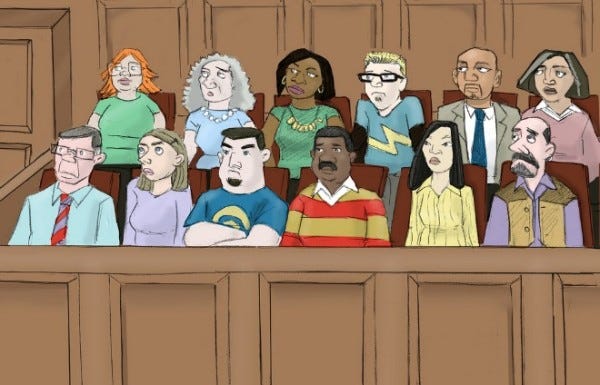
Race and Jury Selection
13 June 2016
Supreme Meals

09 June 2016
Minority Judges in England

Stats from the Judicial Appointments Commission show that, of the lawyers who applied to be recorders (low-level judges) last year, only 10% of BME candidates were ever shortlisted. This is compared to 20% of white candidates. Of those who made the shortlist, 29% of BME lawyers were recommended for appointment. This is 17 percentage points less than the corresponding figure for white lawyers (46%).One reason cited for the changes made by the 2005 judicial selection reforms was the desire to diversify the bench in England. While the bench most surely has become more diverse, it appears that there is still a lot of work to do.
It should also be noted that, since 2012, not a single BME candidate has applied to or been appointed to the Court of Appeal.
08 June 2016
Towards a Minimalist Court?

The first is that decisions should be narrow rather than wide. If the court is asked to strike down an affirmative-action program, it should focus on that program, not on affirmative action in general. This holds as well for abortion, national-security surveillance and presidential powers: Decide the case at hand and leave other problems for other occasions.
The second idea is that decisions should be shallow rather than deep. In a free-speech case, for example, minimalists believe that the court should avoid the most controversial claims about the foundations of liberty. Instead it should seek rulings that can command support from people who have different views on the deepest questions. The justices might agree that the government may not regulate speech unless it poses a clear and present danger, but that view could be rooted in distrust of public officials, respect for human dignity or belief in the marketplace of ideas—and there is no need for them to pick a preferred theoretical foundation.The idea of judicial restraint is one that German students should probably understand, as the German Constitutional Court is sometimes also criticized for failing to exercise so-called " richterliche Selbstbeschränkung." A 2014 SZ article provides some recent examples.
05 June 2016
Arkansas Considering Ending Judicial Elections
The Arkansas Democrat-Gazette is reporting that "in the aftermath of state Supreme Court races rife with negative advertising funded by out-of-state groups, a special legal task force is recommending that Arkansas end elections for its top court." The idea behind electing judges is to make them accountable to the people, but as more and more special interest groups spend money on these campaigns, questions are being raised as to whether judges are truly accountable to the people when their election is so heavily dependent on money from special interest groups.
30 May 2016
Only a Third Find Pupilage
Students in my Introduction to Common Law class know that a step in becoming a barrister is securing a pupilage, the practical training step at the end of the long road to becoming a barrister. In class I have stressed how difficult it is to secure such practical training, and a recent study has shown just how difficult it really is. The English law website Legal Cheek notes:
The statistics, published today by the Bar Standards Board (BSB), show that 35% of all UK/EU domiciled grads that started the Bar Professional Training Course (BPTC) in the academic years commencing in 2011-2013 have gone on to gain pupillage.The article goes on to discuss how diverse the Bar is becoming:
On the diversity front, the report shows that the number of women progressing to a career at the bar is similar to men; 47% of pupillages were awarded to women. It must be borne in mind that more women are enrolling on the BPTC in the first place, which may suggest that men have a greater chance of success. It’s also speculated that white aspiring barristers are more successful in finding pupillages than black ethnic minority (BME) candidates, but “more research is needed to determine whether and, if so, why this may be the case”.
24 May 2016
Debate Over Term Limits for Justices Heats Up
As many students in my courses have learned, federal judges in the United States serve for life. And with no mandatory retirement age, life can mean life. In England, on the other hand, a life term means until one reaches the mandatory retirement age of 70. Nevertheless, neither system has any kind of term limits in place for their judges. As a side note here, it should be pointed out that of course many of the states in the United States do have a mandatory retirement age and a mechanism for voters to remove judges.
The recent death of Justice Antonin Scalia was reignited a debate over whether federal judges should also serve only for a fixed period of time. A recent piece by Orin Kerr in the Washington Post explains why life terms might be a problem:
For additional views on this topic see here, here, and here.
The recent death of Justice Antonin Scalia was reignited a debate over whether federal judges should also serve only for a fixed period of time. A recent piece by Orin Kerr in the Washington Post explains why life terms might be a problem:
It’s often said that elections have consequences. But thanks to life tenure, elections don’t have nearly as much consequence as they should have on the Supreme Court. A President might have zero vacancies to fill or may have many. For example, during the four-year Presidency of Jimmy Carter, no Justice retired. Carter never made a Supreme Court nomination. On the other hand, in the four-year window from 1937 to 1941, seven Justices died or elected to step down. President Franklin Delano Roosevelt and the Senate of that era quickly filled all seven spots.In his next paragraph, though, Kerr gets to the heart of the matter: the ideological make-up of the Court:
If we all agree that the ideological orientation of the Supreme Court matters — which, for better or worse, undeniably has been in case in our collective memory — then I can’t see why that orientation should depend on how long a handful of people in their 70s and 80s can continue to serve. It would make much more sense to tie that orientation to the elected branches in some predictable and democratically accountable way.For many German jurists and students of law, this might seem out of place. Aren't courts suppose to be objective? Isn't a judge suppose to leave ideology out of the decision and simply apply the law? To understand the debates over Supreme Court appointments in the United States one must also understand that this idealistic view of judges is something of the past. Today, the make-up of the Court is as politically charged as any other controversial topic.
For additional views on this topic see here, here, and here.
20 May 2016
Changing the size of courts
The number of judges that sit on America's highest courts (federal and state supreme courts) is, for the most part, not set by the federal and state constitutions. Congress and state legislatures are free to change the number of Justices sitting on the highest courts as they see fit. For instance, the first U.S. Supreme Court had only six members. The number was gradually expanded to seven, then nine, then ten, then back to seven and finally left at nine. All via Acts of Congress. The same goes for the various state Supreme Court.
However, the magazine Governing recently reported on a disturbing trend:
However, the magazine Governing recently reported on a disturbing trend:
When supreme courts were expanded in the past, it was typically the result of a larger revision of the state constitution, said Bill Raftery, an analyst with the National Center for State Courts. Over the past decade, however, legislators in several states have sought to expand or reduce the size of their supreme courts -- in some cases admitting their intent to sway the ideological balance. "In several of these instances, the legislators have been very clear that they want certain decisions by their state courts of last resorts to be changed, or they want future decisions decided a different way," said Raftery.Today America's courts are as political as the other three branches, with control of the highest court being a major goal of both the established political parties.
19 May 2016
State Courts
Students in some of my courses learn that each state in the United States has its own separate and distinct court system, and these systems are by no means identical. It is up to each state to shape their system as they see fit, with changes being made regularly. One such change just took place in the State of Georgia where the legislature recently passed law adding two more Justices to the Georgia Supreme Court. Of course, expanding the make-up of court can sometimes lead to claims of "court packing" whereby the party in power adds seats in order to control the judicial branch. As the Atlanta Journal Constitution points out, this very claim is being made by some Democrats in Georgia.
18 May 2016
Class Actions

Das Verbraucher- und Umweltrecht ist bei uns zahnlos, weil Instrumente zur Durchsetzung fehlen. Dazu bräuchte man entweder starke Behörden oder die effektive Bündelung von Individualrechten. In Deutschland gibt es weder das eine noch das andere. Das Kraftfahrt-Bundesamt agiert als Lehrbuchbeispiel für regulatory capture, also die Unterordnung einer Behörde unter die Partikularinteressen der Industrie. Die manipulierten Autos lässt man weiterfahren. Wenn Umweltverbände nach dem Informationsfreiheitsgesetz Akteneinsicht beantragen, werden ganze Aktenordner geschwärzt, um die Branche zu schützen.
Aber auch für einzelne Verbraucher ist es in Deutschland weitgehend sinnlos, der Übermacht von VW entgegenzutreten. Eine der wenigen Klagen wurde vom Landgericht Bochum im März mit dem erstaunlichen Argument abgewiesen, dass der vorschriftswidrig überhöhte Abgasausstoß nur ein Bagatellmangel sei; der Käufer habe schlicht auf die Nachbesserungsversuche von VW zu warten.
In den USA ermöglicht das Instrument der Sammelklage eine Bündelung der Ansprüche aller Kunden, sofern diese nicht ausdrücklich widersprechen. So wird die in einem komplexen Fall nötige Expertise und Schlagkraft geschaffen und Druck auf die Beklagten ausgeübt. In Deutschland ist dies nur über organisatorisch aufwendige Abtretungsmodelle denkbar, die von der Initiative jedes einzelnen Verbrauchers abhängen.As I mentioned recently in my Introduction to American Law course, the class action lawsuit is by no means a perfect or efficient regulatory instrument, but sometimes it is the only instrument available to achieve a just and needed remedy.
16 May 2016
TV in the Courtroom Debate Comes to Germany

Aus dem Gerichtssaal solle auch in Zukunft keine Showbühne werden, sagte Maas. Die Rechte der Verfahrensbeteiligten müssten gewahrt bleiben. "Aber was von den obersten Gerichten an Recht gesprochen wird, das wirkt sich auf das Zusammenleben unserer Gesellschaft aus."
Interestingly it is the proceedings of the highest courts in both England and the United States where television cameras are still forbidden out of fear that televising these proceedings will in fact create a "Showbühne" atmosphere. The response to Maas' idea from judges on Germany's highest courts was swift and not very welcoming.
13 May 2016
Inside the U.S. Supreme Court

Court junkies will definitely want to check out this conversation with U.S. Supreme Court Chief Justice John Roberts as he talks about the inner workings of the Supreme Court and the selection process used to fill court vacancies.
12 May 2016
Enforcing Human Rights in US Courts and Circuit Splits
The latest installment of Harvard Law Professor Noah Feldman's Bloomberg News legal column entitled "A Nasty Split in U.S. Courts Over Human Rights" contains a few topics that might (should!) be of interest to students of American law. Feldman writes about a recent split in the circuits over the enforcement of human rights in U.S. Courts. The first thing that should jump out to students are the words "split in the circuits". Feldman then writes:
A company whose violation of human rights abroad strongly affects the U.S. can be sued in any federal court in the country -- except New York and Connecticut’s Second Circuit. A decision there Tuesday means it will remain stubbornly outside the pack.Here one has to focus again on the words. By using the words "federal court" the reader should know that we are talking about cases filed in the federal court system. The possible confusion comes in when he mentions "New York and Connecticut's Second Circuit." Here we have to understand that he is not talking about state courts, but rather the federal court of appeals that has jurisdiction over federal cases that arise in the geographical region of New York and Connecticut.
The U.S. Court of Appeals for the Second Circuit split 4-3 -- nastily -- in its refusal to get into conformity with the other circuits.
The rest of the article is also worth a read as it explains how "in 1980, the Second Circuit held that the law (Alien Tort Statute) could be used by a foreigner to sue a foreigner in the U.S. courts for international law violations that took place outside the U.S.." The article goes on to explain how in 2013 the U.S. Supreme Court restricted the ability of such cases being filed in U.S. courts, and how this most recent ruling by the Second Circuit puts up further hurdles to such actions.
11 May 2016
The Impact of Social Media on Juries

This is not the first time the topic of the Internet and juries has been discussed here on this blog (see here, here, and here). But it is the first time that I am reporting about an effort to punish jurors who use social media while serving on a jury. A few weeks ago the AP reported that officials in California has considering ways discourage jurors from engaging in "internet research" or tweeting about a trial while it is in progress:
Legislation supported by state court officials would authorize judges in some counties to fine jurors up to $1,500 for social media and Internet use violations, which have led to mistrials and overturned convictions around the country.
As jurors and judges have become more technology savvy in recent years, the perils of jurors playing around with their smartphones have become a mounting concern, particularly in technology-rich California. A 2011 state law made improper electronic or wireless communication or research by a juror punishable by contempt.
Supporters of the latest California measure say a potential fine would give teeth to existing prohibitions against social media and Internet use and simplify the process for holding wayward jurors accountable.As you will see if you read the rest of the article, this proposal is rather controversial.
09 May 2016
Did Jury Nullification Just Get a New Influential Supporter?
If there is any aspect of the use of juries in the common law system that confuses non-common law students, it is the concept of jury nullification. How can it be, ask many students, that the jury can simply ignore the law? Recently, U.S. Supreme Court Justice Sonya Sotomayor weighed in on the topic. Reason.com reports that the Justice had "kind words" for jury nullification, albeit measured words, when she was asked about a recent federal court case where the judge dismissed a juror who apparently could not bring himself to voting to convict suspected drug dealers:
"In United States v. Thomas, the 2nd Circuit heard a challenge to a judge's dismissal of a juror in a federal drug case who resisted finding the five defendants, all of whom were black, guilty of selling crack. After interviewing the jurors, the judge concluded that the holdout, who was the only black member of the jury, had "immoral" motives because "he believes that these folks have a right to deal drugs, because they don't have any money, they are in a disadvantaged situation and probably that's the thing to do." The judge added that "I don't think he would convict them no matter what the evidence was."
The 2nd Circuit rejected the juror's dismissal, saying the judge did not give sufficient consideration to alternative explanations for his resistance. But it also said the dismissal clearly would have been justified if the juror was in fact determined to acquit the defendants regardless of the evidence. "As an obvious violation of a juror's oath and duty," the court said, "a refusal to apply the law as set forth by the court constitutes grounds for dismissal."Perhaps the most interesting part of this is the fact that the federal appeals court also seems to be saying that jury nullification has no place in American federal courts. And here is where Justice Sotomayor seems to come out in favor of jury nullification, noting that the court of appeals probably got the case wrong. The short story here is jury nullification exists, but most judges certainly do not like it and some even believe its use is prohibited.
05 May 2016
A Court of Eight

02 May 2016
Racism in the UK Bar
One of my favorite UK legal website, Legal Cheek, has a post directing legal watchers to a video interview of England's first black female High Court Judge. Legal Cheek goes on to say:
Dame Linda Dobbs has exposed shameful incidents of racism and sexism at the bar, particularly from her own clerks, in a revealing interview for the First 100 Years project — an ambitious video history which aims to highlight and celebrate the achievements of female lawyers in a profession long dominated by men.A link to the video interview can also be found on the Legal Cheek website.
30 April 2016
Selecting Judges

On Friday in my common law course at Münster University, we discussed the process of selecting judges in both England and the United States. When I mentioned the process for selecting U.S. federal judges, I noted that it has become somewhat political over the past decades, using the recent death of Justice Scalia and the Senate's refusal to allow President Obama to fill that vacancy as an example of just how politicized the process has become. On cue, the Marshall Project has just released statistics concerning how many other vacancies there are in the federal court system:
The ninth seat on the Supreme Court has been vacant for two months.But Antonin Scalia’s chair is not the only empty one in the vast federal judiciary, where several judgeships have remained unfilled for 30 months or more. Around the country, there are 84 of these vacancies, largely as a result of the Senate’s historically low rate of confirming President Barack Obama’s nominees. And since the beginning of last year, the number of unfilled seats and pending nominations have been steadily rising.The rest of the article is worth a read.
28 April 2016
Going Around the Senate

So what happens when the Senate refuses to play along? Up until early this year, the Senate has never absolutely refused to engage in the confirmation process. With only eight months until the next President is selected, leaders of the Senate have said that President Obama's nominee for the vacancy will not be considered by the Senate, and it should be up to the newly elected President to fill to vacancy. While this move is unprecedented, it probably is constitutional. Some, however, have suggested that the President might be able to simply skip the Senate and fill the vacancy, claiming that the Senate has waived its right to consent by not even engaging in the confirmation process. The blog Constitution Daily takes on this argument in a very interesting and worthwhile post.
25 April 2016
Separation of Powers
A recent U.S. Supreme Court case is the subject of a Noah Feldman's column over at Bloomberg News, and it is a must read for students interested in how the Court deals with separation of powers issues. The case involved whether Congress could amend a law in order to impact litigation pending before the courts. At the heart of the matter is whether by doing so Congress is interfering with the power of the judiciary.
22 April 2016
Natural Born Citizen Reloaded
 |
Legislative attorney Jack Maskell, writing for the Congressional Research Service in 2011, found that “the weight of more recent federal cases, as well as the majority of scholarship on the subject, also indicates that the term ‘natural born citizen’ would most likely include, as well as native born citizens, those born abroad to U.S. citizen-parents, at least one of whom had previously resided in the United States, or those born abroad to one U.S. citizen parent who, prior to the birth, had met the requirements of federal law for physical presence in the country.”Anyone interested in learning more about the arguments concerning this phrase should really give Maskell's memo a quick read.
21 April 2016
Going Alone

To aid people in this situation, a new website has emerged, complete with a video game that teaches self-litigants the dos and don'ts of self-representation. It's worth look for anyone interested in learning more about who courts operate in the United States.
11 April 2016
Directly Electing the Senate
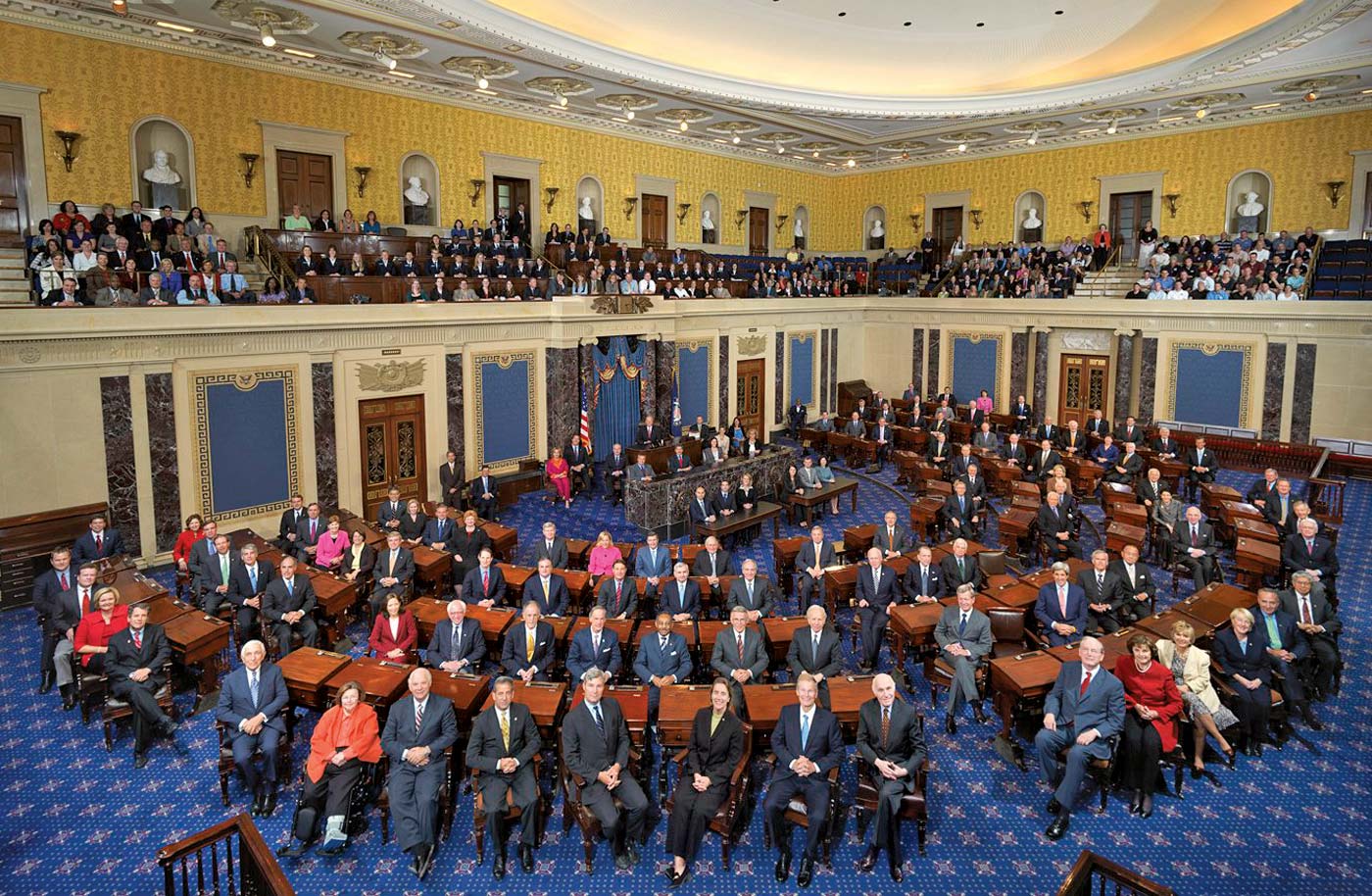
"At the Constitutional Convention in 1787, the Founders were guided by, among other powerful ideas, the fear of the potentially tyrannical, harmful powers of a democratic majority. The proposal that United States Senators should be elected by state legislatures, rather than democratic majorities, was inspired by this fear. . . ."
To understand why the U.S. Senate was originally select by state legislatures and why this changed with the passage of the 17th Amendment, you cannot go wrong reading the rest of the blog post.
28 January 2016
Judicial Elections Back in the News
Two recent news items caught my attention as they show the difficulty states have with keeping their elected judges independent. In an en banc decision the U.S. Court of Appeals for the Ninth Circuit upheld an Arizona law that regulates the fundraising activities of judges. According to the Arizona Courthouse News Service:
In Wisconsin court watchers are concerned that the upcoming Wisconsin Supreme Court race will be overly partisan. This illustrates yet another difficulty with judicial elections. Can judges be said to be truly independent when they run on a partisan platform?
Saying free-speech rights cannot outweigh the need to preserve judicial integrity, the en banc Ninth Circuit on Wednesday upheld an Arizona law banning judges from soliciting donations or stumping for colleagues. The 21-page lead opinion affirms five provisions in Arizona judicial code, which restrict judicial candidates from in-person solicitation or endorsing and campaigning for other candidates publicly, under the First Amendment.The goal here is to keep judges out of the normal give and take political campaigning process in order to keep them independent.
In Wisconsin court watchers are concerned that the upcoming Wisconsin Supreme Court race will be overly partisan. This illustrates yet another difficulty with judicial elections. Can judges be said to be truly independent when they run on a partisan platform?
18 January 2016
Lifetime Appointments
The Washington Post's blog "The Fix" recently had a post informing its readers that the average age of the U.S. Supreme is nearing its record high. The post has some interesting tidbits:
- The average when Justices retire is around 78
- Three Justices are older than 78
- The average age of the Court at the moment is 69
Making Courts More Transparent

14 January 2016
Natural Born Citizen and the Presidency
The natural born citizen question is currently front and center in the Republican primary contest for President of the United States. Students in my U.S. Constitutional Law course will know that a requirement to be President is being a "natural born citizen" of the United States. As I said in class, clearly this disqualifies someone who became a naturalized American citizen, for instance Arnold Schwarzenegger. But what about an American born overseas to American parents? Are they natural born citizen? Or must the person be born in the United States? The issues is being discussed (again) in the United States because Texas Senator Ted Cruz, who is running for President, was born in Canada to an American mother and Cuban father. He has his American citizenship through his mother, of course, but does being born in Canada disqualify him from running for the Presidency? Donald Trump thinks so. So do some legal scholars. The National Constitution Center's blog "Constitution Daily" has more.
11 January 2016
Behind the Scenes at the U.S. Supreme Court
The NPR Politics Podcast has an interesting interview with U.S. Supreme Court Justice Stephen Breyer. In the podcast Breyer takes us behind the scenes at the Supreme Court. It's well worth the listen.
07 January 2016
Constitutional Standing
The Blog Religion Clause reports that a lawsuit challenging Montana's law prohibiting polygamy is on the verge of being dismissed for lack of standing. Students in my U.S. Constitutional Law course might want to take a quick look at this post and see whether they understand why this case might be dismissed. If you understand the reason, then you understand constitutional standing.
06 January 2016
The Meaning of Religious Freedom
Students in my U.S. Constitutional Law course were recently introduced to the confusing and sometimes contradicting Supreme Court jurisprudence related to religious liberty. This confusion is primarily the result of a struggle that has been taking place among the Justices on the Supreme Court for several decades over the meaning of these words:
Justice Antonin Scalia is perhaps the most outspoken advocate on the court of a very limited reading of the so-called establishment clause. Speaking at an event in Louisiana recently, the Justice said:
Congress shall make law respecting the establishment of religion or free exercise thereof.Some see the words "respecting the establishment of religion" as a command for strict church/state separation, while others see it simply as a bar on the federal government from creating a national church or religion. The gulf between these two positions is enormous and multiple views landing somewhere in between these two poles have been expressed by Justices, making this perhaps the most confusing area of American constitutional law.
Justice Antonin Scalia is perhaps the most outspoken advocate on the court of a very limited reading of the so-called establishment clause. Speaking at an event in Louisiana recently, the Justice said:
the idea that government must be neutral between religion and unbelief is not grounded in the country’s constitutional traditions and that God has been good to the United States because Americans honor him.Scalia went on to note that the government should not favor one religion over another, but there is nothing in the American constitutional tradition that demands equal treatment between religion and non-religion.
05 January 2016
Failing to Answer as a Strategy

15 December 2015
Langauge Unbecoming of a Judge?
Readers of recent Supreme Court opinions in both the United Kingdom and United States might be surprised by some of the language used by Justices to describe the arguments set forth by their fellow Justices. In England, it has apparently become so bad that the President of the UK Supreme Court has now publicly called for his fellow Justices to show restraint when writing their opinions. As the Telegraph reports:
This act of "throwing insults" is nothing new at the U.S. Supreme Court. Justice Antonin Scalia has been doing it for almost thirty years calling the views of his fellow Justices "silly" "absurd" and "feeble."The president of the Supreme Court has chastised judges, saying that while it is "fun" to throw insults at each other they are damaging the reputation of the court. Lord Neuberger of Abbotsbury urged lawmakers to stop their “abuse” and “hyperbolic criticism” of one another in their judgements because they risk undermining the authority of the judicial process.
14 December 2015
Can Muslims Be Banned From Entering the United States?

12 December 2015
Judicial Review of Administrative Acts
Students in my American Constitutional Law course were recently exposed to the complex area of American Administrative Law concerning when and what kind of administrative acts the U.S. federal courts may review. A few weeks late, but nevertheless relatively timely, Forbes has published a short article about a case heading to the U.S. Supreme Court concerning an agency interpretation of federal law. The case concerns a recent Obama administrative rule broadening the definition of "waters of the United States." The term is found in the Clean Water Act, which gives the government the authority to prohibit landowners from building on certain land because of environmental concerns. According to Forbes:
The court’s decision to hear U.S. Army Corps of Engineers v. Hawkes Co. follows the Obama administration’s enactment of a new Clean Water Rule that puts millions of additional acres within the definition of “Waters of the U.S.” covered by the Clean Water Act. If the Supreme Court rules for the government in Hawkes, landowners will be left with a difficult choice if regulators decide their property contains wetlands: They can abandon all commercial use of it, apply for a permit with a high chance of being rejected, or risk ruinous fines and even jail if they modify the land.Ultimately, this case boils down to the definition of "final agency action." As we learned in class, federal courts generally refrain from reviewing agency actions unless they are considered to be final. This short article is certainly worth a read.
08 December 2015
The Reach of Constitutional Rights
Prof. Noah Feldman recently started his Bloomberg View column with the question "can an American detained and allegedly tortured by the FBI at black sites outside the U.S. sue for damages? The answer: NO. As we discussed in my American Constitutional Law course, the rights found in the U.S. constitution only protect people when they are inside the boundaries of the country (with a few exceptions). Feldman explains why a recent court decision dealing with the question he poses was wrongly decided. It's worth a read. So is the blog post by Lyle Denniston at the blog Constitution Daily.
03 December 2015
Disappearing Precedent

02 December 2015
The Shadow of Korematsu

Writing for the Court in the (in)famous Korematsu case, Justice Black said:
"It should be noted, to begin with, that all legal restrictions which curtail the civil rights of a single racial group are immediately suspect. That is not to say that all such restrictions are unconstitutional. It is to say that courts must subject them to the most rigid scrutiny. Pressing public necessity may sometimes justify the existence of such restrictions; racial antagonism never can,"For Black and the majority, the idea that there could be Japanese spies circulating among the populace in the immediate aftermath of a Japanese attack was sufficient justification to round up over 120,000 people and place them into camps. The case is still good law today, never having been overturned by the U.S. Supreme Court, and has actually been cited by a few American politicians as precedent for the idea of rounding up recent refugees from Syria.
Students who are interested in learning more about the Korematsu case and how it relates to Syrian refugees are encouraged to check out a recent post over at the Constitutional Daily Blog as well as a recent article by Matt Ford of the Atlantic.
01 December 2015

With President John F. Kennedy’s assassination, the need for a clear way to determine presidential succession, especially with the new reality of the Cold War and its frightening technologies,[14] forced Congress into action.[14] The new President, Lyndon B. Johnson, had once suffered a heart attack,[15] and the next two people in line for the presidency were Speaker of the House John McCormack,[16] who was 71 years old,[14] and Senate President pro tempore Carl Hayden,[16] who was 86 years old.In short, the situation was ripe for one of those rare moments when the country was ready and willing to amend its constitution. A mere six years after being added to the constitution, the amendment was tested with resignation of Vice President Spiro Agnew. To take his place President Richard Nixon selected Rep. Gerald Ford to be the new VP. Under the new amendment, his appointment needed to be confirmed by a majority of both houses of Congress. It was.
And just in time. An informative post on the Constitution Daily blog explains how another aspect of the 25th Amendment, the temporary replacement of the President, was also in play as the Watergate scandal was threatening the Nixon presidency.
29 November 2015
Presidential Pardons

27 November 2015
The First American Constitution
At some point or another most of my students have heard me say that the constitution we study today in American Constitutional Law is actually America's second constitution. The first one, the Article of Confederation, were an abysmal failure, leading to its total repeal and replacement with what we now call the Constitution of the United States of America. So why did this first one fail? As usual, the National Constitutional Center has this question well covered with a post entitled "10 reasons why America's first constitution failed." A nice a short read that is worth your time. Check it out!
25 November 2015
The Importance of Dissenting Opinions
Students in all of my courses are at one point or another confronted with dissenting opinions found in appellate court cases. While the dissenting opinion is a somewhat new feature of German constitutional jurisprudence, it has a long and storied history in American constitutional law. A recent short article in the magazine Reason underscores the importance of dissents.
24 November 2015
Youngstown Steel Case

19 November 2015
The Origins of Judicial Review in the United States
Students of my American Constitutional law course, and to a lesser extent all my other courses, are aware that the U.S. Supreme Court is basically a constitutional court. However, a careful reading of Article Three of the U.S. Constitution shows that in fact the Supreme Court was not expressly given the power to review whether actions taken by the other two branches of government violate the constitution. As it turns out, the Court gave itself this power in perhaps the most important decision ever issued by the Court: Marbury v. Madison. C-Span has a video of a discussion concerning the history of this case and its impact. For all you American constitutional history junkies out there, this video is worth checking out.
16 November 2015
The Role of Judge and Jury

15 November 2015
Term Limits for Florida Judges?
A recent Miami Herald article about a movement to amend the Florida Constitution to allow for judicial term limits serves as a good reminder that each state controls the manner in which their state court judges are selected and how long each may serve. The article explains that:
In Florida, justices and appeals court judges serve six-year terms. They aren’t reelected as trial court judges are; rather, they go before voters in an up-or-down vote as to whether they should stay in office.
The merit retention system was added to Florida’s Constitution by voters in the 1970s, but no justice has been removed from office because of it. From 1980 to 2014, 42 Supreme Court justices have faced a merit retention vote. All received a majority, allowing them to stay in office.This illustrates how some states have a mixture of the selection processes we discussed in class. Here we see a system that has competitive elections for its lower court judges while uses the retention system for its higher court judges. Those wondering why some would want to limit the term of higher court judges need look no further than this quote from the article:
Rep. John Wood, R-Winter Haven, said term limits for the state’s seven justices and 64 appellate judges would ensure “diversity of legal philosophy,” “enhance the proper role of the judiciary,” and “create a true balance of power” with the Legislature and the governor, both already subject to term limits.It seems relatively clear that advocates of this changes believe that judges in Florida have become too entrenched and too powerful.
13 November 2015
Death Penalty Podcast
Yesterday I wrote about whether the death penalty is heading for extinction in the United States. Today I'd like to draw your attention to a podcast found on the National Constitution Center's website featuring answers to questions like:
Does the Cruel and Unusual Punishment Clause prohibit the death penalty? If not, are some modern methods of execution “barbaric” enough to violate the Clause? What standard should courts use to determine if a punishment is “cruel and unusual”?Check it out and see if you can follow along with the discussion!
12 November 2015
The End of the Death Penalty in America?

11 November 2015
Choosing the Author of Supreme Court Opinion
Both the Washington Post and New York Times recently ran articles about how Chief Justice Roberts distributes opinion drafting assignments among the nine Justices of the United States Supreme Court. Both articles are worth reading for anyone interested in the inner workings of the Court.
10 November 2015
The Lochner Case

05 November 2015
Donald Trump and the UK Supreme Court
How on earth could I resist posting a link to an article that mentions Donald Trump and the UK Supreme Court in the same sentence? For students in my JTMCL and Common Law Legal Systems courses (Münster), this article also reinforces the idea that the UK Supreme Court is the court of last resort (with some minor exceptions) for court systems found in England/Wales, Northern Ireland and in this case Scotland.
03 November 2015
Judicial Elections

02 November 2015
Jury Selection and Race in the United States
At some point students in most of my courses are introduced to the method used in the United States to select juries, a method that basically gives advocates a limited number of "objections" to potential jurors. These objections take the form of peremptory challenges and can be used by advocates to remove potential jurors from the jury pool for any reason . . . except for the wrong reason. In the Batson case the U.S. Supreme Court ruled that a "wrong reason" included removing a potential juror because of race. As Garrett Epps of the Atlantic writes, proving that race is a factor in the removal of a potential juror has been difficult and now is the focus of case being heard today by the Court:
Since 1986, the Court has extended that rule to peremptory challenges by defendants as well as prosecutors; to peremptory challenges of potential jurors even if they are of a different race as the defendant; to peremptory challenges based on sex as well as race; and to peremptory challenges in civil, as well as criminal, cases. Batson, thus, is a landmark—though at best a confusing one. That confusion may be on display next week, when the Supreme Court takes up a jury-selection case that is literally a matter of life and death. Foster v. Chatman tests how strong the evidence of racial motive must be in a jury selection case before a defendant can prevail on the issue.Students are strongly encouraged to read Epp's wonderful summary of the case that also includes a little of the history concerning the use of peremptory challenges by common law courts. Along these same lines a piece in Slate by Mark Stern and an opinion piece in the New York Times by former United States Deputy Attorney General for the Bush Administration Larry Thompson are also worth reading.
30 October 2015
Checks and Balances
One of the six big ideas we discussed in American Constitutional Law is the principle of checks and balances that can be found throughout the U.S. Constitution. One example is how vacancies in the federal judiciary are filled. The process involves the President nominating an individual and then the U.S. Senate votes whether to confirm the nomination. This check on presidential power is taken seriously and has become increasingly politicized by both parties. Politico recently ran an article with the headline "Angry GOP Senate freezes out Obama nominees" illustrating nicely how nominations for the federal bench have been caught up in the political polarization that is a hallmark of today's Washington D.C..
28 October 2015
The Origins of the U.S. Constitution

28 April 2015
Should the US Do Away With Lifetime Appointment of Federal Judges?
By now, anyone reading this blog should have already heard me say in class that Federal judges in the United States are appointed for life. The actual language in Article III of the U.S. Constitution says that judges "shall hold their offices during good behavior," which has been interpreted to mean as long as they behave and are not removed by the impeachment process, they remain a federal judge. To say that not everyone is enamored with this setup might be a bit of an understatement. Probably since the first controversial issued by the Supreme Court way back when there have been people calling for the terms of the Justices to be limited. Kenneth Jost recently made this argument in a blog post that is well worth the read.
27 April 2015
At Age 92, Judge Finds Balance
For those of you who thought I was joking when I said some federal judges in the United States work into their 90s, check out this very nice piece in the New York times about federal judge Robert Sweet.
25 April 2015
Sentencing Phase
In my Münster class yesterday, we discussed the role of judges. One of the things I pointed out was that in criminal cases, it is the job of the jury to determine guilt, but it is the job of the judge to punish someone found guilty.
However, as I also mentioned, there is one exception to this general rule: capital punishment. The Boston Marathon bomber case offers an example of this. The defendant was recently found guilty of the bombing (actually he had admitted to participating, but was arguing that he was unduly influenced by his older brother), and now it is time to determine whether the state can execute him for the crime. That decision is left to the jury.
However, as I also mentioned, there is one exception to this general rule: capital punishment. The Boston Marathon bomber case offers an example of this. The defendant was recently found guilty of the bombing (actually he had admitted to participating, but was arguing that he was unduly influenced by his older brother), and now it is time to determine whether the state can execute him for the crime. That decision is left to the jury.
22 April 2015
U.S. Chief Justice Called to Jury Duty
Jury duty in the United States is considered to be an obligation of citizenship. If you are called to serve, it is your duty as a citizen to go. However, not everyone is eligible to serve. As I have pointed out or will point out in class, many states refuse to let lawyers serve on a jury. However, not all have this restriction, and when a high public officials, many of whom have law degrees, are called to serve it sometimes generates headlines. The most recent example of this occurred last week when the Chief Justice of the United States was called to jury duty:
The National Constitution Center has more on why the Chief Justice was eligible to sit on a jury.
John G. Roberts Jr. showed up for jury duty in Rockville like other civic-minded citizens and was being considered for a civil trial in a case involving a car crash. He answered two questions in open court about relatives — noting that his sister in Indiana is a nurse, and his brother-in-law was with Indiana State Police — but none about his own line of work, which would be listed on a questionnaire. He then talked with attorneys and the judge privately at the bench. Roberts was not selected, and left court without comment.The Washington Post article from which the above quote is taken goes on to note that Justice Kagen was also recently called to duty. She too was not selected to serve, though.
The National Constitution Center has more on why the Chief Justice was eligible to sit on a jury.
19 April 2015
U.S. Supreme Court Asked to Look Abroad for Guidance on Same Sex Marriage
An article with this headline appeared last week in the New York Times. In class I have often pointed out that international law or law from foreign jurisdictions plays little role in American law. But there are exceptions, and there most certainly is no rule against Justices using foreign law as persuasive precedent. In fact, as the Times article points out, the Justices have on occasion used foreign law as a guide, for instance Justice Kennedy wrote in a 2005 opinion concerning the death penalty for juveniles: “The opinion of the world community, while not controlling our outcome,
does provide respected and significant confirmation for our own
conclusions.”
26 January 2015
Jury Selection and the Death Penalty
In class, at least some of my classes, we talked about the jury selection process taking place in Colorado where a person is being charged with shooting and killing several people in a movie theater. The case received an enormous amount of media attention, requiring a huge jury pool to be formed and jury selection process that could take weeks if not months. On the other side of the country the infamous Boston Marathon bombers is about to be tried, and there too jury selection will be tricky business. Yet this time one's views on the death penalty will also come into play. Should it? The AP has an interesting article that addresses this question.
21 January 2015
Language Matters
Or maybe not. From a legal perspective it most certainly does, but
news outlets misuse legal English often. Case in point: a recent
headline regarding an appeal of three lower court rulings read "Gay marriage bans in three southern states on trial at U.S. appeals court." Did you get that? "ON TRIAL".
Students in all of my courses should understanding why the use of the word trial is inappropriate here. If you don't, go back and review the meaning of a trial.
Students in all of my courses should understanding why the use of the word trial is inappropriate here. If you don't, go back and review the meaning of a trial.
09 January 2015
Supreme Court asked to decide what "accompanying" means
Students in all three of my courses this semester have been or will soon be exposed to American concepts of statutory. The U.S. Supreme Court recently also had to tackle these concepts in a case dealing with what the word "accompanying" means. According to the New York Times:
After a botched bank robbery in 2008 in North Carolina, Larry Whitfield entered the home of a 79-year-old woman, telling her he needed a place to hide. He directed the woman, who was upset and crying, to move with him from her living room to another room some nine feet away.
Those few steps exposed Mr. Whitfield to prosecution under a federal law that calls for a 10-year mandatory minimum sentence when a criminal “forces any person to accompany him” during a bank robbery or while fleeing.
Read the rest of the article to see some of the questions the Justices asked as they struggled to find meaning for this commonly used word.They also gave rise to a lively Supreme Court argument on Tuesday, one largely concerned with the meaning of the word “accompany.”
08 January 2015
The Boston Marathon Bomber and Pro-Death Penalty Juries
Does the jury selection process in the United States result in pro-death penalty juries? According to one journalist watching the developments in the Boston Marathon Bomber trial, it does. To see how, check our her article in the Boston Globe.
07 January 2015
Going on Senior Status
Because the U.S. Constitution gives federal court judges lifetime appointments, and because implicitly this means Congress cannot set a mandatory retirement age for federal court judges, some judges work well beyond the normal retirement age. However, many of these judges do not work full-time, rather they go on "senior status." A recent Boston Globe article explains:
The senior status arrangement, enjoyed by some 500 federal judges around the country, allows older judges to go into semiretirement while mentoring the fresher faces on the bench and helping to clear the court’s cases.Federal judges at all three levels can take advantage of this status, however, when a Supreme Court Justice retires, they may only serve as lower court judges under their senior status. Once the judge takes senior status, s/he effectively goes into retirement allowing the President to appoint a new judge, with the consent of the Senate, of course.
18 December 2014
$100K for Swearing at the Cops!
Anyone who has bothered to take a look at some of my older postings will know that a favorite topic of mine is getting arrested for swearing in public. It is well established that free speech rights under the U.S. Constitution protect even vulgar speech like swearing. As a recent article in the Atlanta Journal Constitution points out in an article about an Atlanta woman who was arrested for swearing at the police:
“Ms. Barnes’ comments to the police may have been offensive, but no one in the United States of America should be chased down and arrested for their free speech,” said lawyer Cynthia Counts, who represented Barnes in her civil and criminal litigation. “The officers argued that it was a bad neighborhood and you shouldn’t disrespect the police because it could create issues,” she added.
Counts noted federal courts had overuled such reasoning after 1918 sedition laws made “disloyal, profane, scurrilous, or abusive language” about the U.S. government, flag or armed forces — or that caused people to view government institutions with contempt — a felony.These are losers for cities and counties. In this instance, Cobb County settled out of court with this potty mouth for $100,000!! Hopefully, in the future Cobb County will train its police officers to ignore offensive speech directed at them.
11 December 2014
Getting a Hearing Before the Supreme Court: Only for Elites?
This week Reuters published a special report about the lawyers who get their cases heard before the U.S. Supreme Court. Their conclusion: if you want to access the Supreme Court you had better hire one of the 66 lawyers who seem to repeatedly be granted access to the Court. Part one of the report is entitled "A cadre of well-connected attorneys has honed the art of getting the
Supreme Court to take up cases - and business is capitalizing on their
expertise," which should give you an idea of the point the report is trying to make. The report is rather long but will give students a very good understanding of the process of having a case heard before America's highest court.
09 December 2014
The Power to Declare War
When was the last time the United States formally declared war on another country?
Students in my American Law courses (at least the ones who have already completed the Introduction Course) know the answer to this, and understand that the U.S. Constitution is a bit confusing when it comes to the question of when the President can send the military oversees to engage in battle.
Article I of the Constitution clearly give the Congress the power to declare war, however the President is Commander-in-Chief of the military and charged with defending the interests of the country. Custom plays an enormous role in this question, and arguably it has become custom to allow the President to commit troops oversees without a formal declaration of war, as this recent post on the National Constitution Center's blog clearly illustrates.
Students in my American Law courses (at least the ones who have already completed the Introduction Course) know the answer to this, and understand that the U.S. Constitution is a bit confusing when it comes to the question of when the President can send the military oversees to engage in battle.
Article I of the Constitution clearly give the Congress the power to declare war, however the President is Commander-in-Chief of the military and charged with defending the interests of the country. Custom plays an enormous role in this question, and arguably it has become custom to allow the President to commit troops oversees without a formal declaration of war, as this recent post on the National Constitution Center's blog clearly illustrates.
28 November 2014
California Governor Criticized for Judical Appointments
California's Governor Jerry Brown has now appointed three judges to the California Supreme Court, and as this editorial at SFGate notes, none of them have judicial experience. The writer of the editorial thinks that's a problem. Read the rest of it to find out why.
Subscribe to:
Posts (Atom)